Nestled within the verdant expanse of Brooklyn’s iconic Prospect Park, the Concert Grove Pavilion has long stood as a testament to timeless design and community spirit. For years, its graceful spans offered a serene retreat for picnickers and park-goers seeking solace and fresh air. Completed in 1874, tragically ravaged by fire in 1974, and meticulously restored in 1988, this architectural gem is once again undergoing a significant restoration. This latest effort promises to bring the Concert Grove Pavilion back to its full glory, reopening its doors to public use at a time when accessible outdoor spaces are more cherished and vital than ever before.
The history of the Concert Grove Pavilion is as rich and layered as the park itself, reflecting the evolving needs and aspirations of the city it serves. Over its extensive lifespan, this elegant wood and iron structure has been known by various evocative names, including the Flower Garden Shelter, the Teahouse, and even the Oriental Pavilion. Each name hints at a different era, a different purpose, or perhaps a different public perception of its charm. However, its original intent, conceived in 1874, was to serve as an open-air shelter for the Concert Grove, a visionary pastoral music experience meticulously planned by the legendary park designers, Frederick Law Olmsted and Calvert Vaux.
A Visionary Landscape: The Genesis of Concert Grove
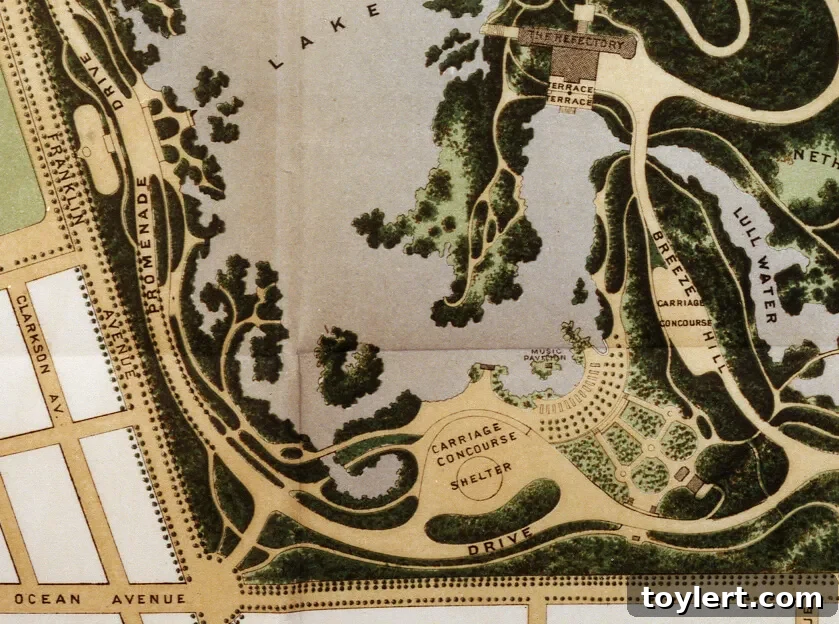
The creation of Prospect Park itself was a monumental undertaking, aimed at providing a naturalistic oasis for the burgeoning population of Brooklyn. Olmsted and Vaux, renowned for their work on Central Park, envisioned Prospect Park as a pastoral idyll, a place where city dwellers could escape the urban hustle and reconnect with nature. The southeastern portion of the park, specifically designated for the Concert Grove, was an integral part of this grand design. Early plans reveal a sophisticated arrangement: a formal garden crisscrossed with elegant walkways, inviting visitors to promenade and enjoy leisurely strolls. These paths culminated in stately stairs leading down to the tranquil lakefront, where carefully placed seating offered prime views of a stage situated on the enchanting Music Island.
To further enhance the experience for music lovers and park visitors, additional amenities were thoughtfully provided. A refreshment stand, known as the Concert Grove House, offered sustenance, while the open-air shelter – the future pavilion – promised comfort and protection from the elements. This entire area was designed not merely as a place for passive enjoyment but as an immersive cultural experience, blending the beauty of landscape architecture with the joy of musical performance. The Concert Grove was intended to be a vibrant hub, a social gathering point where art, nature, and community converged.
Architectural Grandeur: Calvert Vaux’s Masterpiece
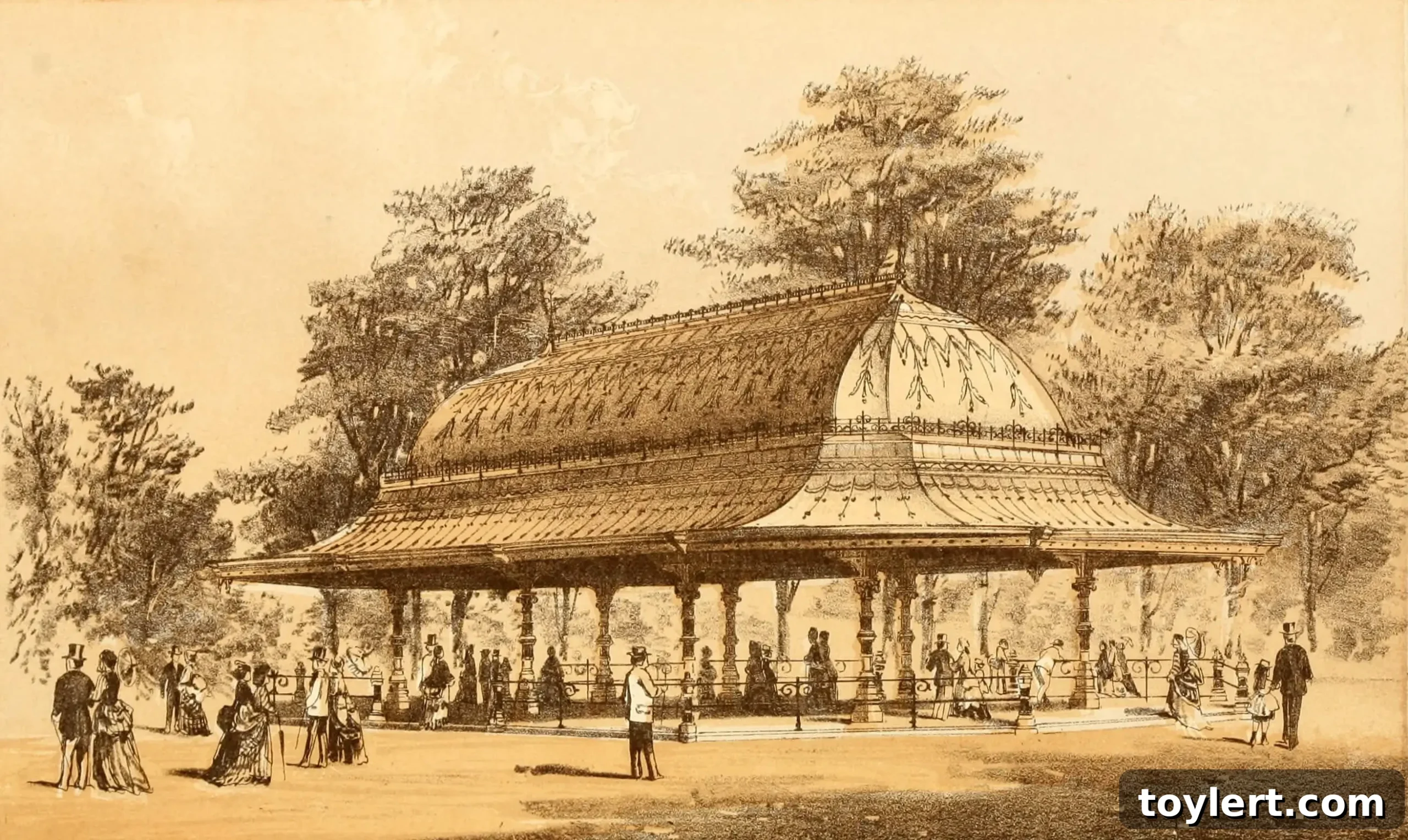
The pavilion itself was a singular achievement, a true architectural masterpiece crafted by the brilliant Calvert Vaux. His initial sketch, which first graced the pages of an 1873 Brooklyn Park Commissioners annual report, offered a glimpse into the exquisite design to come. While the final structure completed in 1874 diverged slightly from the sketch, lacking some of the elaborately ornamented roof details initially envisioned, it remained remarkably consistent in its core particulars. The pavilion was, and continues to be, a prime example of Victorian-era park architecture, blending intricate decorative elements with functional design.
A Closer Look at the Design and Craftsmanship
The most striking feature of the Concert Grove Pavilion is its dramatic double-hipped roof, majestically topped with an ornate iron cresting that adds an air of delicate grandeur. This impressive roof structure is supported by a series of intricate cast-iron columns, each a work of art in itself, showcasing the skilled craftsmanship of the period. The entire perimeter of the structure was originally encircled by an ornamental fence, adding another layer of sophisticated detail. Historical images provide invaluable insight into the rich melange of decorative elements that once adorned the pavilion.
These images reveal an abundance of exquisite details: finely carved wooden pendants cascading from the eaves, delicate trim pierced with a distinctive trefoil pattern, and intricate ironwork gracefully adorning both the roofline and the crest. Every element, from the sturdy columns to the smallest decorative flourish, speaks to a commitment to beauty and durability. The combination of wood and iron, materials chosen for their aesthetic appeal and structural integrity, created a harmonious blend that allowed the pavilion to seamlessly integrate into its natural surroundings while simultaneously standing out as a focal point of elegant design within the Concert Grove.
A Century of Service and a Moment of Loss
For a full century, the Concert Grove Pavilion served its intended purpose with grace and resilience. It witnessed countless picnics, concerts, leisurely afternoons, and romantic strolls. It became a beloved landmark, deeply embedded in the collective memory of generations of Brooklynites. However, this century of serene service was abruptly interrupted in 1974 when a devastating fire largely destroyed the cherished structure. The loss was profound, leaving a void in the heart of Prospect Park and in the hearts of those who held it dear. The charred remains served as a stark reminder of the fragility of historic structures and the impact of such irreversible damage.
The community’s response to this tragedy was swift and impassioned. There was an undeniable desire to see the pavilion rise again, to reclaim a piece of the park’s soul that had been lost. This collective determination paved the way for its first major restoration, completed in 1988. This effort marked a significant moment in the pavilion’s history, demonstrating the public’s commitment to preserving their shared heritage and ensuring that future generations could experience its beauty.
The Current Renaissance: Restoring for a New Era
Now, decades after its 1988 rebirth, the Concert Grove Pavilion is undergoing another critical restoration. This current project is more than just a repair; it is a comprehensive revitalization designed to address the accumulated wear and tear of time, update infrastructure, and ensure the pavilion’s structural integrity for decades to come. Modern preservation techniques are being employed, marrying historical accuracy with contemporary construction standards. The goal is not merely to replicate the past but to ensure the pavilion’s sustainable future, allowing it to continue serving as a vital public amenity.
Why This Restoration Matters Now More Than Ever
In an increasingly urbanized world, the demand for accessible, well-maintained outdoor spaces has surged. Parks like Prospect Park offer crucial green lungs for the city, providing opportunities for recreation, relaxation, and cultural enrichment. The Concert Grove Pavilion, as a key feature of this grand park, plays a significant role in enhancing the visitor experience. Its restoration is particularly timely, aligning with a renewed appreciation for communal outdoor gathering places. As communities seek safe and beautiful environments for events, celebrations, or simply quiet contemplation, the return of a fully functional and beautifully restored pavilion could not be more welcome.
The Scope of the Work
The current restoration effort is comprehensive, encompassing various aspects of the pavilion’s structure and aesthetics. This includes meticulous repairs or replacement of deteriorated wooden elements, refurbishing the intricate cast-iron components, and restoring the iconic double-hipped roof and its ornamental cresting. Special attention is also being paid to accessibility, ensuring that the pavilion can be enjoyed by all visitors. The project involves extensive research into historical documents and photographs to ensure that every detail, from the color palette to the choice of materials, is as true to Vaux’s original vision as possible. This commitment to historical authenticity ensures that the pavilion will not only be structurally sound but will also accurately reflect its significant architectural heritage.
The Enduring Legacy of the Concert Grove Pavilion
The Concert Grove Pavilion is more than just a structure; it is a living monument to the foresight of its creators, the resilience of a community, and the enduring power of beautiful architecture. Its repeated cycles of creation, destruction, and rebirth tell a compelling story of continuity and change. It stands as a symbol of Prospect Park’s ability to adapt and thrive, constantly renewing itself to meet the needs of a dynamic city.
Upon its completion, this latest restoration will re-establish the pavilion as a vibrant hub for the park. It will once again host community events, offer a picturesque backdrop for photography, and provide a tranquil spot for park-goers to relax, read, or simply enjoy the surrounding natural beauty. Its return to public use will undoubtedly enrich the lives of countless individuals, reaffirming its status as an architectural gem and a cherished public amenity within one of America’s most beloved urban parks.
Conclusion: A Beacon of Community and History
The Concert Grove Pavilion, with its storied past and promising future, represents a vital link between Brooklyn’s rich history and its vibrant present. As the wraps come off and its restoration nears completion, it will once again stand as a beacon of architectural elegance and a testament to the enduring value of public spaces. It reminds us of the importance of preserving our historical treasures, not just as relics of the past but as dynamic, functional spaces that continue to serve and inspire future generations. Its reopening will be a cause for celebration, marking another chapter in the remarkable life of this iconic Prospect Park landmark.