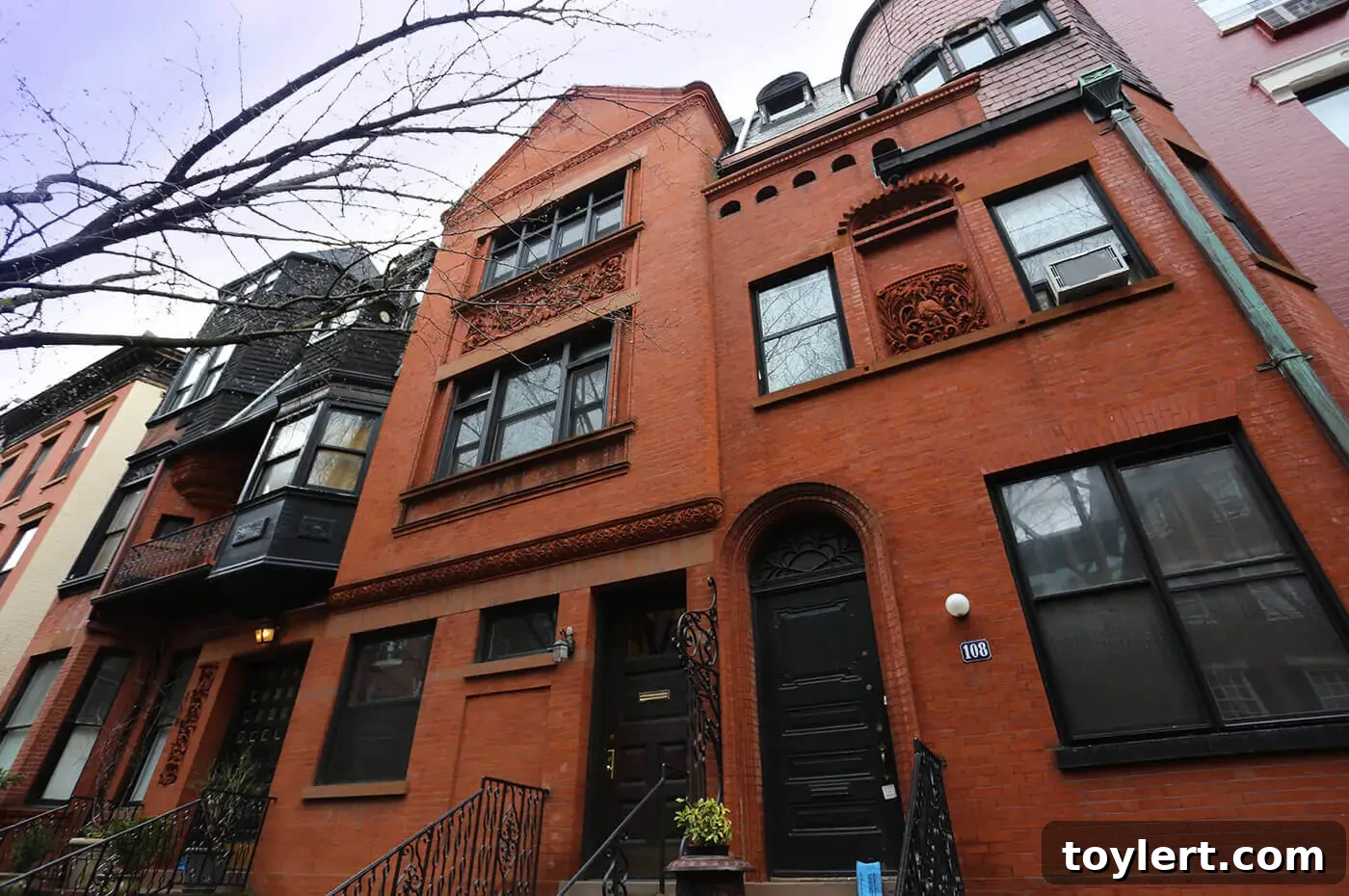
Decoding Queen Anne Architecture: The Eccentric Charm of a Victorian Era Icon
Poor Queen Anne! Her name has become almost synonymous with a catch-all architectural style – a flamboyant, intricate, and deeply eclectic design genre that truly captured the imagination of builders and homeowners, especially in thriving American cities like Brooklyn, towards the end of the 19th century. Yet, the story behind this captivating style is far more complex than a simple royal dedication. It’s a tale woven with historical misnomers, industrial innovation, and a collective desire for architectural exuberance.
The immediate questions that arise are often the most intriguing: How did a relatively little-known queen of England, who reigned nearly two centuries prior to its emergence, lend her name to an entire period of American architecture? And, perhaps more importantly for enthusiasts and casual observers alike, what precisely defines Queen Anne architecture, a style so diverse it often defies easy categorization?
Indeed, Queen Anne architecture is a magnificent amalgamation of so many disparate elements – from subtle medieval-inspired details and exquisitely ornamented tiles to the dramatic flair of turrets, towers, and distinctive oriel windows. Its sheer variety is a well-known inside joke among architecture aficionados. When confronted with a structure that boasts an array of decorative features, an unconventional layout, and an undeniable charm that doesn’t quite fit a rigid stylistic mold, the common refrain echoes: “What would you call that one? I can’t quite put a name to it…must be Queen Anne.” The knowing nod and shared sentiment of “Yeah, Queen Anne” perfectly encapsulate its wonderfully amorphous identity.
Unraveling the Queen Anne Enigma: A Name Beyond Its Time
To truly understand the Queen Anne style, we must first address the curious case of its nomenclature. Queen Anne of Great Britain reigned from 1702 to 1714. The architectural style that bears her name flourished predominantly between the 1880s and 1910s in the United States – a significant chronological gap of nearly 200 years. The link, it turns out, is more a matter of revival than direct succession.
The term “Queen Anne” was initially popularized in England during the 1860s by the influential architect Richard Norman Shaw and his contemporaries. Their “Queen Anne Revival” sought inspiration from the vernacular architecture of Queen Anne’s actual reign and, more broadly, from the preceding Stuart period. This earlier English style was characterized by brickwork, often with white sash windows, and a relatively restrained classicism compared to the later Victorian flamboyance. When this “revival” concept crossed the Atlantic, particularly through architectural pattern books and publications, American builders and architects interpreted it with a decidedly more imaginative and elaborate approach.
Instead of merely replicating the genteel English precedents, American designers embraced the spirit of eclecticism that the name implied, applying it to structures that were distinctly American in their ambition and execution. Thus, the American Queen Anne style, while borrowing a historical name, evolved into something far grander, more asymmetrical, and more visually complex than its English namesake, becoming an icon of the late Victorian era’s prosperity and decorative zeal.
The Defining Characteristics of Queen Anne Architecture
What makes a Queen Anne home instantly recognizable, despite its diverse manifestations? It’s a harmonious (or delightfully clashing) blend of elements that together create an unmistakable aesthetic. Here are the core features:
Asymmetry and Dynamic Silhouettes
Perhaps the most striking characteristic of Queen Anne architecture is its deliberate asymmetry. Unlike earlier, more formal styles, Queen Anne homes rarely present a perfectly balanced facade. Instead, they embrace an irregular footprint, with projections, recesses, and varied massing that create a dynamic and visually interesting silhouette. This often translates into varied wall textures, multi-faceted rooflines, and an overall sense of organic growth rather than strict classical order.
Turrets, Towers, and Dominant Rooflines
The romantic allure of a Queen Anne home is often personified by its distinctive turrets and towers. These can be round, square, or octagonal, topped with conical, pyramidal, or even bell-shaped roofs, frequently adorned with decorative finials. These vertical elements serve not only as architectural focal points but also provide unique interior spaces. Complementing these vertical accents are the complex and often steeply pitched rooflines, featuring multiple gables (often projecting), dormers, and decorative shingles or detailing that add to the visual richness from every angle.
Rich Textural Play and Ornate Detail
Queen Anne homes are a celebration of texture and ornamentation. Builders utilized an extensive palette of materials and decorative techniques to break up wall surfaces and add visual interest. Common elements include:
- Fish-scale shingles: Wooden shingles cut into decorative patterns, often seen on gables, turrets, or upper stories.
- Spindlework: Elaborately turned wood details, frequently found on porches, gables, and railings, often referred to as “gingerbread” trim.
- Patterned masonry: Bricks laid in decorative bonds, or terra cotta panels with intricate designs.
- Decorative gables: Often featuring half-timbering, relief carvings, or intricate shingle patterns.
This layering of textures and details creates an effect of opulent craftsmanship that speaks to the era’s appreciation for artisanal skill and industrial production alike.
Inviting Porches and Unique Window Designs
The Queen Anne style often features expansive, wrap-around porches, providing welcoming outdoor living spaces. These porches are typically supported by decorative columns and adorned with intricate balustrades and spindlework, making them a key social and architectural feature. Windows also play a crucial role in defining the style. Oriel windows (projections from the wall, supported by corbels) and bay windows (projections reaching the ground) are common, often incorporating leaded or stained glass, adding both visual interest and an abundance of natural light to the interiors. Varying window shapes and sizes across the facade further enhance the asymmetrical aesthetic.
A Symphony of Materials and Vibrant Hues
Unlike more monochromatic styles, Queen Anne architecture thrives on a diverse array of building materials. Brick, stone, clapboard, and shingle siding are often combined on a single facade, each material contributing to the overall textural richness. This material diversity is frequently complemented by vibrant, multi-hued paint schemes. Homeowners and builders of the era were not afraid of bold color choices, often highlighting different architectural elements with contrasting or complementary tones, further enhancing the playful and expressive nature of the style.
The Rise and Reign of Queen Anne in America
The Queen Anne style emerged during a period of immense change and prosperity in the United States, roughly from 1880 to 1910. The Industrial Revolution had ushered in new methods of mass production, making decorative architectural elements more accessible and affordable. Furthermore, the burgeoning middle class desired homes that reflected their newfound affluence and individuality, moving away from the more austere aesthetics of earlier periods. Queen Anne offered the perfect blend of grandeur, comfort, and unique character.
Its popularity soared across the nation, from bustling urban centers to developing suburban neighborhoods. The style provided architects and builders with unparalleled freedom to experiment, blending historical motifs with modern construction techniques. This adaptability meant that Queen Anne homes could range from grand, mansion-like estates to more modest, yet still highly decorative, suburban dwellings, making it a truly democratic architectural expression of the era.
Queen Anne’s Crown Jewel: Its Presence in Brooklyn
While Queen Anne architecture graced landscapes across America, its presence in Brooklyn is particularly noteworthy and celebrated. As Brooklyn transformed from a collection of towns into a bustling borough of New York City in the late 19th and early 20th centuries, its rapidly expanding neighborhoods became fertile ground for the Queen Anne style. Areas such as Ditmas Park, Park Slope, Prospect Park South, and sections of Flatbush are veritable open-air museums of Queen Anne homes.
Developers in these neighborhoods, aiming to attract affluent buyers, embraced the flamboyant and distinctive qualities of Queen Anne. They built entire blocks of homes, each unique yet united by the overarching style, creating streetscapes of unparalleled charm and architectural richness. The spacious lots available in Brooklyn’s burgeoning suburbs allowed for the grand scale, extensive porches, and elaborate gardens that often accompanied these homes, creating picturesque residential environments that still captivate today.
Architectural Diversity in Brooklyn’s Historic Neighborhoods
Brooklyn’s Queen Anne examples showcase the style’s incredible versatility. You’ll find homes that lean heavily into the “Shingle Style Queen Anne,” where entire upper stories are clad in patterned wood shingles, providing a more rustic yet still elaborate appearance. Others exhibit “Free Classic Queen Anne” characteristics, incorporating classical columns and pediments alongside the signature asymmetry and varied textures, blending Victorian grandeur with a touch of neoclassical elegance. This regional variation, often tailored to specific developer visions and available materials, further cemented Queen Anne’s status as a beloved and enduring style within Brooklyn’s architectural heritage.
Enduring Allure and Modern Appreciation
Despite their elaborate nature and the century-plus they’ve stood, Queen Anne homes continue to hold immense appeal. Their individuality, historical resonance, and sheer decorative charm set them apart from more conventional housing styles. For many, owning a Queen Anne means owning a piece of history, a home with a story in every turret and every meticulously carved spindle. Their unique floor plans, often featuring grand staircases, spacious rooms, and intricate interior detailing, offer a living experience unlike any other.
Preserving the Legacy: Challenges and Rewards
Owning a Queen Anne home often comes with the rewarding challenge of preservation. These homes require a dedication to historical accuracy and a commitment to maintaining their unique features. Restoring original details, from repairing intricate woodwork to matching historical paint colors, can be a labor of love. However, the efforts are invariably worthwhile, as they contribute to safeguarding a significant architectural legacy and ensuring that these magnificent structures continue to inspire awe and admiration for generations to come. Modern homeowners often find ways to integrate contemporary comforts and efficiencies while respecting the original design, creating a perfect blend of past and present.
Conclusion: The Timeless Charm of Queen Anne
From its curious name to its wonderfully eclectic design, Queen Anne architecture remains one of the most beloved and recognizable styles of the Victorian era. It stands as a testament to a period of economic boom, industrial innovation, and a vibrant cultural desire for self-expression in home design. Whether gracing the tree-lined streets of Brooklyn or standing proudly in historic districts across the nation, Queen Anne homes offer a rich tapestry of textures, forms, and colors, embodying a flamboyant spirit that continues to enchant and inspire. Far from being a mere architectural joke, Queen Anne is a celebration of individuality, a grand statement of beauty, and an enduring symbol of American ingenuity and decorative artistry.