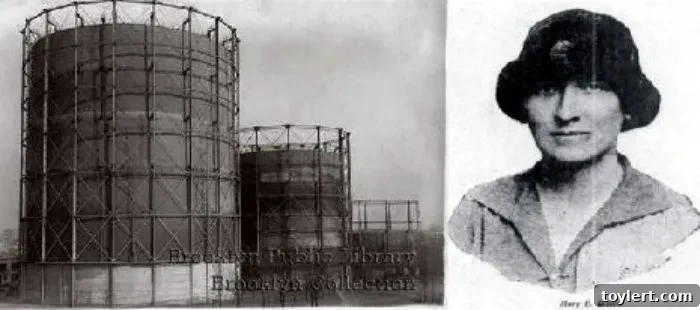
This article is the first in a series exploring the fascinating history of gas utilities and the trailblazing figure of Mary E. Dillon. Continue reading: Part 2, Part 3, and Part 4.
Illuminating Progress: The Enduring Legacy of Gas Utilities and Mary E. Dillon
Utility companies stand as indispensable pillars of modern life, providing the essential services that power our homes, businesses, and communities. From the humble flip of a light switch to the warmth emanating from our heating systems, we often take for granted the intricate networks and dedicated organizations that ensure our daily comforts. Whether it’s Con Edison, National Grid, or another vital supplier, these entities deliver the electricity and gas that have become fundamental to contemporary existence.
While today’s natural gas predominantly fuels appliances and heating systems, its historical significance extends far beyond these applications. Throughout the greater part of the 19th century, gas was the paramount utility, a revolutionary force that single-handedly transformed urban landscapes. It supplied light, heat, and even motive power, serving as the backbone of urban development and dramatically altering the fabric of daily life. This series delves into the rich history of gas utilities, exploring their profound impact and celebrating the remarkable contributions of pioneering figures like Mary E. Dillon, a name synonymous with innovation and leadership in the industry.
The Dawn of Gas Power: A Revolution in Urban Life
The advent of gas lighting in the early 19th century marked a pivotal moment in human history, heralding an era of unprecedented progress. Before gas, cities plunged into darkness after sunset, illuminated only by flickering oil lamps or candlelight, which offered limited visibility and posed significant fire hazards. The introduction of manufactured gas, primarily derived from coal, brought about a dramatic change. Gas streetlights, first installed in major European and American cities, cast a bright, steady glow that extended the workday, fostered social activity, and significantly enhanced public safety.
The technology behind early gas utilities was nothing short of ingenious for its time. Coal was heated in retorts to produce “coal gas,” which was then purified and stored in massive gasometers – iconic structures that became symbols of industrial might in many urban centers. From these reservoirs, an intricate web of cast-iron pipes was laid beneath city streets, delivering gas directly to homes, businesses, and public spaces. This vast infrastructure project was a monumental undertaking, requiring significant capital, engineering expertise, and a workforce capable of intricate installation and maintenance.
The impact on urban life was immediate and profound. Brighter streets deterred crime, making evening travel safer and encouraging the growth of nightlife and public entertainment. Inside homes, gas lighting offered a cleaner, more efficient alternative to oil lamps, reducing soot and improving indoor air quality. As the century progressed, gas technology evolved, finding new applications beyond illumination. Gas stoves and water heaters began to appear in homes, promising greater convenience and efficiency in cooking and sanitation. Industrial applications also emerged, demonstrating gas’s versatility as a power source.
The Rise of Utility Giants and Infrastructural Challenges
The rapid expansion of gas infrastructure led to the proliferation of numerous small, independent gas companies in burgeoning cities. Each company often served a limited geographical area, leading to a patchwork of competing networks, varying service quality, and sometimes, redundant infrastructure. However, the inherent economies of scale in utility provision, coupled with the immense capital required for expansion and maintenance, inevitably led to a period of consolidation. Smaller companies were gradually acquired or merged, giving rise to larger, more dominant entities like the ones we recognize today, such as Con Edison and National Grid.
This consolidation was driven by the need for more efficient resource allocation, standardized service, and the ability to finance large-scale projects, such as expanding pipelines to newly developed suburban areas or upgrading manufacturing plants. The challenges were immense: maintaining aging infrastructure, ensuring a consistent and safe supply, and navigating the complex political landscape of urban development. As these companies grew, so did public demand for regulation. Governments began to step in to oversee rates, service quality, and safety standards, recognizing utilities as natural monopolies essential for public welfare.
A significant shift in the 20th century was the gradual transition from manufactured gas to natural gas. Manufactured gas was expensive to produce and contained impurities, while natural gas, found deep within the earth, offered a cleaner, more abundant, and ultimately cheaper fuel source. This transition required another massive overhaul of infrastructure, as existing pipelines had to be adapted or replaced, and new distribution networks extended to tap into natural gas reserves. This shift solidified the role of gas as a primary energy source for heating and cooking, setting the stage for the modern utility landscape.
Mary E. Dillon: A Trailblazer in the Gas Industry
Amidst this evolving landscape of industrial growth and corporate consolidation, certain individuals emerged as pivotal figures, shaping the trajectory of the utility sector. One such remarkable person was Mary E. Dillon, a true pioneer whose career defied the conventional norms of her era. Mary E. Dillon was not just another executive; she was a trailblazer who rose through the ranks to become the President of the Brooklyn Borough Gas Company (BBG), an extraordinary achievement that made her the first woman to lead a major utility company in the United States.
Dillon’s journey to the top was a testament to her exceptional intellect, unwavering dedication, and astute business acumen. She joined BBG in 1904, starting in a clerical role, a common entry point for women in business at the time. However, she quickly distinguished herself, demonstrating a profound understanding of the company’s operations and a keen ability to manage complex challenges. Over the years, she assumed increasingly responsible positions, mastering various aspects of the gas business, from customer service and accounting to finance and strategic planning. Her comprehensive knowledge and hands-on experience across different departments gave her a unique perspective on the company’s overall functioning and its potential for growth.
Her leadership was particularly critical during challenging times, including the economic downturns and the profound shifts in energy production from manufactured to natural gas. Dillon championed efficiency, customer satisfaction, and prudent financial management. She was known for her progressive approach to employee relations, understanding that a motivated and skilled workforce was vital for the company’s success. Under her stewardship, the Brooklyn Borough Gas Company not only navigated complex regulatory environments but also maintained a reputation for reliable service and community engagement, serving the residents of Coney Island, Flatbush, and other Brooklyn neighborhoods with dedication.
Mary E. Dillon’s ascent shattered glass ceilings and provided a powerful example of female leadership in a male-dominated industry. Her legacy extends beyond her tenure at BBG; she paved the way for future generations of women in business and demonstrated that competence and vision know no gender. Her story is an integral part of the narrative of American industry, highlighting the contributions of often unsung heroes who built the infrastructure that underpins our modern world.
Brooklyn’s Gas Heritage: A Local Perspective
The story of gas utilities is intimately woven into the fabric of Brooklyn’s history. As one of America’s most dynamic and rapidly growing urban centers in the 19th and early 20th centuries, Brooklyn’s development was inextricably linked to the availability of reliable energy. Companies like the Brooklyn Borough Gas Company played a crucial role in transforming nascent communities into thriving neighborhoods. The construction of gas plants, the laying of thousands of miles of pipelines, and the constant innovation in service delivery were foundational to Brooklyn’s expansion.
The gas infrastructure shaped how Brooklynites lived and worked. It allowed factories to operate longer, provided comfort and safety to homes, and dramatically improved the quality of life in both established and newly developing areas. The presence of a strong utility like BBG, particularly under the leadership of someone as dedicated as Mary E. Dillon, meant that residents could count on their energy supply, even through periods of rapid urbanization and economic fluctuation. The gas mains beneath Brooklyn’s brownstone-lined streets and bustling commercial avenues are a silent testament to this enduring legacy, connecting generations to the energy that powers their daily lives.
Enduring Legacy: Utilities in the Modern Era
The utility companies of today, while vastly different in their technological advancements and regulatory frameworks, are direct descendants of these pioneering gas companies. The fundamental mission remains the same: to provide essential energy services reliably and safely. While natural gas continues to be a crucial component of our energy mix for heating and industrial processes, the industry is once again at a crossroads, facing new challenges and opportunities.
The modern era is defined by a global imperative for sustainability and a transition towards cleaner energy sources. Utility companies are now at the forefront of integrating renewable energy, upgrading grids to be smarter and more resilient, and exploring innovative solutions for energy storage and distribution. The challenges are formidable: balancing affordability with environmental responsibility, ensuring grid stability in the face of variable renewable input, and adapting to ever-evolving technological landscapes. Yet, the lessons from the past, particularly the spirit of innovation and dedicated service exemplified by figures like Mary E. Dillon, continue to inspire.
In an increasingly interconnected world, the “constants in our lives” – our utility providers – continue to play a critical role. They are not merely suppliers of commodities but custodians of essential infrastructure, integral to our economic prosperity, environmental health, and quality of life. Understanding their history, acknowledging the visionaries who shaped them, and appreciating their ongoing evolution is key to comprehending the foundations upon which our modern society is built and anticipating the energy solutions of tomorrow.