Got an inspiring architectural or interior design project to share with The Insider? Please contact Cara Greenberg at caramia447 [at] gmail [dot] com to propose a feature.
A Timeless Transformation: Restoring a Park Slope Row House with Vintage Soul
In the vibrant heart of Park Slope, Brooklyn, a dilapidated 19th-century wood-frame row house has been meticulously brought back to life, not just as a dwelling, but as a vivid canvas reflecting its owners’ deep appreciation for early and mid-20th-century domestic life. This wasn’t merely a renovation; it was an artistic endeavor, a collaborative journey between discerning homeowners and the visionary architect Michelle Krochmal of Park Slope-based Filament Architecture Studio. The result is a truly unique home, a playful and colorful homage to a bygone era, seamlessly blended with modern comfort and functionality.
From Derelict to Dream Home: The Initial Assessment
The story of this remarkable transformation began not with a hammer and nails, but with a critical question. The prospective homeowners, eyeing the 1,700-square-foot property, were uncertain if their dream could ever take root in such challenging soil. Acting on a realtor’s astute advice, they enlisted architect Michelle Krochmal to conduct a crucial pre-purchase assessment. Her expertise would determine the viability of their ambitious project.
Krochmal vividly recalls the state of the house: “It was a wreck. It hadn’t been touched in many, many years, and the family that had lived there for a very long time were heavy smokers. Nicotine was in everything.” This wasn’t an exaggeration; the pervasive yellow-brown stains and distinct odor permeated every surface, a testament to decades of neglect. Beyond the cosmetic, the structure whispered tales of age and disrepair. Original features were obscured, systems were outdated, and the overall layout felt cramped and disconnected, typical of many untouched 19th-century homes struggling to meet 21st-century living standards. The house wasn’t just old; it was tired, crying out for a comprehensive intervention – a complete overhaul encompassing layout reconfiguration, mechanical system upgrades, and an extensive cosmetic revitalization.
Forging a Vision: The Architect-Client Partnership
The decision to acquire the house hinged entirely on Krochmal’s affirmative assessment that, despite its daunting condition, it possessed good bones and immense potential. This initial consultation laid the groundwork for an extraordinary architect-client relationship, built on trust and a shared vision. The homeowners weren’t just looking for an updated space; they desired a home that would encapsulate their passion for the aesthetics and functionality of early to mid-20th-century design. Their aspiration was a dwelling that felt both authentically vintage and vibrantly modern, a place where their cherished collections and lifestyle could flourish.
Michelle Krochmal’s role extended beyond merely fixing what was broken. She was tasked with translating this deeply personal vision into a tangible architectural and interior design scheme. This involved careful listening, extensive research into period-appropriate details, and the ingenious integration of modern amenities without compromising the desired nostalgic ambiance. The challenge was to create a space that felt like a natural extension of the past, yet was robustly equipped for contemporary living, striking a delicate balance between historical reverence and practical innovation.
Embracing the Past: Design Philosophy and Aesthetic Choices
The core of this renovation lay in its unique design philosophy: to create a home that celebrated the “playful and colorful” essence of the past. This meant moving beyond sterile, minimalist trends to embrace warmth, character, and a sense of curated history. Krochmal and the homeowners meticulously considered every element, from the grand architectural gestures to the smallest decorative accents, ensuring they resonated with the desired vintage aesthetic.
A Symphony of Color and Texture
Color became a crucial protagonist in this narrative. Eschewing muted tones, the team opted for a vibrant yet harmonious palette inspired by early and mid-20th-century design, featuring rich blues, cheerful yellows, deep greens, and warm reds. These colors were strategically applied to walls, cabinetry, and tiles, creating distinct moods in each space while maintaining a cohesive flow throughout the house. Textural elements, such as subway tiles, patterned wallpapers, and carefully selected wood finishes, further enhanced the period feel, adding depth and authenticity to the interiors.
Layout Reimagined: Optimizing 1,700 Square Feet
The original 19th-century layout, characterized by smaller, more compartmentalized rooms, was carefully re-evaluated. While a completely open-plan concept might have contradicted the vintage feel, intelligent modifications were made to improve flow and maximize natural light. Walls were strategically removed or reconfigured to create more generous living areas, better sightlines, and a more intuitive circulation path, enhancing both functionality and the sense of spaciousness within the 1,700-square-foot footprint. For instance, the kitchen, often a darker space in older homes, was opened up to receive more light and become a more central, inviting hub for the family.
Navigating Renovation Complexities: Challenges and Solutions
Renovating a derelict 19th-century row house presents a unique set of challenges, demanding both technical prowess and creative problem-solving. Beyond the pervasive nicotine residue, which required extensive cleaning, sealing, and material replacement, the structural integrity and outdated systems of the house needed significant attention.
Structural Soundness and Modern Infrastructure
A thorough structural assessment was paramount. This often involves inspecting foundations, floor joists, and roofing for integrity and signs of stress. Any necessary repairs or reinforcements were undertaken to ensure the house’s longevity and safety. Simultaneously, the mechanical, electrical, and plumbing (MEP) systems were completely modernized. Old knob-and-tube wiring was replaced with safe, contemporary electrical systems, ensuring ample power for modern appliances and devices. Antiquated plumbing was upgraded to provide efficient water delivery and drainage, and a new HVAC system was installed to guarantee comfortable temperatures year-round, all while being thoughtfully integrated to minimize visual impact on the vintage aesthetic.
Energy Efficiency and Period Authenticity
Improving energy efficiency in historic homes can be tricky, as strict preservation guidelines often limit exterior alterations. Krochmal and her team explored solutions such as upgraded insulation within walls and ceilings, and the careful restoration or replacement of windows with energy-efficient alternatives that maintained the original architectural character. This balanced approach ensured the home was not only beautiful but also sustainable and cost-effective to maintain in the long run.
Curated Interiors: A Homage to Domestic Life
The true magic of this Park Slope renovation lies in its interior details, which meticulously bring the early and mid-20th-century vision to life in every room. Each space tells a part of the story, combining functionality with an undeniable charm.
The Heart of the Home: A Vintage-Inspired Kitchen
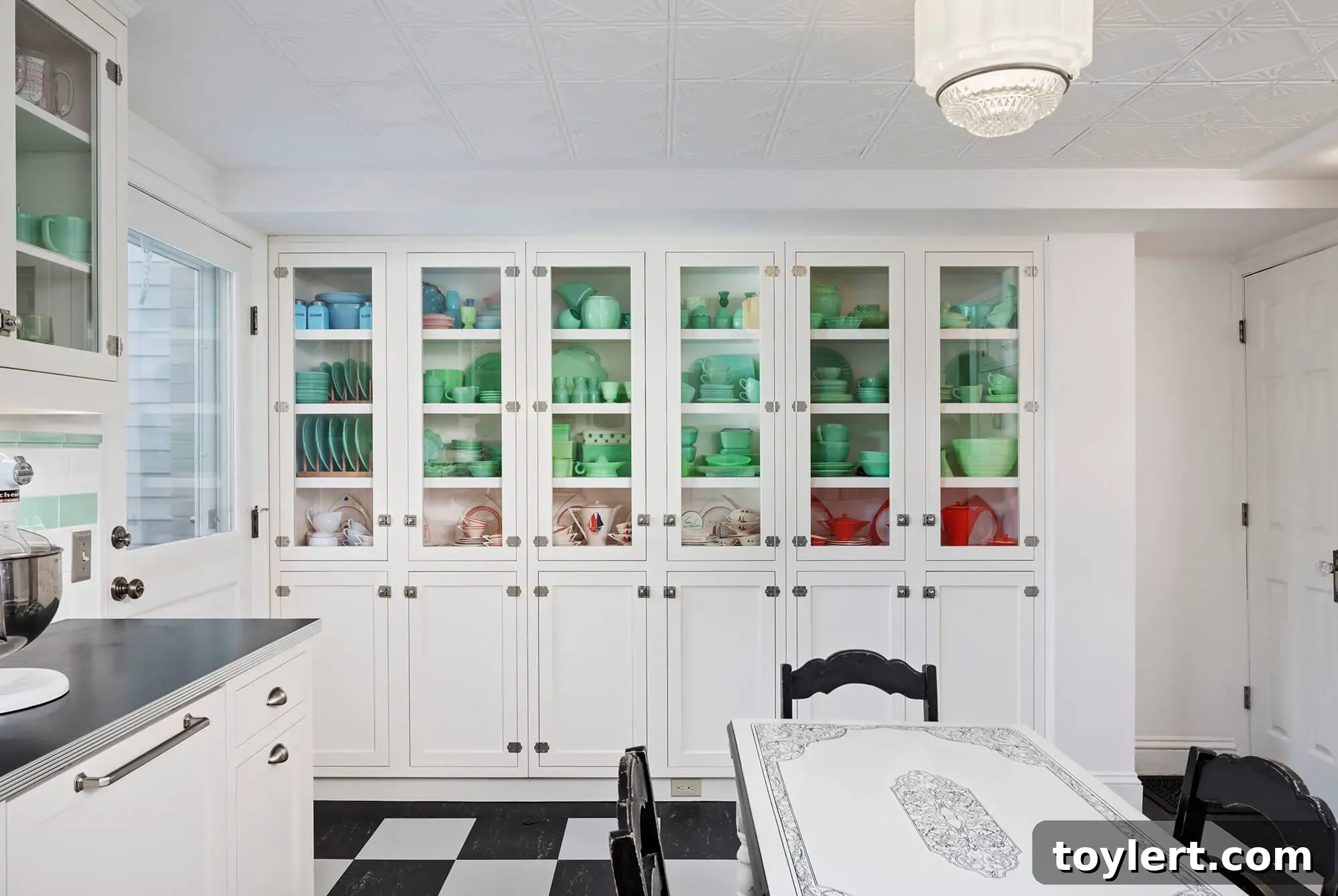
The kitchen, often considered the heart of the home, received a spectacular vintage-inspired treatment. Custom cabinetry in period-appropriate colors, perhaps a cheerful mint green or a classic butter yellow, was paired with durable countertops, possibly butcher block or a classic laminate reminiscent of the era. Retro-style appliances, whether true vintage finds meticulously restored or modern replicas, were seamlessly integrated. The choice of flooring, perhaps classic linoleum patterns or checkerboard tiles, further cemented the aesthetic, making the kitchen a truly inviting and functional space that felt plucked from a different time.
Bathrooms with Character and Comfort
Bathrooms were designed to evoke a sense of nostalgic luxury. Clawfoot tubs, pedestal sinks, and high-tank toilets (where feasible) became focal points. Subway tiles, a timeless classic, were used on walls, complemented by period-appropriate fixtures in chrome or polished nickel. The clever use of specific tile patterns and vintage lighting fixtures ensured these essential spaces offered modern comfort without sacrificing their distinctive old-world charm.
Living Spaces: Playful Collections and Cozy Corners
The living and dining areas were designed to be both functional for entertaining and intimate for daily family life. Furniture selections leaned towards mid-century modern pieces, carefully curated vintage finds, or custom-made items that echoed the desired period. Open shelving and built-in nooks were incorporated to display the homeowners’ extensive collections of period art, ceramics, and books, adding to the “playful” aspect of the design. Textiles with bold geometric patterns or charming floral motifs further enhanced the cozy and inviting atmosphere.
The Lasting Impact: A Legacy of Thoughtful Renovation
The transformation of this Park Slope row house stands as a testament to the power of a clear vision, expert architectural guidance, and a deep respect for historical context. The homeowners not only rescued a derelict property but imbued it with a unique personality that perfectly reflects their passion for a specific era of domestic design. Michelle Krochmal and Filament Architecture Studio successfully navigated the complexities of a challenging renovation, delivering a home that is both beautiful and highly functional, durable and delightful.
This project serves as an inspiring example for anyone considering the renovation of a historic property. It demonstrates that with careful planning, creative design, and a collaborative spirit, it’s entirely possible to honor the past while creating a vibrant, comfortable, and thoroughly modern home for the future. The playful, colorful homage to early and mid-20th-century domestic life in this Park Slope residence is more than just a house; it’s a living piece of art, a cherished sanctuary, and a joyful celebration of timeless design.