Got a project to propose for The Insider? Please contact Cara Greenberg at [email protected].
Illuminating Brooklyn: The Transformative Power of Rear Wall Glass in Historic Row House Renovations
In the vibrant tapestry of Brooklyn’s urban landscape, historic row houses stand as timeless architectural gems, each with a story etched into its brownstone, brick, or limestone facade. Yet, for all their charm and heritage, these long, narrow dwellings often present a common challenge for 21st-century homeowners: a distinct lack of natural light. Modern living demands brightness, openness, and a seamless connection to the outdoors, qualities that were not always priorities during the original construction of these venerable homes.
This inherent design constraint has given rise to one of the most impactful and sought-after renovation strategies across the borough over the past decade: the strategic replacement of part, or even all, of the rear wall with expansive glass. Typically, this dramatic transformation occurs on the parlor floor, where living and entertaining spaces reside, though its influence can extend to other levels, bringing a flood of light into previously dim interiors.
The Enduring Quest for Light in Urban Living
The desire for natural light is more than just an aesthetic preference; it’s a fundamental aspect of well-being, influencing mood, productivity, and overall quality of life. In densely packed urban environments like Brooklyn, where properties often share party walls and street-facing windows provide limited light penetration into deep floor plans, homeowners are actively seeking innovative solutions to brighten their living spaces.
Brooklyn row houses, including the iconic brownstones, are characteristically long and narrow. Their design, often dating back to the 19th and early 20th centuries, prioritized privacy and efficient use of compact lots. This resulted in interiors that, while stately, could feel dark and compartmentalized, especially in the central areas. The “back wall blowout” emerged as a brilliant architectural response, directly addressing this core issue by inviting the outside in.
The “Back Wall Blowout”: A Defining Renovation Trend in Brooklyn
The ubiquity of the “back wall blowout” trend is no accident. As architect Daniel Kaplan of Gowanus-based Bowerbird Architects aptly states, “The back wall blowout is ubiquitous, because brownstones are long, narrow and dark inside. That’s your opportunity to bring in light.” This simple yet profound statement encapsulates the driving force behind countless successful renovations. It’s not merely about adding windows; it’s about fundamentally re-imagining the relationship between the interior and exterior, transforming confined spaces into luminous, flowing environments.
This design approach offers a multitude of benefits that resonate deeply with contemporary lifestyles:
- Maximized Natural Light: By replacing solid walls with floor-to-ceiling glass, often in the form of sliding doors or large window systems, sunlight can penetrate deep into the home, reducing reliance on artificial lighting during the day.
- Open-Plan Living: These expansive glass walls often accompany the creation of open-concept living, dining, and kitchen areas on the parlor floor, fostering a sense of spaciousness and connectivity that traditional layouts lacked.
- Seamless Indoor-Outdoor Connection: Large glass doors blur the lines between inside and out, creating a fluid transition to rear gardens, patios, or decks. This enhances the usability of outdoor spaces and brings elements of nature into daily life.
- Modern Aesthetic Integration: While preserving the historic charm of the facade, the rear wall transformation allows for a sleek, modern aesthetic within the home, blending the best of old-world character with contemporary design.
- Enhanced Views: Even if the view is simply a private garden, an expansive glass wall elevates it to a living piece of art, changing with the seasons and time of day.
Architectural Vision: Daniel Kaplan and Bowerbird Architects Leading the Way
Implementing such a significant structural and aesthetic change requires considerable expertise. This is where firms like Bowerbird Architects, led by Daniel Kaplan, excel. Their deep understanding of Brooklyn’s architectural heritage, combined with a forward-thinking approach to modern living, positions them as leaders in this specialized field.
Bowerbird Architects approaches each project with a guiding principle: to unlock the full potential of these historic structures for modern families. Their work demonstrates a commitment to thoughtful design that respects the building’s history while infusing it with renewed vitality and functionality. The “back wall blowout” is not just a trend for them; it’s a carefully considered design strategy to enhance livability, ensuring that light, space, and comfort are at the forefront of every renovation.
Case Study: A Windsor Terrace Limestone Transformed by Bowerbird Architects
The philosophy of maximizing light and space was certainly the guiding principle behind Bowerbird Architects’ thoroughgoing renovation of a specific 20-foot limestone row house in Windsor Terrace. This project serves as a prime example of how strategic design can breathe new life into an historic property, tailoring it to the needs of a contemporary family.
The Original State and Client Vision
The Windsor Terrace home, a classic limestone row house, presented the typical challenges of its era: a somewhat dark interior, compartmentalized rooms, and a rear wall that offered little connection to the private garden. A young family of four acquired the property, envisioning a home that would not only honor its historic roots but also provide bright, open, and functional spaces suitable for modern family life, entertaining, and everyday activities. Their primary desire was to overcome the inherent dimness and create a vibrant, light-filled sanctuary.
Designing for Light and Flow: The Parlor Floor Transformation
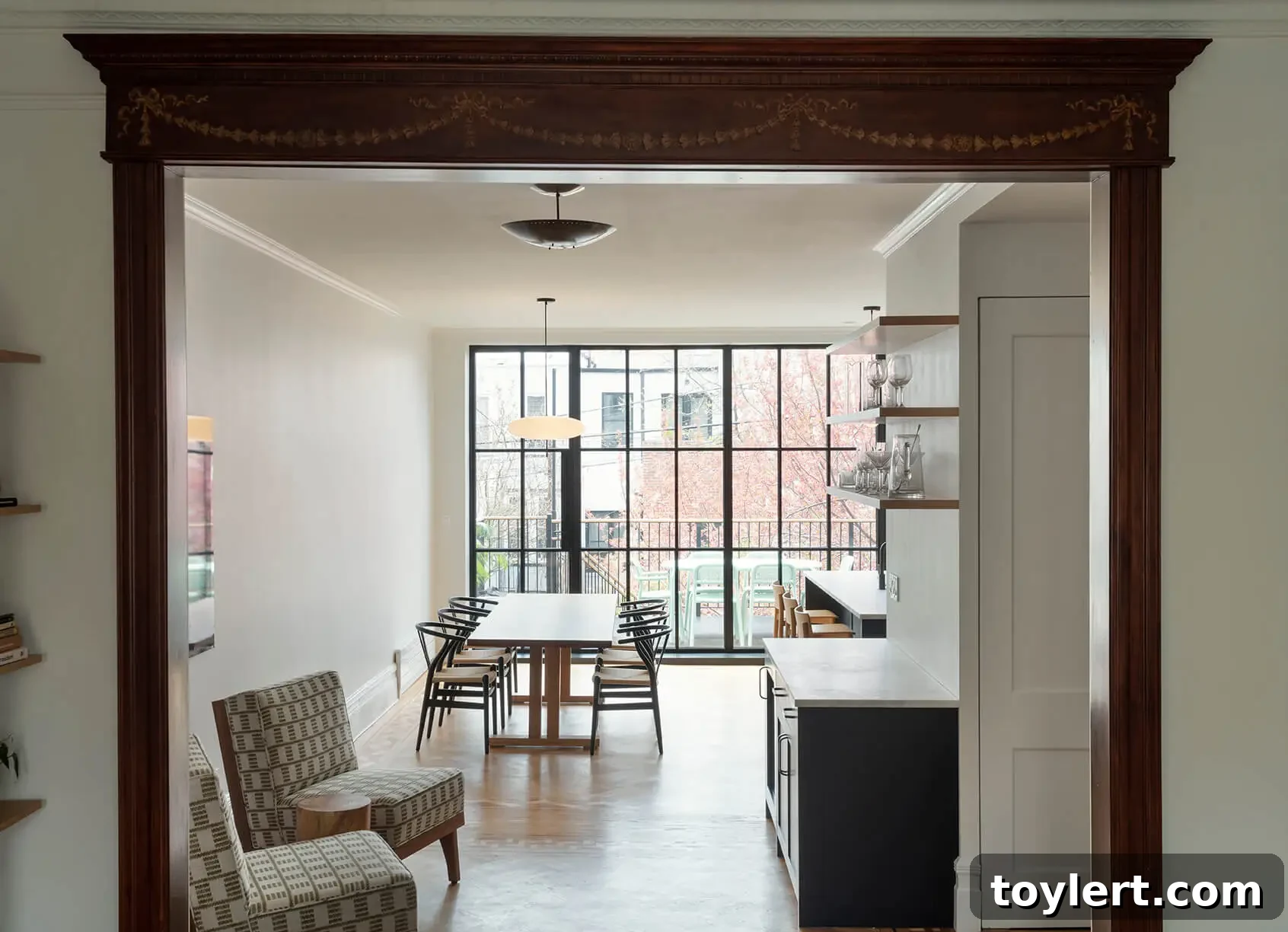
Bowerbird Architects’ solution centered dramatically on the parlor floor. The original, solid rear wall was meticulously replaced with an expansive, custom-designed glass system. This wasn’t just a simple window installation; it was a floor-to-ceiling intervention, likely featuring large sliding or folding glass doors that, when open, completely dissolved the barrier between the indoor living space and the outdoor garden. This transformation instantly flooded the entire parlor floor—which typically houses the living, dining, and kitchen areas—with an abundance of natural light.
The impact was immediate and profound. What were once distinct, dimly lit rooms merged into a cohesive, open-plan expanse. The kitchen, often relegated to the darker middle of a row house, now basked in sunlight, becoming a central hub for family interaction. Light-colored materials and finishes were strategically employed throughout the interior—crisp white walls, pale wood flooring, and minimalist cabinetry—to further amplify the natural brightness and create an airy, expansive feel. The result was a dynamic, versatile space perfect for both quiet family moments and lively social gatherings.
Beyond the Parlor: Integrated Lighting Solutions
While the parlor floor garnered the most dramatic transformation, Bowerbird Architects’ holistic approach extended throughout the Windsor Terrace home. To ensure that light permeated all levels, additional strategies were likely employed. Open-riser staircases, light wells, and carefully placed skylights on upper floors could have been integrated to draw natural light down into the core of the house. The seamless connection to the rear garden also meant that the family gained not just visual access, but functional access, allowing children to play freely and adults to enjoy outdoor dining or relaxation just steps from their living space. This thoughtful integration ensured that the home felt uniformly bright and welcoming from top to bottom.
Navigating the Challenges of Historic Renovation
While the rewards of a “back wall blowout” are significant, executing such a renovation in a historic Brooklyn row house comes with its own set of complexities and considerations. These projects are not merely cosmetic upgrades; they involve substantial structural and design work that demands professional expertise.
Structural Integrity and Engineering
Removing a significant portion of a rear wall, especially in a multi-story building, involves compromising its structural integrity. This necessitates meticulous planning by structural engineers to design new support systems, often involving steel beams or columns, to safely carry the loads from upper floors and the roof. Ensuring the stability of the entire structure is paramount and requires a deep understanding of historic building methods as well as modern engineering solutions.
Preserving Historic Character and Navigating Regulations
Many Brooklyn row houses are located within historic districts, meaning any exterior alterations must comply with stringent landmark commission regulations. Architects must carefully balance the desire for modern light and openness with the need to maintain the building’s historical integrity and aesthetic harmony with its surroundings. This can involve debates over materials, window styles, and the overall visual impact of the new rear facade.
Energy Efficiency and Climate Control
Large expanses of glass can pose challenges for thermal performance. To prevent excessive heat gain in summer and heat loss in winter, high-performance, energy-efficient glazing is essential. This includes options like double or triple-paned glass with low-emissivity (low-E) coatings and argon gas fills. Architects must also consider the home’s HVAC system to ensure it can effectively regulate temperature with the increased thermal load from the glass.
Privacy and Aesthetics
While bringing in light, large glass walls can also compromise privacy, especially in urban environments with close neighbors. Solutions such as strategic landscaping, automated blinds or shades, and even smart glass that can tint on demand, are often integrated into the design. Aesthetically, the new rear facade must be thoughtfully designed to complement the existing architecture, even if it introduces a decidedly modern element.
The Enduring Impact: Modern Living in Historic Gems
Renovations like the Windsor Terrace project by Bowerbird Architects highlight the enduring appeal and adaptability of Brooklyn’s historic row houses. By skillfully integrating modern design principles, particularly the strategic use of expansive rear wall glass, architects and homeowners are creating spaces that are not only beautiful but also highly functional and aligned with contemporary desires for light, openness, and connection to the environment.
These transformations represent more than just architectural interventions; they enhance the quality of life for residents, foster a stronger connection to home, and often significantly increase property value. They stand as testaments to the power of thoughtful design to marry the charm of the past with the comforts of the present, ensuring that these cherished urban gems continue to thrive for generations to come. The “back wall blowout” is not just a trend; it’s a testament to innovative architecture making historic homes more livable and luminous than ever before.