The Unraveling: The Fall of the Jenkins Family Financial Empire – Part Four Amidst the Panic of 1907
This article is Part Four in our extensive series chronicling the dramatic decline of the Jenkins Family Financial Empire. Catch up on the unfolding saga by reading Part 1, Part 2, Part 3, Part 5, and Part 6 of this captivating story.
The year was 1907, and as autumn leaves gave way to the biting winds of winter, a profound sense of apprehension gripped the United States. New York City, the nation’s financial heart, found itself particularly vulnerable, still reeling from the devastating aftershocks of a financial maelstrom known as the Panic of 1907. This crisis, which had erupted with brutal force in October, unleashed widespread havoc across the stock market and sent shockwaves through the venerable banking institutions of Wall Street. For prominent families like the Jenkins, whose wealth and influence were intricately tied to the delicate balance of the financial system, these were not merely turbulent times; they marked the beginning of a decisive and irreversible decline.
The Panic of 1907: A Nation on the Brink
The Panic of 1907, often referred to as the “Knickerbocker Crisis,” was a severe financial recession that exposed the inherent fragility of the American banking system in the absence of a central bank. Its roots lay in a combination of factors: reckless speculation in the copper market, a lack of confidence in trust companies, and the highly decentralized nature of the financial infrastructure. The crisis reached its zenith when the Knickerbocker Trust Company, one of New York’s largest and most respected financial institutions, collapsed after a failed attempt to corner the copper market. The subsequent failure of a brokerage firm associated with the Knickerbocker Trust triggered widespread fear among depositors, leading to a classic bank run.
Across the city, and indeed the nation, people rushed to withdraw their funds from banks and trust companies, fearing that their life savings would vanish overnight. This collective loss of confidence created a vicious cycle, as institutions, starved of cash, were forced to liquidate assets, further driving down prices and exacerbating the crisis. The stock market plunged by nearly 50% from its peak the previous year, unemployment surged, and countless businesses teetered on the brink of ruin. While the federal government possessed limited tools to intervene, the crisis was ultimately mitigated, albeit barely, by the extraordinary intervention of financier J.P. Morgan, who, leveraging his vast personal wealth and influence, rallied other bankers to pool resources and inject liquidity into the embattled system. This pivotal event underscored the urgent need for financial reform and eventually paved the way for the creation of the Federal Reserve System.
Trust Companies and Wall Street’s Vulnerability
During the early 20th century, trust companies occupied a peculiar and often precarious position within the financial landscape. Unlike traditional commercial banks, which were subject to stricter regulations regarding reserves and lending practices, trust companies operated with greater freedom. They offered a broader range of services, including managing estates, acting as corporate trustees, and engaging in more speculative investment activities. This flexibility allowed them to grow rapidly and attract substantial deposits, often by offering higher interest rates than their more conservative counterparts. However, this lack of stringent oversight also made them inherently more vulnerable to economic downturns and loss of public confidence.
When the Knickerbocker Trust, a seemingly invincible titan, crumbled, it sent a chilling message throughout the financial community. Depositors, unable to distinguish between sound and unsound institutions, began to view all trust companies with suspicion. This generalized panic led to widespread withdrawals from trust companies across New York City. The intricate web of interbank lending meant that the failure of one institution could quickly destabilize others, creating a domino effect. Wall Street, the epicenter of American finance, found itself struggling to contain the contagion, as the fundamental trust that underpins any financial system evaporated almost overnight. For a family empire like the Jenkins, whose holdings likely included interests in various financial vehicles, including trust companies, this widespread distrust was nothing short of catastrophic.
The Jenkins Family Empire: Navigating the Storm
The Jenkins family, renowned for their extensive financial empire, had established deep roots within New York’s commercial and banking sectors. Their wealth, accumulated over generations, likely encompassed a diverse portfolio: stakes in industrial enterprises, significant real estate holdings, and, crucially, substantial investments and perhaps even direct ownership in local financial institutions. The very notion of an “empire” suggests vast interconnectedness, where the fortunes of one venture could directly impact another. In the vibrant borough of Brooklyn, their influence would have been particularly strong, intertwined with the growth and development of its burgeoning communities.
As the Panic of 1907 unfolded, the Jenkins family would have faced an unprecedented crisis of liquidity and confidence. Their traditional avenues of wealth generation, from real estate development to industrial investments, would have been severely hampered by the credit crunch and widespread economic uncertainty. Loans became scarce, property values plummeted, and consumer spending contracted. More critically, their connections to trust companies, potentially including institutions like the Williamsburg Trust Bank, would have become a major liability rather than an asset. The erosion of public trust in such entities directly threatened the very foundations upon which their financial stability rested.
Williamsburg Trust Bank on Fulton Street: A Local Impact
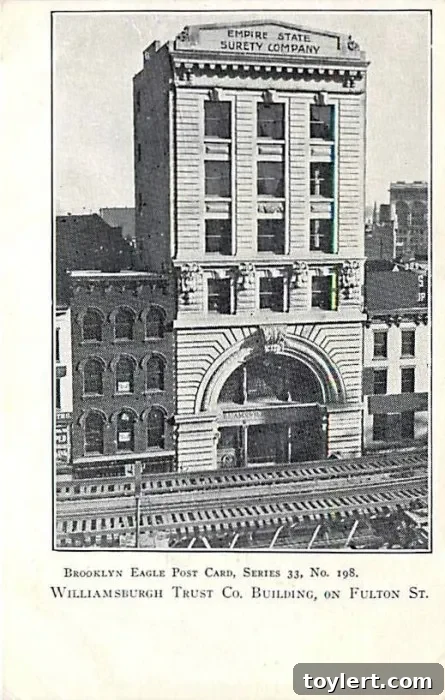
The image of the Williamsburg Trust Bank on Fulton Street serves as a poignant reminder of the localized impact of the 1907 Panic. Situated in a thriving Brooklyn neighborhood, this bank would have been a cornerstone of the community, handling the deposits of local businesses, residents, and perhaps even the Jenkins family themselves. For families like the Jenkins, owning or having significant influence in such a local institution was a common strategy for consolidating power and wealth. It allowed them to direct capital, facilitate their own projects, and maintain a visible presence in the community.
When the fear of bank runs spread, institutions like the Williamsburg Trust Bank would have been immediately vulnerable. Even if fundamentally sound, a sudden influx of withdrawal demands could quickly deplete their cash reserves, forcing them to suspend payments or, worse, declare insolvency. The visual of anxious crowds queuing outside such a bank, desperate to retrieve their money, epitomized the raw panic of the era. For the Jenkins family, the fate of the Williamsburg Trust Bank, whether as a direct holding or a significant partner, would have been a direct indicator of their empire’s stability. Any distress at the bank would have sent ripples through their broader financial network, signaling deep trouble to their investors and potentially prompting further withdrawals from other Jenkins-affiliated ventures.
Decisions and Consequences: The Unraveling
In the tense atmosphere of late 1907, the leaders of the Jenkins family empire would have been forced to make agonizing decisions. The choices made during a financial crisis can dictate the very survival of an enterprise. Did they attempt to shore up struggling ventures with their own personal fortunes, risking total ruin? Did they desperately seek loans from other financiers, perhaps J.P. Morgan’s consortium, only to face unfavorable terms? Or did they attempt to liquidate assets, a desperate move that would inevitably sell off their holdings at fire-sale prices, forever diminishing their long-term power?
The “fall” of such an empire is rarely a single, sudden event. Instead, it is a gradual unraveling, a series of painful concessions and strategic retreats. The Panic of 1907 would have pressured the Jenkins family to shed unprofitable or highly leveraged assets, likely losing significant portions of their real estate and corporate interests. Their control over local banks and trusts might have been challenged, or they may have been forced to sell off shares to maintain liquidity elsewhere. Each decision, each forced divestment, chipped away at the foundation of their empire, reducing their influence, shrinking their capital, and damaging their once-impeccable reputation. The social and political ramifications for such a prominent family would have been immense, leading to a decline in prestige that often accompanies financial ruin.
A Legacy Tested: The Broader Implications
The Panic of 1907 served as a harsh test for countless financial institutions and wealthy families across the United States. While some, like J.P. Morgan, emerged with enhanced reputations, many others, including families like the Jenkins, found their carefully constructed empires crumbling under the immense pressure. This period highlights the inherent risks of unchecked financial growth and the critical importance of a stable, regulated banking system.
For the Jenkins family, the events of 1907 were more than just a temporary setback; they marked a definitive turning point. The economic fallout would have profoundly reshaped their future, impacting generations to come. The grand ambitions, the strategic maneuvers, and the carefully cultivated networks that had defined their empire would have been severely compromised, leaving a legacy irrevocably altered by the tumultuous forces of a financial crisis. The story of the Jenkins family during this era is a potent reminder of how even the most powerful institutions can be brought to their knees when public trust erodes and the financial markets descend into chaos.
Delve deeper into the intricate details of their decline and the ripple effects across Brooklyn in the next installments of our series. Continue reading with Part 5 and Part 6.