Editor’s note: This story is an update of one that ran in 2013. Read the original here.
Unraveling the Enigma: The Historic Worker Housing of Herkimer Place, Bed-Stuy
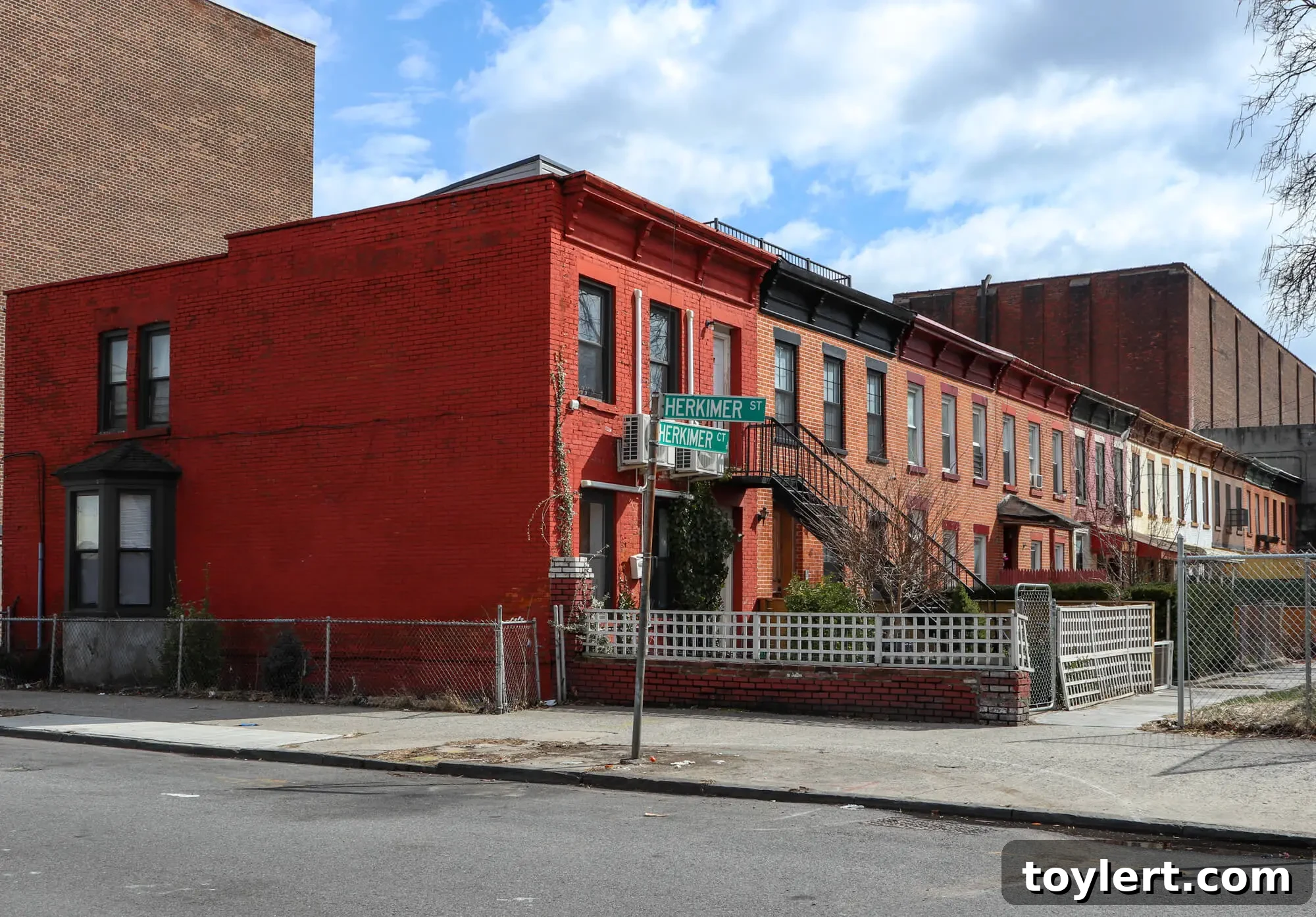
For decades, the quaint cluster of homes at Herkimer Place has stood as a silent testament to Brooklyn’s rich industrial past, yet their precise origins often remained shrouded in mystery. For residents and history enthusiasts alike, these unassuming structures in Bedford Stuyvesant have long sparked curiosity: When exactly did they rise from the earth? Who commissioned their construction, and for what specific purpose? Were they designed to house the burgeoning workforce of a particular local industry? The enduring questions about their architectural lineage and the identities of their earliest inhabitants have fueled a fascinating quest for answers, revealing a narrative far more intricate than initially imagined. This journey into the past uncovers not just the story of these compelling homes, but also a broader tapestry of Brooklyn’s transformation from rural outskirts to a vibrant urban center, shedding light on the forces that shaped one of its most storied neighborhoods.
The Enduring Mystery of Herkimer Place
Since the early 1980s, these distinctive row houses have captivated the imagination of local observers. Their uniform brick facades, modest scale, and practical layouts strongly suggested they were purpose-built as worker housing. The questions were persistent and intriguing: For whom exactly were these residences intended? The prominent Horton Ice Cream Company, with its colossal factory complex directly across the street—whose impressive skeletal remains now form part of Restoration Plaza—was a prime suspect. Was this dairy giant responsible for providing housing for its employees, a common practice among large industrialists of the era who sought to create stable communities for their labor force? And if so, who was the architect behind their functional yet enduring design? These were the initial questions that set the stage for a deeper historical investigation, a meticulous quest to peel back the layers of time and urban development, piecing together fragments of the past to form a coherent story.
Worker Housing in 19th-Century Brooklyn: A Historical Context
The demand for worker housing surged dramatically in 19th-century Brooklyn as industries flourished and the population exploded with waves of immigrants and migrants seeking economic opportunity. Rapid urbanization often led to cramped, unsanitary living conditions, prompting some forward-thinking companies and benevolent landlords to construct better accommodations. These structures, often simple yet sturdy, aimed to provide stable, affordable homes for laborers, contributing to a more settled and productive workforce. Such housing initiatives were not merely philanthropic; they were also a pragmatic response to labor needs and a way to foster company loyalty. The design of the Herkimer Place houses, featuring practical layouts suitable for families and durable materials intended for longevity, aligns perfectly with this historical context, reflecting a common architectural approach to industrial-era housing. Understanding this broader trend is crucial to understanding the potential motivations behind their construction and their place within the fabric of a rapidly industrializing city.
A Glimpse into Early Bedford: Charles W. Betts and His Estate
Our historical journey, however, begins not at Herkimer Place itself, but approximately five blocks away, where the seeds of Bedford’s transformation were sown decades earlier. In 1861, Charles W. Betts, the influential Secretary of the Brooklyn Railroad Company, embarked on an ambitious project. The Brooklyn Railroad Company was instrumental in developing what would become the Long Island Rail Road, connecting vast swathes of Long Island to Brooklyn and subsequently, to Manhattan. Recognizing the allure of the rapidly expanding suburbs, Betts chose this area of Bedford to construct a magnificent country villa, a testament to his wealth, social standing, and forward-thinking vision for urban expansion. His investment in this seemingly peripheral area underscored the growing confidence in Brooklyn’s future as a desirable residential destination for the city’s elite.
The Lefferts Legacy and Betts’ Vision for Bedford
Betts acquired a substantial tract of land from the venerable Lefferts family, one of Brooklyn’s oldest and most prominent landowning families whose lineage traced back to the Dutch colonial era. The Lefferts family had for generations owned vast farmlands and estates across Flatbush, Bedford, and other parts of Kings County. This acquisition by Betts was significant, as it marked a crucial shift in land use, transitioning from large agricultural or semi-rural estates to parcels ripe for suburban development. Betts’ vision for his estate was grand, reflective of the era’s taste for Italianate architecture, a style characterized by its picturesque, often asymmetrical forms, wide eaves, ornamental brackets, and inviting verandas. His villa was designed to be a luxurious retreat from the bustling city, surrounded by spacious grounds that would later give way to more dense urban grids as Brooklyn continued its inexorable march towards urbanization. This foresight not only benefited Betts personally but also laid the groundwork for future development in the area.
The Architectural Gem: 97 MacDonough Street
Within this expansive Betts estate, now stands one of Stuyvesant Heights’ most revered architectural treasures: 97 MacDonough Street. Today recognized as the oldest house in Stuyvesant Heights, this remarkable Italianate country villa, though significantly altered over the centuries, astonishingly retains much of its original grandeur and structural integrity. Its enduring presence is a highlight of this storied block, a visible, tangible link to a bygone era when Bedford was merely a burgeoning suburb. The careful preservation of its distinctive architectural elements—such as its imposing massing, deep cornices, and elegant window surrounds—allows modern observers to appreciate the sophisticated tastes and aspirations of Brooklyn’s elite in the mid-19th century. The house serves as a potent, tangible reminder of the area’s initial development as a residential haven for the affluent, long before it became known for its iconic brownstones and the diverse, vibrant community that defines it today. Its story is a microcosm of Stuyvesant Heights’ evolution.
The Intersection of Industry and Residential Development in Bed-Stuy
The trajectory from Charles W. Betts’ sprawling country estate to the worker housing of Herkimer Place vividly illustrates the rapid and multifaceted development of Bedford Stuyvesant. As the Long Island Rail Road expanded its reach, it facilitated both suburban growth and robust industrialization, making the area increasingly accessible for both residents and businesses. Companies like Horton Ice Cream, which established its large factory operations nearby, required a substantial workforce to sustain their production demands. This created a dual need within the community: on one hand, for grand residences for the wealthy who sought escape from urban congestion, and on the other, for practical, affordable housing for the laborers who powered the local economy. The simultaneous presence of such a significant industrial enterprise, coupled with the legacy of earlier landholders like Betts, painted a dynamic picture of economic and social change, transforming a rural landscape into a bustling urban center with diverse housing needs.
The Rise of Industrial Brooklyn and its Housing Demands
Brooklyn in the late 19th and early 20th centuries was a veritable powerhouse of industry, boasting everything from shipbuilding and manufacturing to extensive food processing plants. Factories were often strategically located near transportation hubs like rail lines and ports, making areas like Bedford Stuyvesant incredibly attractive for industrial investment. The Horton Ice Cream Company was a major player in this rapidly expanding industrial landscape, not only providing extensive employment opportunities but also significantly contributing to the economic and social character of the neighborhood. The critical need to house these workers led to the construction of entire blocks of modest yet sturdy row houses, designed for efficiency, durability, and affordability rather than elaborate ornamentation. These homes were more than just shelter; they were critical social infrastructure, enabling the continuous growth of Brooklyn’s economy by providing essential accommodation for the labor force. They represent a fundamental chapter in the borough’s industrial and social history.
Connecting the Dots: From Speculation to Definitive Discovery
The persistent investigation into the Herkimer Place houses ultimately revealed that while the Horton Ice Cream Company was indeed a significant industrial neighbor and a plausible suspect, the worker housing itself was likely developed by another prominent figure in Brooklyn’s real estate history: Amzi Hill. Hill was a prolific builder and developer active in Brooklyn during the late 19th century, responsible for numerous residential projects across various burgeoning neighborhoods. His work often focused on providing well-built, accessible housing for the rapidly growing middle and working classes, bridging the gap between grand estates and informal settlements. This discovery not only provides a definitive answer to the long-standing question of who built these distinctive houses but also expertly situates them within a broader pattern of speculative real estate development that characterized Brooklyn’s explosive growth during this transformative period, highlighting the role of individual entrepreneurs in shaping the urban environment.
Amzi Hill’s Enduring Contribution to Bed-Stuy Architecture
Amzi Hill’s developments were widely recognized for their practical yet appealing design, frequently incorporating architectural details that elevated them above mere utilitarian structures. His projects contributed significantly to the architectural fabric of neighborhoods like Bed-Stuy, providing solid, respectable homes for the burgeoning population that was pouring into the borough. The houses on Herkimer Place, with their sturdy brick construction, thoughtful layouts, and understated aesthetic, bear the unmistakable hallmarks of such a developer, designed specifically to meet the burgeoning demand for respectable working-class residences. This crucial clarification about Amzi Hill’s involvement deftly resolves the initial speculation surrounding the Horton Ice Cream Company, re-contextualizing the homes not as direct company-sponsored housing but as a vital product of general urban expansion and astute real estate entrepreneurship, reflecting the dynamic market forces at play in late 19th-century Brooklyn.
The Enduring Legacy of Herkimer Place and Bedford Stuyvesant
Today, the houses of Herkimer Place stand as a profound testament to Brooklyn’s rich, layered history, embodying the complex interplay of industrial growth, suburbanization, and thoughtful residential development. They represent far more than just brick and mortar; they are living artifacts that tell compelling stories of ambition, labor, community, and the persistent human endeavor to create homes. Their journey from a mysterious cluster of homes to structures with a clear and fascinating historical lineage underscores the immense importance of local architectural history in understanding the broader narrative of a city’s evolution. For those who walk these historic streets, the once unanswered questions now offer a profound and personal connection to the generations who built and lived in this remarkable and resilient corner of Bedford Stuyvesant, echoing the whispers of the past into the present day.
Conclusion: Preserving Brooklyn’s Multifaceted Past
The captivating history of Herkimer Place and its surrounding area offers a compelling narrative of Brooklyn’s dynamic evolution. From Charles W. Betts’ grand Italianate villa on MacDonough Street, embodying the aspirations of the 19th-century elite and their desire for suburban elegance, to the practical worker housing built by Amzi Hill, these structures collectively tell the multifaceted story of a rapidly transforming urban landscape. This detailed research not only provides definitive answers to long-held questions about the origins of these charming and historically significant homes but also profoundly enriches our understanding of Bedford Stuyvesant’s intricate and diverse past. It reminds us that every street, every building, and every meticulously preserved detail holds a unique piece of history, waiting patiently to be discovered and appreciated. The ongoing preservation of these architectural legacies is absolutely vital, ensuring that future generations can continue to explore, learn from, and appreciate the rich heritage that continues to shape our vibrant communities.