Editor’s note: This story is an update of one that ran in 2012, delving deeper into the history and architectural grandeur of 53 Prospect Park West. For an initial glimpse, you can read the original here.
53 Prospect Park West: A Gilded Age Legacy Forged by Cleansing Powder and Architectural Brilliance
Nestled on a distinguished stretch of Prospect Park West, overlooking the verdant expanse of Brooklyn’s iconic Prospect Park, stand two architectural masterpieces. These are not just houses; they are enduring testaments to an era of unparalleled ambition and opulence. Among the finest private homes still gracing the entire city, these residences were conceived and constructed during the flourishing Gilded Age, a period that saw Brooklyn transform into a thriving hub for entrepreneurial innovation and profound wealth creation.
The block itself is remarkably exclusive, featuring only these two magnificent dwellings, each possessing a unique narrative of origin and design. Both were commissioned by the burgeoning class of industrialists and visionaries who made their fortunes in the dynamic landscape of late 19th and early 20th century America. Eager to manifest their newfound success in tangible form, these prominent owners engaged two of Brooklyn’s most brilliant architects, resulting in homes that, while distinct in their stylistic expressions, collectively contribute to an awe-inspiring streetscape, perfectly complementing the natural beauty of Prospect Park.
The Genesis of a Fortune: William H. Childs and the Power of Cleanliness
The story of one of these splendid edifices, specifically the mansion at 53 Prospect Park West, is inextricably linked to an unlikely source of immense wealth: a humble cleansing powder. This seemingly ordinary household staple transformed its manufacturer, William H. Childs, into an extraordinarily wealthy figure, capable of commissioning a residence of monumental scale and exquisite detail. Childs’ entrepreneurial genius lay in recognizing the widespread need for an effective, yet gentle, cleaning agent in American homes. His product, widely known today as Bon Ami, became a household name with its famous slogan, “Hasn’t scratched yet!” – a testament to its non-abrasive qualities and a brilliant marketing triumph.
The Gilded Age in Brooklyn was a crucible of industrial and commercial expansion. Fortunes were forged in everything from manufacturing to shipping, and the burgeoning middle and upper classes fueled a demand for consumer goods. Childs’ success with Bon Ami wasn’t just about selling a cleaning product; it was about understanding consumer needs, implementing efficient production, and executing masterful marketing strategies. His company’s growth mirrored Brooklyn’s own ascendancy as a center of commerce and culture, laying the groundwork for the construction of grand homes that symbolized this prosperity.
Architectural Grandeur on Prospect Park West
When it came to building his dream home, William H. Childs spared no expense. He sought out an architect capable of translating his immense wealth and refined taste into a structure that would not only provide a luxurious living space but also stand as a monument to his achievements. While the exact architect commissioned for 53 Prospect Park West is a detail often celebrated in architectural circles, what is undeniable is the exceptional quality of the design and craftsmanship. Gilded Age mansions typically showcased an eclectic blend of architectural styles, drawing inspiration from European precedents such as Beaux-Arts, Romanesque Revival, Italian Renaissance, and Châteauesque.
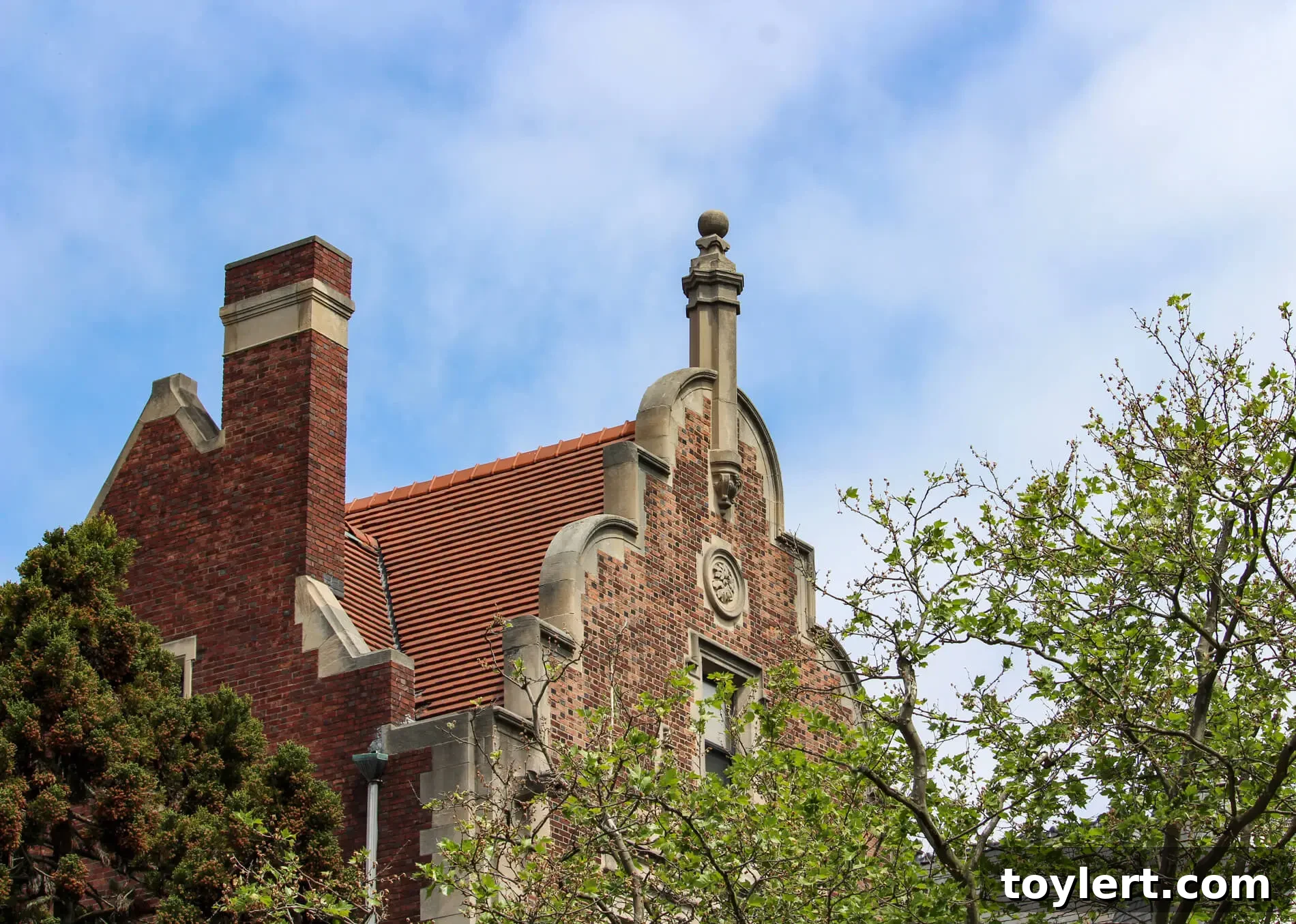
The result at 53 Prospect Park West is a formidable yet elegant edifice, characterized by its robust materials, intricate detailing, and commanding presence. The facade likely features a masterful interplay of brick, limestone, and terra cotta, meticulously crafted to create visual interest and textural richness. Grand windows, often adorned with elaborate surrounds and perhaps featuring stained glass, would have allowed natural light to flood the interiors while offering picturesque views of Prospect Park. The scale of the mansion itself speaks volumes, with multiple stories crowned by a stately roofline, possibly featuring dormers, chimneys, and decorative elements that contribute to its distinctive silhouette.
The location played a pivotal role in the design. Prospect Park West, with its direct frontage to Frederick Law Olmsted and Calvert Vaux’s urban masterpiece, was arguably the most coveted address in Brooklyn for those seeking to build monumental private residences. Architects were challenged to design homes that harmonized with the park’s natural beauty while simultaneously asserting their owners’ social standing. The homes on this block achieve this delicate balance, presenting facades that are both imposing and inviting, blending seamlessly with the surrounding landscape while standing out as architectural gems.
Inside a Gilded Age Masterpiece: Opulence and Craftsmanship
Stepping inside a Gilded Age mansion like 53 Prospect Park West would have been an experience in unparalleled luxury. The interior spaces were designed not just for living, but for grand entertaining and showcasing the owner’s wealth and taste. A magnificent foyer, often featuring marble flooring and an ornate grand staircase, would have greeted visitors, leading them into a series of exquisitely appointed public rooms. These might have included expansive drawing-rooms, formal dining halls capable of seating dozens, richly paneled libraries filled with rare books, and perhaps even a ballroom for lavish social gatherings.
Throughout the mansion, the highest quality materials and artisanal craftsmanship would have been evident. Walls might have been adorned with silk damask, hand-painted murals, or intricate wood paneling in exotic hardwoods like mahogany or quarter-sawn oak. Fireplaces, often the focal point of each room, would have featured elaborate mantels carved from marble or rare woods. Lighting fixtures, from grand chandeliers to delicate sconces, would have been custom-designed, often incorporating gas and later electric light. The use of stained glass, particularly from renowned studios such as Tiffany, was a common feature in many Gilded Age homes, casting colorful light and depicting intricate scenes that added to the interior’s artistic splendor. The mention of “Tiffany” in the original article’s URL hints at the possibility that elements from this celebrated studio might have graced William H. Childs’ magnificent home, further elevating its artistic and monetary value.
Every detail, from the intricate plasterwork on the ceilings to the custom-designed hardware on the doors, would have been meticulously planned and executed by skilled artisans. These homes were, in essence, works of art themselves, reflecting a period when craftsmanship and bespoke design were paramount, and the integration of fine art into domestic architecture was a standard practice among the wealthy elite.
From Private Residence to Public Service: The Legacy of 53 Prospect Park West
Like many grand Gilded Age mansions, 53 Prospect Park West eventually transitioned from a private family residence to serve a broader community purpose. The original article’s URL provides a crucial clue, referencing the “Society for Ethical Culture.” This suggests that at some point in its history, the William H. Childs mansion was acquired by or became home to the Brooklyn Society for Ethical Culture, an organization dedicated to fostering ethical living and social justice through education, community service, and cultural programs.
This transition is a common narrative for large, single-family homes in urban centers. Maintaining such vast estates became increasingly challenging for private individuals as times changed, domestic staff became scarcer, and property taxes rose. Institutions, non-profits, and educational bodies often found these historic buildings suitable for their needs, allowing them to be preserved and given a new lease on life. The adaptive reuse of 53 Prospect Park West by the Society for Ethical Culture would have involved careful modifications to accommodate offices, meeting rooms, and possibly communal spaces, while ideally preserving the significant architectural features of the original structure.
The presence of such an esteemed organization within its walls further underscores the building’s enduring significance. It transformed from a symbol of individual wealth into a center for community engagement, intellectual discourse, and moral development. This new chapter in its history allows the grandeur of the past to continue serving the present, offering a unique blend of historical ambiance and contemporary purpose.
53 Prospect Park West Today: A Cherished Landmark
Today, 53 Prospect Park West stands as a cherished landmark within the historic Park Slope neighborhood, a testament to Brooklyn’s rich architectural heritage and the ambition of its Gilded Age pioneers. Its preservation speaks to a broader appreciation for historical architecture and the stories embedded within these magnificent structures.
The mansion continues to be a focal point on Prospect Park West, inviting onlookers to marvel at its scale and intricate details. It serves as a living museum, reminding us of the era when cleansing powder could build empires and brilliant architects could craft dreams in brick and stone. The juxtaposition of its luxurious origins with its later role as a community hub for the Society for Ethical Culture creates a compelling narrative of adaptation and enduring relevance.
As visitors and residents stroll along Prospect Park West, they are not merely passing by buildings; they are walking through chapters of Brooklyn’s history. The twin houses on this block, and particularly 53 Prospect Park West, are more than just homes. They are custodians of stories, symbols of an extraordinary era, and enduring monuments to the visionaries and artisans who shaped the urban landscape of one of the world’s most dynamic cities. Their continued presence enhances the beauty and historical depth of Brooklyn, ensuring that the legacy of the Gilded Age continues to inspire and captivate future generations.