The Enduring Legacy: How Sacred Spaces Shaped Architectural Innovation
Throughout human history, across every culture and civilization, buildings and spaces dedicated to honoring and worshipping a Higher Power have consistently served as groundbreaking laboratories for architectural innovation. These sacred structures, often the most ambitious and enduring creations of their time, have not merely housed spiritual practices but have actively pushed the boundaries of design, engineering, and artistic expression. Indeed, much of what we recognize as foundational in Western architecture today, from its majestic forms to its intricate details, has been directly inherited or adapted from the awe-inspiring temples of the Greeks and Romans, the sophisticated mosques of ancient Islam, and the monumental domes of Constantinople.
The pursuit of the divine has consistently inspired humanity to reach for the extraordinary, translating spiritual aspirations into tangible, monumental forms. This drive has led to an unparalleled degree of creativity, problem-solving, and sheer ambition in construction. Early civilizations, in their quest to build enduring monuments to their gods or ancestral spirits, developed fundamental principles of structural integrity, material science, and aesthetic balance. These early endeavors laid the groundwork for millennia of architectural evolution, each new sacred edifice building upon the successes and lessons of its predecessors, constantly refining techniques and inventing entirely new ones.
From Ancient Marvels to Classical Grandeur: Foundations of Sacred Design
The journey of sacred architecture begins with the earliest monumental constructions. In ancient Egypt, the colossal pyramids and vast temple complexes like Karnak stand as testament to an early mastery of stone masonry, precise alignment, and monumental scale, all dedicated to their pantheon of gods and the afterlife. These structures were designed to impress, to inspire reverence, and to endure for eternity, demonstrating an early understanding of structural engineering and the symbolic power of architecture.
Following this, the Greeks perfected the classical orders—Doric, Ionic, and Corinthian—which brought unprecedented harmony, proportion, and elegance to temple design. The Parthenon, dedicated to the goddess Athena, remains a quintessential example of architectural precision, optical refinements, and an enduring aesthetic that has influenced countless Western buildings. Greek temples were not just places of worship; they were expressions of ideal beauty and mathematical perfection, embodying a philosophical approach to space and form. The Roman Empire, in turn, assimilated and expanded upon Greek principles, adding their own revolutionary innovations such as concrete, arches, and vaults. The Pantheon, a temple dedicated to all gods, exemplifies Roman ingenuity with its colossal unreinforced concrete dome, a feat of engineering that remained unsurpassed for centuries. This structure showcased how a vast, unobstructed interior space could be created, inviting worshippers into a truly immersive spiritual environment and setting a new standard for monumental enclosed spaces.
Simultaneously, in the East, the Byzantine Empire, centered in Constantinople, became a crucible of architectural innovation, particularly in dome construction. The Hagia Sophia, originally built as a cathedral, stands as a breathtaking monument to this era. Its massive central dome, supported by an ingenious system of pendentives, created a vast, ethereal interior space bathed in light, seemingly defying gravity. This innovation profoundly influenced subsequent religious architecture, bridging the gap between Roman vaulting and later Islamic and Renaissance domes. Across the burgeoning Islamic world, mosques began to emerge as vibrant centers of faith and community. Early mosque architecture, while diverse, often featured vast prayer halls, intricate geometric patterns, calligraphy, and the innovative use of domes and minarets. These structures emphasized spiritual unity and devotion, developing unique architectural elements that created serene and awe-inspiring environments for communal prayer, further enriching the global tapestry of sacred design.
The Soaring Heights of Medieval Cathedrals: A Testament to Faith and Engineering
The Middle Ages, often mistakenly characterized as a period of stagnation, were in fact a time of extraordinary architectural leaps, particularly in the realm of sacred building. During an era when the vast majority of people lived in primitive huts and shelters, and literacy was rare, the great Gothic cathedrals began to rise, defying the limitations of their time. These magnificent structures were more than just buildings; they were encyclopedias in stone and glass, telling biblical stories and theological concepts to an illiterate populace through their intricate sculpture, stained glass windows, and monumental scale.
The architects and builders of these cathedrals, often working with limited theoretical knowledge but immense practical ingenuity, figured out revolutionary engineering solutions. The invention of the flying buttress, a distinctive external support system, allowed walls to be thinned and pierced with enormous windows, freeing the interior space from heavy, load-bearing walls. This innovation, coupled with the pointed arch and ribbed vault, enabled cathedrals to achieve unprecedented height and lightness, creating truly soaring spaces that drew the eye and spirit heavenward. The interplay of light through vast, elaborate tracery windows, filled with magnificent stained glass, transformed the interiors into kaleidoscopic realms of color and narrative. Each pane told a story, depicting saints, biblical events, and symbolic motifs, educating and inspiring the faithful. The construction of these colossal edifices, often taking generations to complete, required meticulous planning, advanced scaffolding techniques, and an unprecedented level of communal effort, creating an architectural style that continues to be admired, studied, and copied today for its sheer beauty, structural daring, and spiritual resonance.
The Renaissance Rebirth: Harmony, Humanism, and Domes Reimagined
Building upon the structural innovations of the Gothic era, the Renaissance marked a “rebirth” of classical ideals, blending them with new scientific understanding and a renewed focus on humanism. Architects of this period looked back to the grandeur of Greco-Roman and Eastern dome architecture, but sought to improve upon it with a fresh perspective on symmetry, proportion, and human scale. This era saw the invention and perfection of architectural and engineering feats of immense ingenuity and beauty, often driven by the ambition to create grander, more harmonious places of worship.
Filippo Brunelleschi’s iconic dome for the Florence Cathedral stands as a testament to Renaissance innovation, solving a centuries-old engineering challenge with a revolutionary double-shell design that required no scaffolding from the ground up. This feat of engineering, based on mathematical principles and practical genius, paved the way for future dome construction. Later, Michelangelo’s design for the dome of St. Peter’s Basilica in Rome further showcased the era’s mastery, blending classical monumentality with unparalleled spatial grandeur. Renaissance sacred architecture was characterized by a clarity of form, a reliance on classical motifs like columns, pilasters, and pediments, and an emphasis on creating rational, balanced spaces that reflected both divine order and human capability. These structures were not just places of worship but also symbols of intellectual achievement and artistic excellence, profoundly influencing the trajectory of architecture for centuries to come.
Brooklyn’s Sacred Tapestry: A Modern Legacy of Faith and Form
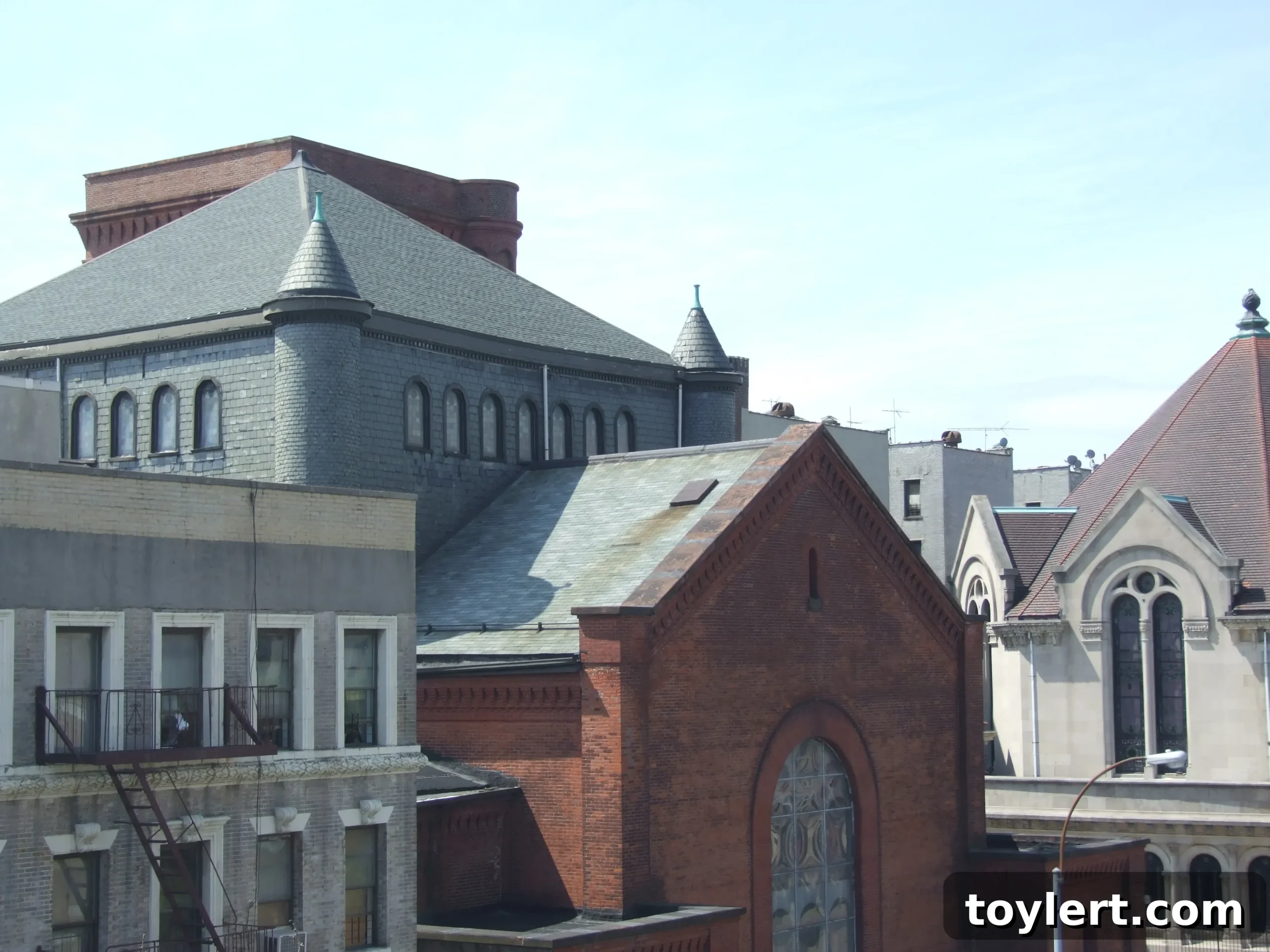
The historical trajectory of architectural innovation in sacred spaces culminates in the vibrant urban landscapes of the 19th and 20th centuries, and Brooklyn stands as a remarkable testament to this enduring legacy. By the time this bustling borough was rapidly expanding, everything was in place—the accumulated knowledge of centuries of architectural and engineering triumphs—for the construction of the diverse and magnificent churches, synagogues, and temples that grace its streets today. As Brooklyn grew into a melting pot of immigrant communities, each group brought their spiritual traditions and aspirations, leading to an explosion of religious building that reflected a rich tapestry of styles and faiths.
From the Neo-Gothic spires reaching for the heavens to the stately Romanesque Revival facades, and the elegant Neoclassical temples, Brooklyn’s sacred architecture of this period is a living museum of styles. These buildings often blended historical forms with contemporary materials and urban sensibilities. Congregations, whether of Irish Catholic, Italian Catholic, German Lutheran, Eastern European Jewish, or various Protestant denominations, invested heavily in creating places of worship that were not only functional but also powerful symbols of their identity, community, and devotion. Architects drew inspiration from the grand cathedrals of Europe, the classical temples of antiquity, and the spiritual geometries of Eastern traditions, adapting them to the urban fabric of Brooklyn. They employed sophisticated construction techniques, often incorporating new technologies like steel framing, while meticulously recreating historical details in brick, stone, and stained glass.
The spiritual architecture of 19th and 20th-century Brooklyn stands as a powerful continuation of a millennia-old tradition: using the built environment to express the profound human connection to the divine. These buildings, though rooted in historical precedents, were innovative in their own right, adapting grand visions to the constraints and opportunities of a burgeoning metropolis. They served as beacons of hope, centers of community life, and enduring landmarks that continue to shape the borough’s unique character. Brooklyn’s churches and temples are not merely historical relics; they are vibrant repositories of architectural genius, communal heritage, and spiritual devotion, reflecting humanity’s continuous quest to build spaces that transcend the ordinary and connect us to something greater than ourselves, proving that the laboratory of sacred architecture is forever at work.