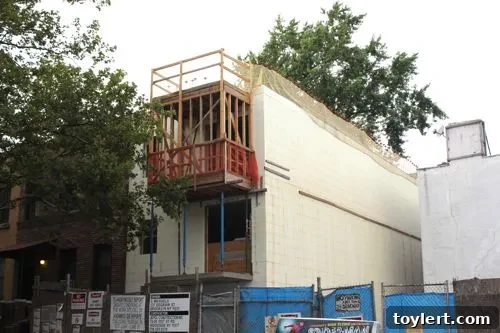
Navigating Urban Aesthetics: A Closer Look at New Development on Degraw Street, Brooklyn
Brooklyn, a borough celebrated for its rich history, vibrant culture, and distinct architectural character, is continuously evolving. Amidst its charming brownstone blocks and tree-lined streets, new developments frequently emerge, striving to meet the demands of a growing population. These projects often spark lively discussions, particularly when their design language diverges sharply from the established aesthetic. The new four-story, four-family residential building at 337 Degraw Street stands as a prime example, prompting a critical examination of how contemporary architecture integrates—or struggles to integrate—within a revered historical context.
The Initial Impression: A Conversation Starter in Brooklyn’s Urban Fabric
Upon first glance, the new construction at 337 Degraw Street immediately commands attention, not necessarily for reasons of widespread admiration. The architectural community and local residents alike often engage in spirited debate when a new structure appears to clash with its surroundings rather than complement them. While beauty truly lies in the eye of the beholder, there are often common threads that define what makes a building successful in its urban setting – elements like scale, material harmony, and respect for the existing streetscape. In the case of this particular four-story edifice, initial reactions suggest a significant departure from these commonly held ideals, leading to a palpable sense of apprehension regarding its final aesthetic.
The design, as it currently stands, raises questions about the thoughtful integration of modern structures into areas defined by their historical charm. It underscores the challenges faced by developers and architects in balancing innovation with tradition, and economic viability with aesthetic responsibility. Many observers hope that the current appearance represents an unfinished stage, anticipating that forthcoming “cosmetic additions” might significantly alter its perception and elevate its contribution to the neighborhood’s visual tapestry.
Understanding Brooklyn’s Architectural Heritage and Modern Infill Challenges
The Enduring Appeal of Brownstone Brooklyn
Brooklyn’s reputation as an architectural treasure trove is largely built upon its distinctive brownstones and other historic townhouses. These structures, predominantly built in the 19th and early 20th centuries, are characterized by their rich sandstone facades, intricate detailing, bay windows, and stoops that foster a unique street-level interaction. Neighborhoods like Carroll Gardens, Cobble Hill, and Boerum Hill—where Degraw Street is situated—are celebrated for their cohesive aesthetic, pedestrian-friendly environments, and a profound sense of place. This heritage isn’t merely decorative; it represents generations of urban planning and design that prioritized human scale, community interaction, and enduring craftsmanship.
The collective impact of these brownstone rows creates a powerful visual rhythm and a recognizable urban identity that residents and visitors cherish. Any new development, therefore, faces the inherent challenge of inserting itself into this established narrative without disrupting its flow or diminishing its charm. The expectation is often for designs that, even if contemporary, acknowledge and echo the scale, material palette, and general spirit of their neighbors.
Navigating Modern Infill: A Delicate Balance
Modern infill development in historic districts is a complex architectural undertaking. It requires more than just erecting a building; it demands a nuanced understanding of context, materiality, and community expectations. Architects and developers must grapple with:
- Scale and Massing: Ensuring the new building doesn’t overpower adjacent structures in height, width, or depth, maintaining a harmonious street profile.
- Materiality: Selecting materials that complement, rather than contrast jarringly with, the existing architectural fabric. While not necessarily demanding brownstone, materials like brick, natural stone, or thoughtfully chosen contemporary panels can achieve compatibility.
- Fenestration and Rhythm: Paying attention to window placement, size, and proportion to reflect the patterns established by historical buildings, or to introduce a new, thoughtful rhythm.
- Detailing and Craftsmanship: Incorporating elements that demonstrate attention to detail and quality, echoing the craftsmanship found in older structures, even if in a modern idiom.
- Contextual Responsiveness: Designing a facade that acknowledges and responds to its immediate neighbors and the broader streetscape, creating a sense of belonging.
When these principles are overlooked, the result can be a building that feels isolated and out of place, detracting from the overall aesthetic integrity of the neighborhood rather than enhancing it. This delicate balancing act defines much of the debate around new construction in heritage-rich urban environments.
A Closer Look at 337 Degraw Street: Dissecting the Design Concerns
While specific architectural plans and material specifications for 337 Degraw Street are not extensively detailed, the initial visual assessment from the available imagery and local sentiment points to several areas of concern that contribute to a less than optimistic outlook. The term “four-story, four-family project” suggests a significant residential presence, implying a need for careful consideration of its facade and interaction with the public realm.
Key concerns often revolve around the visual qualities that make a building either blend seamlessly or stand out awkwardly:
- Facade Treatment: Is the choice of facade material discordant? Does it appear inexpensive or unfinished? A flat, undifferentiated facade lacking texture or depth can often feel out of place among more articulated historic buildings.
- Window Design and Placement: Do the windows contribute to the building’s overall character? Are they proportionate? Modern designs sometimes feature repetitive or overly stark window patterns that fail to relate to the varied fenestration found in older buildings.
- Massing and Proportion: Does the building’s overall bulk feel too dominant for its lot size or adjacent structures? Even if within zoning limits, a building can feel overwhelming if its proportions are not carefully managed.
- Lack of Detailing: Historic brownstones are rich in cornice work, lintels, sills, and other architectural details. A new building that presents a stark, unadorned surface can appear sterile or incomplete by comparison, contributing to a sense of visual harshness.
- Roofline and Streetscape: How does the roofline interact with the neighboring buildings? Does it create an abrupt interruption or maintain a respectful visual continuity?
The initial sentiment that “we’re not optimistic” regarding its current state strongly implies a perceived lack of these integrated qualities. It suggests a design that, at least in its visible form, may prioritize functional density over aesthetic harmony, leading to a structure that struggles to find its place within the streetscape.
The Impact of Design on Urban Fabric and Community Wellbeing
The aesthetic quality of individual buildings extends far beyond their immediate footprint; it profoundly influences the entire urban fabric and, by extension, the wellbeing of the community. A street lined with thoughtfully designed buildings creates a pleasant, inviting, and walkable environment. Conversely, a street dotted with structures perceived as unattractive or incongruous can diminish the overall appeal of a neighborhood, leading to a variety of negative impacts.
From Visual Pollution to Urban Enhancement
When a building fails to meet community aesthetic expectations, it can be perceived as visual pollution. This isn’t merely a matter of taste; it affects how residents feel about their neighborhood, their sense of pride, and their desire to engage with public spaces. A well-designed building, on the other hand, contributes positively to the visual landscape, enhancing the daily experience of pedestrians and residents. It can become a source of pride, a landmark, or simply a harmonious element that quietly elevates its surroundings.
Thoughtful urban design considers the entire block, not just the individual parcel. It recognizes that each new structure is a new sentence in an ongoing narrative, and a jarring sentence can disrupt the entire story. The balance between allowing architectural innovation and maintaining community character is crucial, and debates around buildings like 337 Degraw Street highlight this tension.
Beyond Aesthetics: Property Values and Community Investment
While directly linking a single building’s design to broad property value shifts can be complex, it’s undeniable that the overall perceived quality and attractiveness of a neighborhood significantly impact real estate values and investment appeal. Areas known for their beautiful architecture and well-preserved streetscapes tend to command higher prices and attract more long-term investment. Conversely, a proliferation of poorly designed or incongruous developments could, over time, subtly erode a neighborhood’s desirability and perceived value.
Furthermore, the design of new buildings can influence community spirit and social cohesion. When residents feel their neighborhood’s character is being respected and enhanced through new construction, it fosters a stronger sense of community ownership and pride. When new designs appear insensitive or purely profit-driven, it can lead to resentment, gentrification concerns, and a feeling of disconnect between long-term residents and new developments.
The Promise of Future Amendments: Can Cosmetic Additions Turn the Tide?
The initial appraisal of 337 Degraw Street holds out a glimmer of hope: “Hopefully there’s some cosmetic additions in the pipeline that’ll turn the four-story, four-family project around at the last minute.” This suggests that the building, as seen in its current iteration, might not be its final form. Indeed, many construction projects evolve, with significant aesthetic enhancements often being among the final touches.
What kind of “cosmetic additions” could genuinely transform a building perceived as aesthetically challenging? These might include:
- Enhanced Facade Cladding: Replacing or overlaying existing materials with higher-quality, more textured, or contextually appropriate finishes. For example, adding brick slips, natural wood panels, or architectural metalwork.
- Architectural Detailing: Introducing cornices, parapet treatments, window surrounds, or decorative screens that add visual interest and break up large, flat surfaces.
- Strategic Landscaping: Incorporating greenery, planters, or climbing vines on the facade or at street level to soften harsh lines and introduce organic elements.
- Thoughtful Lighting: Implementing exterior lighting that highlights architectural features, creates warmth, and improves nighttime aesthetics and safety.
- Storefront or Entryway Redesign: If the ground floor has a commercial or public-facing component, redesigning its entrance and windows to be more inviting and integrated.
- Color Palette Adjustments: A more harmonious or sophisticated color scheme can significantly alter a building’s perceived character.
The effectiveness of such additions hinges on their scope and quality. Minor tweaks may only offer superficial improvements, whereas a comprehensive re-evaluation of the facade, especially regarding materials and detailing, holds greater potential for a genuine transformation. Developers often face pressure to minimize costs, and these aesthetic refinements can be among the first elements to be streamlined. However, the long-term value of a building, both financially and to the community, is profoundly influenced by its visual appeal.
Lessons for Future Developments in Brooklyn
The ongoing dialogue surrounding developments like 337 Degraw Street offers valuable insights for architects, developers, urban planners, and communities across Brooklyn and similar historic urban environments. It reinforces the critical need for a balanced approach to growth and preservation.
Embracing Contextual Modernism
The future of Brooklyn’s architectural landscape lies not in mere replication of historical styles, nor in a complete disregard for tradition, but in the intelligent application of “contextual modernism.” This approach advocates for contemporary designs that are innovative and forward-looking, yet deeply respectful of their surroundings. It means understanding the DNA of a neighborhood—its scale, rhythm, materials, and spirit—and translating those elements into a modern vocabulary. Such designs can introduce fresh perspectives while enhancing, rather than detracting from, the existing urban tapestry.
Sustainable Design and Lasting Aesthetics
Beyond visual appeal, modern developments must also embrace sustainability. Environmentally responsible design, energy efficiency, and durable, high-quality materials not only contribute to the planet’s health but also to the longevity and timelessness of a building’s aesthetic. Buildings designed with sustainability in mind often inherently possess qualities of good design—simplicity, efficiency, and a connection to natural elements—that can contribute positively to the urban environment.
The Role of City Planning and Community Engagement
Effective urban planning and robust zoning regulations are crucial in guiding new construction. These frameworks should encourage high-quality design, protect historic character, and provide clear guidelines for infill development. Equally important is active community engagement. When residents have a voice in the planning process, their insights and values can help shape projects that truly serve the neighborhood, fostering a stronger sense of community ownership and ensuring that new buildings contribute positively to the collective urban experience.
Conclusion: Shaping Brooklyn’s Architectural Future
The discussion around 337 Degraw Street serves as a poignant reminder of the profound responsibility that comes with shaping our urban environments. Every new building is an opportunity to enhance the beauty, functionality, and historical narrative of a place. While the initial impression of this particular development has stirred concern, it also fuels a crucial conversation about the standards we collectively uphold for architectural excellence and contextual sensitivity.
As Brooklyn continues its dynamic transformation, the hope remains for a future where innovation and tradition harmoniously coexist. Developers, architects, and city planners have the power to create structures that are not only functional and economically viable but also aesthetically pleasing, respectful of their heritage, and ultimately, beloved by the communities they serve. The pursuit of thoughtful, integrated design is not a luxury, but a necessity for building truly resilient, beautiful, and livable urban spaces for generations to come.
For more insights into local developments, you can refer to the original article: Building Rising on Smith and Degraw [Brownstoner]. Explore the location on Google Maps.