30 Henry Street: Unpacking the Approved Condo Design in Historic Brooklyn Heights
A detailed look at the journey from initial concepts to the Landmarks Preservation Commission’s green light for a significant new development.
The Unveiling of Brooklyn Heights’ New Architectural Chapter at 30 Henry Street
The Brooklyn Eagle recently brought to light the “modified” rendering for the highly anticipated condominium development slated for 30 Henry Street in the coveted Brooklyn Heights neighborhood. This revelation marks a significant milestone in a project that has drawn considerable attention from both architectural enthusiasts and devoted community members alike. Situated within one of New York City’s most storied and meticulously preserved historic districts, any new construction at this address is destined to be scrutinized, debated, and ultimately, woven into the rich tapestry of its surroundings.
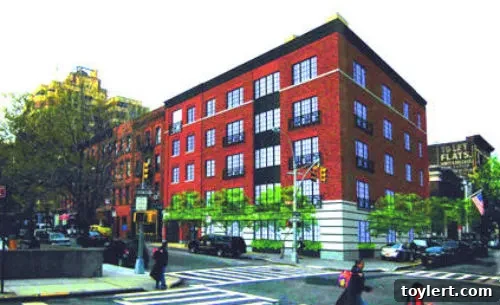
The image above showcases the design that ultimately secured approval from the Landmarks Preservation Commission (LPC) last week, signaling a crucial step forward for the developers. While the initial reports suggested minimal alterations from its predecessor, a closer examination reveals the subtle yet impactful design decisions that shaped its final acceptance. Such nuances are paramount when navigating the strict guidelines set forth by the LPC, an entity dedicated to safeguarding the architectural and cultural heritage of designated landmark areas.
The Evolution of Design: From Critique to Commission Approval
The path to approval for 30 Henry Street was far from straightforward, epitomizing the delicate balance between modern development aspirations and the imperative of historic preservation. The first iteration of the building’s design, initially presented to the LPC and the public, garnered a rather lukewarm reception. Notably, the influential Brooklyn Heights Association (BHA), a powerful voice in local preservation efforts, openly characterized the initial design as “boring.” This critique wasn’t merely an aesthetic judgment; it underscored a fundamental concern that the proposed structure failed to adequately respond to the distinctive architectural character and human scale of its historic context.
In a neighborhood celebrated for its elegant brownstones, tree-lined streets, and iconic views, the expectation for new construction is exceptionally high. Developers are often tasked with creating designs that, while contemporary in their function and amenities, simultaneously pay homage to the existing architectural language of the district. The BHA’s feedback highlighted the community’s desire for a building that not only blended in but also contributed positively to the streetscape, rather than standing as an uninspired anomaly.
Navigating the Nuances: What Changed in the Modified Design?
Upon reviewing the “modified” rendering, it becomes apparent that the changes, while perhaps subtle to the untrained eye, were significant enough to sway the Landmarks Preservation Commission. The article points out that the approved design is “almost a carbon copy” of the first, with one discernable new element being a “slightly darker color of brick on the facade.” This seemingly minor detail is, in fact, a crucial example of how fine-tuned architectural adjustments are made in landmarked areas.
The selection of facade materials, particularly brick color, texture, and bond pattern, plays a pivotal role in how a new building integrates with its historic neighbors. In Brooklyn Heights, where pre-war brickwork ranges from deep reds to varied browns, a precisely chosen brick can ensure visual harmony. A darker hue might have been selected to provide a more sophisticated contrast or to better match the weathered appearance of adjacent structures, giving the new building an immediate sense of belonging rather than stark newness. Such choices are often the result of extensive material studies, mock-ups, and discussions with preservationists.
Beyond brick color, even imperceptible shifts in window proportions, the depth of reveals, the detailing of cornices, or the articulation of the ground floor can significantly alter a building’s perceived mass and character. While the original report indicates these changes were minimal, the LPC’s decision to green-light the revised plan suggests that these tweaks, however understated, successfully addressed earlier concerns about the design’s contextual appropriateness and overall aesthetic contribution.
The Role of the Landmarks Preservation Commission (LPC)
The Landmarks Preservation Commission holds immense power and responsibility in New York City’s urban development landscape, particularly in districts like Brooklyn Heights. Established in 1965, the LPC is tasked with preserving and protecting the city’s architecturally, historically, and culturally significant buildings and sites. For any development, renovation, or alteration within a designated historic district, approval from the LPC is mandatory. This rigorous review process ensures that new construction respects the existing fabric of the neighborhood, maintaining its unique charm and historical integrity.
The Commission’s decision-making process involves a thorough examination of design proposals, often requiring multiple presentations, revisions, and public hearings. They assess various aspects, including scale, massing, materials, architectural style, and how a proposed building relates to its immediate context. The approval for 30 Henry Street signifies that the modified design met the LPC’s stringent criteria, striking an acceptable balance between contemporary architectural expression and the preservation principles that define Brooklyn Heights.
Brooklyn Heights: A Legacy of Preservation and Luxury Living
Brooklyn Heights stands as one of New York City’s most desirable and historically significant neighborhoods. Designated as the city’s first historic district in 1965, its charm lies in its impeccably preserved 19th-century townhouses, picturesque streets, and breathtaking views of the Manhattan skyline and the Brooklyn Bridge. The community’s deep-seated commitment to preservation means that new developments are not just buildings; they are expected to be thoughtful contributions that enhance, rather than detract from, the area’s established character.
Luxury condominium developments in Brooklyn Heights cater to a discerning clientele seeking a blend of historic charm, modern amenities, and unparalleled access to cultural institutions, fine dining, and expansive green spaces like the Brooklyn Bridge Park. The introduction of new residences at 30 Henry Street will undoubtedly contribute to the area’s vibrant real estate market, offering state-of-the-art living spaces within a timeless setting. The community’s active engagement, exemplified by the Brooklyn Heights Association, ensures that such developments are meticulously vetted, reflecting the residents’ profound investment in their neighborhood’s future.
Community Voice and the Future of Urban Development
The initial critique from the Brooklyn Heights Association serves as a powerful reminder of the vital role community organizations play in shaping urban development. In historic districts, residents are often the fiercest advocates for preservation, leveraging their collective voice to ensure that developers and regulatory bodies remain accountable. Their input can lead to meaningful design revisions, resulting in projects that are better integrated into their surroundings and more reflective of local values.
The approval of 30 Henry Street’s modified design represents a successful, albeit perhaps arduous, negotiation between developer interests, preservation mandates, and community expectations. It sets a precedent for how future projects within Brooklyn Heights, and indeed other historic districts, might navigate the complexities of modern construction within a protected urban fabric. As Brooklyn continues its dynamic evolution, balancing growth with preservation will remain a central challenge and a testament to its enduring appeal.