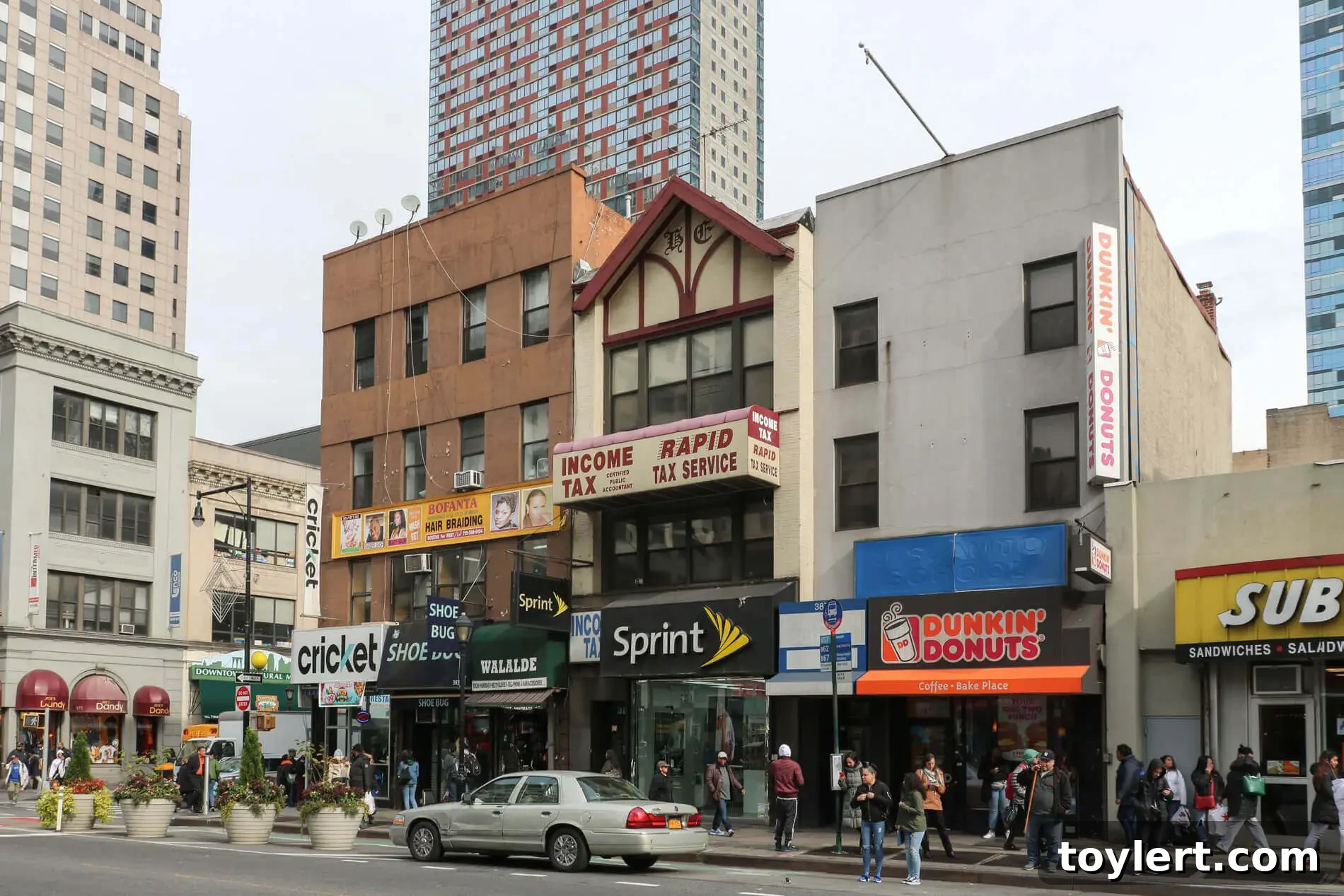
From Grand Residence to Bohemian Hub: The Tale of a Downtown Brooklyn Brownstone Turned Rathskeller
In the vibrant and ever-evolving heart of Downtown Brooklyn, where towering modern structures often dominate the skyline, whispers of the past are deeply etched into its enduring architectural gems. Among these, the story of a particular brownstone located at 385 Jay Street offers a captivating glimpse into Brooklyn’s rich and dynamic history, marked by an unexpected and intriguing transformation. This distinguished private residence, once a symbol of domesticity and prosperity, embarked on a unique journey, evolving into a lively rathskeller – a traditional German-style basement tavern. This remarkable metamorphosis not only highlights the adaptable nature of Brooklyn’s historic buildings but also reflects the profound social, cultural, and architectural shifts that shaped the borough during the late 19th and early 20th centuries.
The Enduring Legacy of Brooklyn Brownstones
To fully grasp the significance of the changes that swept through 385 Jay Street, it is essential to appreciate the profound architectural and cultural importance of the brownstone in Brooklyn’s urban landscape. Characterized by their iconic reddish-brown sandstone facades, these stately row houses became the quintessential residential structures of New York City, particularly prevalent across Brooklyn, throughout the 19th century. Primarily constructed between the 1840s and the 1890s, brownstones quickly became symbols of aspirational living, representing stability and comfort for the burgeoning middle and upper-middle classes.
Architecturally, brownstones boast distinctive features such as grand stoops that lead elegantly to the parlor floor, expansive bay windows designed to maximize natural light, intricately detailed cornices, and ornate door surrounds. Their interiors were meticulously planned for sophisticated urban living, often featuring high ceilings, generous room dimensions, and layouts that facilitated both private family life and elaborate social gatherings. Iconic Brooklyn neighborhoods like Park Slope, Fort Greene, Brooklyn Heights, and indeed, specific residential pockets within Downtown Brooklyn, owe much of their distinctive character and enduring charm to these robust structures. Their solid construction and timeless aesthetic have allowed countless brownstones to withstand the test of time, adapting gracefully to the changing needs of their inhabitants and the continuous evolution of the city itself.
Downtown Brooklyn in 1887: A Crossroads of Development
The year 1887 provides a crucial historical context for our narrative. At this point in time, Downtown Brooklyn stood as a bustling and rapidly expanding urban nucleus. Already established as a significant commercial and civic hub, particularly centered around the vibrant Fulton Street corridor, the area also retained a substantial residential presence. Jay Street, strategically positioned between the vital arteries of Willoughby and Fulton streets, perfectly exemplified this intricate blend of commercial dynamism and residential tranquility. It was a thoroughfare where elegant homes stood in close proximity to burgeoning businesses, reflecting the diverse and transitional character of the borough.
Specifically, detailed historical records from 1887 reveal that the odd-numbered side of Jay Street, nestled squarely between Willoughby and Fulton streets, was largely defined by a cohesive and impressive row of six brownstone residences. These prominent homes occupied nearly all the available lots along that particular stretch of the block, with the notable exceptions being the strategically important corner properties at Willoughby and Fulton. This residential arrangement paints a vivid picture of a street that, while intimately connected to the heart of commercial activity, still proudly maintained its identity as a desirable and dignified residential enclave. Residents would have enjoyed the unparalleled convenience of urban amenities while relishing the architectural comfort and domestic bliss offered by their brownstone homes, creating a truly unique blend of urban living.
Jay Street’s Transformation: From Residential Charm to Commercial Vibrancy
The precise location of 385 Jay Street underscores the transitional nature of Downtown Brooklyn. Willoughby Street, situated to its north, functioned as a crucial connector, providing vital links between various sections of the rapidly developing district. Fulton Street, located to the south, was already a bustling commercial thoroughfare, teeming with an array of shops, professional offices, and entertainment venues. The brownstones lining Jay Street offered a welcome and relatively serene reprieve from the commercial clamor, yet remained mere steps away from the very heart of the action. This enviable proximity made these residential structures prime candidates for eventual commercial adaptation, a common phenomenon as Brooklyn continued its relentless march towards greater densification and urban expansion.
The Intrigue of the Rathskeller: A Taste of German Tradition in Brooklyn
The transformation of a refined brownstone residence into a vibrant rathskeller is particularly fascinating and culturally significant. The term “rathskeller,” of German origin, literally translates to “council cellar” and historically referred to a restaurant or tavern traditionally situated in the basement of a city hall or municipal council building. Over time, the concept broadened to encompass any basement-level public establishment, typically characterized by a distinctive, cozy, and often rustic ambiance. These establishments were renowned for serving authentic German cuisine, a wide selection of beers, and fostering a convivial, communal atmosphere, quickly becoming beloved gathering spots for various communities, especially those with significant German immigrant populations.
Brooklyn, during the late 19th century, was home to a substantial and thriving German community, particularly concentrated in neighborhoods such as Bushwick and Williamsburg, but with a notable presence dispersed throughout the entire borough. The emergence of a rathskeller in Downtown Brooklyn strongly suggests a deliberate effort to cater to this important cultural demographic or to introduce a novel and appealing dining and social experience to a wider, diverse audience. Converting a brownstone’s basement into such a unique venue would have necessitated substantial architectural and interior design modifications, crafting a space that felt distinctly different from the stately residential floors above. Imagine dark wood paneling, robust communal tables, and perhaps even evocative murals depicting traditional German landscapes or folklore, all replacing typical domestic decor, inviting patrons into an immersive world of camaraderie and authentic fare.
Why a Brownstone Basement? The Practicality and Appeal
The strategic choice of a brownstone basement for establishing a rathskeller was driven by both practical considerations and symbolic appeal. Basements inherently offered a naturally cool and stable environment, making them ideal for the storage of beer and perishable food items. Their subterranean positioning also provided a unique sense of intimacy, privacy, and an escape from the relentless street-level hustle and bustle. For a brownstone, the conversion of its English basement or garden level presented a common and effective strategy for adapting to evolving urban needs without resorting to the complete demolition of the original structure. This adaptive reuse effectively preserved the building’s elegant and historic facade while simultaneously enabling a profitable new commercial venture below. Furthermore, the robust and sturdy construction of these 19th-century buildings lent itself exceptionally well to accommodating the increased foot traffic and vibrant, boisterous atmosphere typically associated with a popular tavern.
Architectural Adaptation and the Challenges of Preservation
The intricate process of converting a residential brownstone into a commercial establishment like a rathskeller would have presented a unique set of architectural challenges and innovative opportunities. While the exterior facade might have largely retained its original dignified character, perhaps with the discreet addition of new signage, the interior spaces would have undergone a dramatic and comprehensive redesign. Structural modifications would likely have been necessary to safely support increased occupancy loads, and entirely new ventilation, heating, and plumbing systems would have been meticulously installed to meet commercial standards. The grand stoop, a defining hallmark of brownstones, could have been thoughtfully maintained for access to the upper residential or office floors, while a separate, more direct entrance to the rathskeller might have been ingeniously created at street level or via a thoughtfully modified basement entrance.
Such significant transformations vividly highlight the concept of adaptive reuse in historic buildings, a practice that, while occasionally sparking debate among preservationists, has frequently proven indispensable for the continued survival of architectural heritage in rapidly developing urban centers. While some purists might lament the loss of original residential interiors, the strategic conversion allowed the building to remain economically viable and culturally relevant to the community, thereby preventing its potential demolition. This flexibility speaks volumes about the inherent resilience and robust design principles embedded within these 19th-century structures, demonstrating their remarkable capacity to accommodate an astonishing array of diverse functions over their extended lifespan.
The Lasting Legacy of 385 Jay Street and Downtown Brooklyn’s Future
The compelling story of the 385 Jay Street brownstone, charting its course from a cherished family home to a vibrant rathskeller, encapsulates the broader and ongoing narrative of Downtown Brooklyn itself. This dynamic district has continually reinvented its identity, transitioning from a predominantly residential and civic center to a bustling commercial, educational, and, increasingly once again, a thriving residential hub. Today, Jay Street is largely characterized by sleek modern office towers, expansive university buildings, and soaring high-rise residential complexes, which makes the continued existence of a 19th-century brownstone – especially one with such a unique and storied past – a truly remarkable anchor to the historical fabric of the neighborhood.
These fascinating stories of architectural evolution are far more than mere historical anecdotes; they are vital, tangible pieces of the complex urban mosaic. They serve as poignant reminders that buildings are not static entities but rather living testaments to human ingenuity, profound social change, and vibrant cultural exchange. The brownstone that transformed into a rathskeller on Jay Street stands as a powerful symbol of Brooklyn’s enduring capacity for reinvention while simultaneously preserving the rich echoes of its layered past. It invites us to delve deeper into the hidden histories concealed behind every facade and to profoundly appreciate the intricate and delicate dance between preservation and progress that continually defines our magnificent cities.
In conclusion, the journey of the brownstone at 385 Jay Street represents a truly captivating chapter in Brooklyn’s extensive architectural saga. It powerfully highlights not only the remarkable adaptability of these iconic structures but also the vibrant and intricate cultural interplay that has consistently shaped the identity of New York City. From the quiet elegance and domesticity of a late 19th-century residence to the convivial and welcoming atmosphere of a German-style tavern, this building’s extraordinary history offers a tangible and compelling link to a bygone era, reminding us that even amidst the most modern and rapidly developing urban settings, the past continues to tell its compelling, vital, and unforgettable tales.