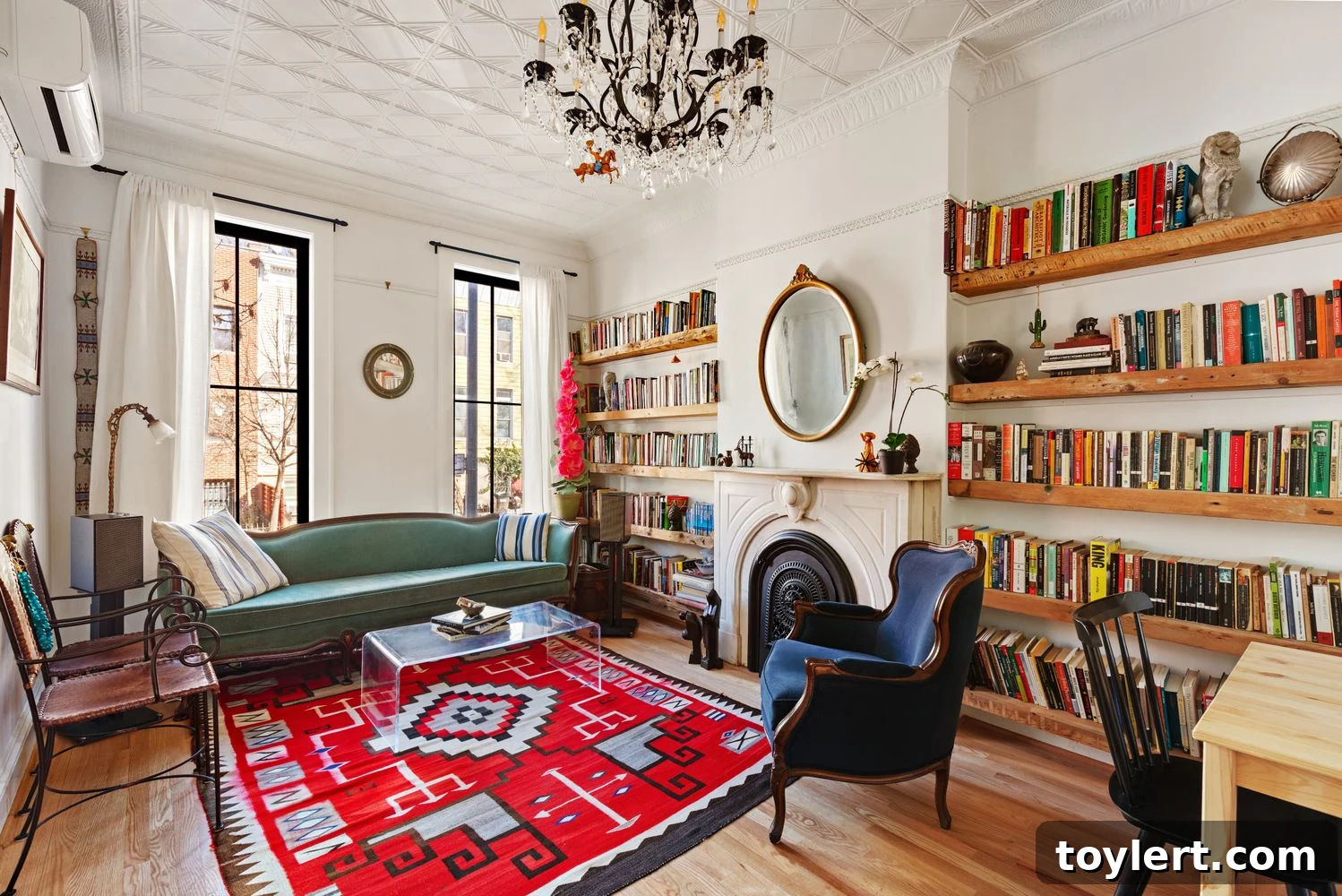
102 Hall Street: A Historic Clinton Hill Wood Frame Transformed for Modern Living
Nestled within the historically rich Wallabout section of Clinton Hill, Brooklyn, the distinguished wood-frame dwelling at 102 Hall Street presents a compelling narrative of preservation and progressive renovation. This mid-19th century residence, largely intact when it was last offered for sale in 2019, has since undergone a meticulous makeover. The extensive renovation has masterfully woven contemporary conveniences and aesthetic enhancements into its historic fabric, ensuring its legacy endures while catering to modern lifestyles. The transformation thoughtfully preserved many of its quintessential interior details, yet boldly introduced a sleek, modern staircase, significantly upgraded the culinary heart of the home with a state-of-the-art kitchen, and integrated essential modern comforts like central air conditioning, a highly coveted feature in historic Brooklyn homes.
The Exterior Evolution: Blending History with Contemporary Appeal
The exterior of this charming residence, a true gem among Clinton Hill wood frames, has also received a thoughtful refresh that respects its architectural lineage while embracing a cleaner, more contemporary aesthetic. The distinctive fish-scale shingles, which once adorned its facade, have been carefully removed, replaced with crisp, white siding that instantly brightens the property and lends it a sophisticated, timeless appeal. This change not only modernizes its curb appeal but also offers enhanced durability and easier maintenance, a practical consideration for any homeowner. Crucially, the elegant cornice, a hallmark of mid-19th century Brooklyn architecture and a testament to the home’s original craftsmanship, has been meticulously preserved. Its intricate detailing continues to crown the structure, serving as a beautiful bridge between the home’s storied past and its revitalized present. This careful balance of renovation highlights the enduring beauty of historic design principles while updating the home for the 21st century.
A Prime Location: Wallabout’s Enduring Charm and Historic Connections
The strategic positioning of 102 Hall Street contributes significantly to its allure. Tucked away on a tranquil block, it finds itself surrounded by a rich collection of early to mid-19th century homes, each telling a piece of Wallabout’s captivating history. This area, known for its deep historical roots, offers a unique blend of quiet residential streets and convenient urban access. Its proximity to the Brooklyn Navy Yard, a pivotal site in American history, offers residents a constant connection to the borough’s industrial and maritime heritage, now reimagined as a hub for innovation and creativity. Furthermore, the property boasts excellent connectivity, being just moments away from the Brooklyn-Queens Expressway (BQE), which provides seamless access to Manhattan and other parts of Brooklyn and Queens. A unique cultural landmark also lies just around the corner: the Walt Whitman House on Ryerson Street. This close association with one of America’s literary giants adds an extra layer of historical significance and intellectual intrigue to the neighborhood, inviting residents to explore the footsteps of the famous poet who once called this vibrant community home. Living at 102 Hall Street means not just owning a home, but becoming part of a rich historical tapestry.
Unearthing the Past: A Glimpse into 102 Hall Street’s History
Delving into the archival records reveals fascinating insights into the origins and evolution of 102 Hall Street. A map from 1869 provides a window into the street’s nascent years, indicating that what we now know as Hall Street was then recognized as Houston. This historical detail underscores the dynamic nature of urban planning and nomenclature in Brooklyn’s formative decades. The map also confirms the presence of a number of established houses already gracing this very block, signaling a thriving and developing community even in the mid-19th century. Further historical documentation surfaces in an intriguing sales advertisement for this very house, published in 1872, by which time the street had already been formally renamed to Hall Street. This advertisement, a rare glimpse into the real estate market of yesteryear, presented the house – described as a “two story brick basement” dwelling with “all the improvements” – as an exceptional bargain at a mere $5,000. It’s worth noting that while the current house is a wood frame, the “brick basement” likely refers to the foundation or garden level, a common construction method for wood-frame homes of the era. This attractive price point even included period luxuries such as window shades and carpets, highlighting the perceived value and amenities of the time. The architectural evolution of the exterior is further chronicled in a circa 1940 tax photo, which clearly depicts the house adorned with the charming fish-scale shingles that characterized its facade for many decades. This photograph also offers a tantalizing glimpse of its paired neighboring house, revealing an original door hood, suggesting a cohesive architectural style that once defined the entire block.
Architectural Splendor and Thoughtful Preservation
When this magnificent 16-foot-wide residence garnered attention as a Brownstoner House of the Day feature in 2019, it was celebrated for its remarkable preservation of period-appropriate architectural elements. These original features provided a profound connection to its mid-19th century origins, showcasing the exquisite craftsmanship of its era. Inside, visitors were greeted by a grand staircase, complete with its original newel post, a testament to the home’s initial design integrity and an elegant focal point. Throughout the residence, a collection of intricately carved marble mantels stood as silent witnesses to countless generations, each piece a unique work of art reflecting the refined tastes of its early inhabitants. Bedrooms revealed charming arched niches, perfect for displaying cherished heirlooms or simply adding a touch of classic architectural flair. Delicate plaster details, often found on ceilings and cornices, further enhanced the interior’s historical grandeur, speaking volumes about the decorative preferences of the period. Alongside these cherished original details, the house also featured several later design touches that had, over time, become integral to its character, such as beautiful tin ceilings. These elements, though not original to the house’s construction, added layers of charm and reflected subsequent periods of architectural style and homeowner preference. Even before the latest comprehensive renovation, the home had already seen updates to its functional spaces; the garden level kitchen and both bathrooms had previously been modernized, ensuring a baseline of contemporary comfort while preserving the home’s overarching historic appeal.
The Art of Renovation: Blending Heritage with Contemporary Comforts
The recent renovation of 102 Hall Street stands as a superb example of the thoughtful approach required when updating historic properties in a borough as architecturally significant as Brooklyn. The philosophy guiding this transformation was clearly one of respectful integration: how to introduce modern functionality and aesthetic preferences without erasing the very soul of the original structure. The decision to install a modern staircase, for instance, was not merely about updating an old fixture; it was about creating a striking contemporary focal point that complements the preserved period details, offering a visual dialogue between past and present. Similarly, the upgraded kitchen isn’t just about new appliances; it’s about crafting a highly efficient, aesthetically pleasing space that serves the demands of modern culinary practices while integrating seamlessly into the home’s historic context. The addition of air conditioning, a luxury often absent in older homes, represents a crucial enhancement to daily comfort, making the residence far more appealing in Brooklyn’s warmer months without compromising its historical integrity. This delicate balance – the strategic preservation of original architectural elements like marble mantels, plasterwork, and the exterior cornice, alongside the insertion of modern systems and finishes – is what elevates the renovation of 102 Hall Street beyond a simple remodel. It transforms it into a living testament to how historic Brooklyn homes can evolve, providing all the conveniences of contemporary life while continuing to tell their rich, compelling stories for generations to come. This approach not only preserves the architectural heritage but also enhances the market value and desirability of such unique properties in one of New York City’s most sought-after neighborhoods.
Life in Clinton Hill: A Vibrant Brooklyn Enclave
Clinton Hill remains one of Brooklyn’s most cherished and vibrant neighborhoods, a place where historic grandeur meets contemporary urban living. Its tree-lined streets are famed for their stunning array of architectural styles, from grand Italianate brownstones to charming wood-frame houses like 102 Hall Street, each contributing to a picturesque streetscape that has captivated residents for centuries. The community here is known for its strong sense of local pride and neighborly warmth, fostering an inviting atmosphere that makes it a highly desirable place to call home. Beyond its architectural beauty, Clinton Hill boasts a thriving local scene, with an eclectic mix of independent boutiques, cozy cafes, and acclaimed restaurants that cater to every taste. The neighborhood’s cultural fabric is enriched by institutions like Pratt Institute, whose influence can be felt in the artistic energy that permeates the area. Residents also enjoy abundant green spaces, including Fort Greene Park, which offers a verdant escape from city life with its playgrounds, tennis courts, and popular farmers market. Excellent public transportation options, including subway lines and bus routes, ensure seamless connectivity to Manhattan and other Brooklyn neighborhoods, making commuting and exploring the wider city incredibly convenient. All these elements combined – the stunning architecture, the tight-knit community, the vibrant cultural scene, and unparalleled convenience – underscore why homes like 102 Hall Street, with their blend of history and modern comfort, are so highly sought after in today’s competitive Brooklyn real estate market. They offer not just a place to live, but a lifestyle rich in history, culture, and urban convenience.
A Testament to Timeless Appeal and Thoughtful Renewal
In conclusion, 102 Hall Street stands as a remarkable embodiment of Clinton Hill’s enduring charm and the successful marriage of historical preservation with modern living. This mid-19th century wood-frame house, now meticulously renovated, continues to radiate its original character while providing every comfort expected in a contemporary home. From the elegant simplicity of its new white siding and preserved cornice to the sophisticated updates within, including a modern staircase, upgraded kitchen, and integrated air conditioning, every detail reflects a thoughtful approach to enhancing a historic property. Its privileged location in the Wallabout area, surrounded by fellow historic homes and significant landmarks like the Walt Whitman House, further amplifies its appeal, placing residents within a rich historical and cultural landscape. The journey of 102 Hall Street, from its early days on Houston Street to its current incarnation, serves as a compelling narrative of adaptation and enduring value. It is more than just a house; it is a cherished piece of Brooklyn’s architectural legacy, thoughtfully renewed to embark on its next chapter. For those seeking a unique blend of historical grandeur, modern convenience, and a vibrant community, 102 Hall Street represents an unparalleled opportunity to own a piece of Clinton Hill’s storied past, impeccably prepared for the future.