The Enduring Allure of Brownstones: A Deep Dive into New York City’s Iconic Homes
Brownstones, with their distinctive reddish-brown facades and stately presence, are more than just buildings; they are a quintessential symbol of New York City, embodying a rich history, architectural grandeur, and enduring desirability. Once the pinnacle of urban sophistication in the mid-19th century, these iconic residences are experiencing a significant resurgence, captivating homeowners and architecture enthusiasts alike. Their unique charm is particularly palpable in Brooklyn, where entire neighborhoods are defined by these magnificent structures, creating a timeless streetscape that continues to inspire and enchant.
What Exactly is a Brownstone? Defining an Architectural Icon
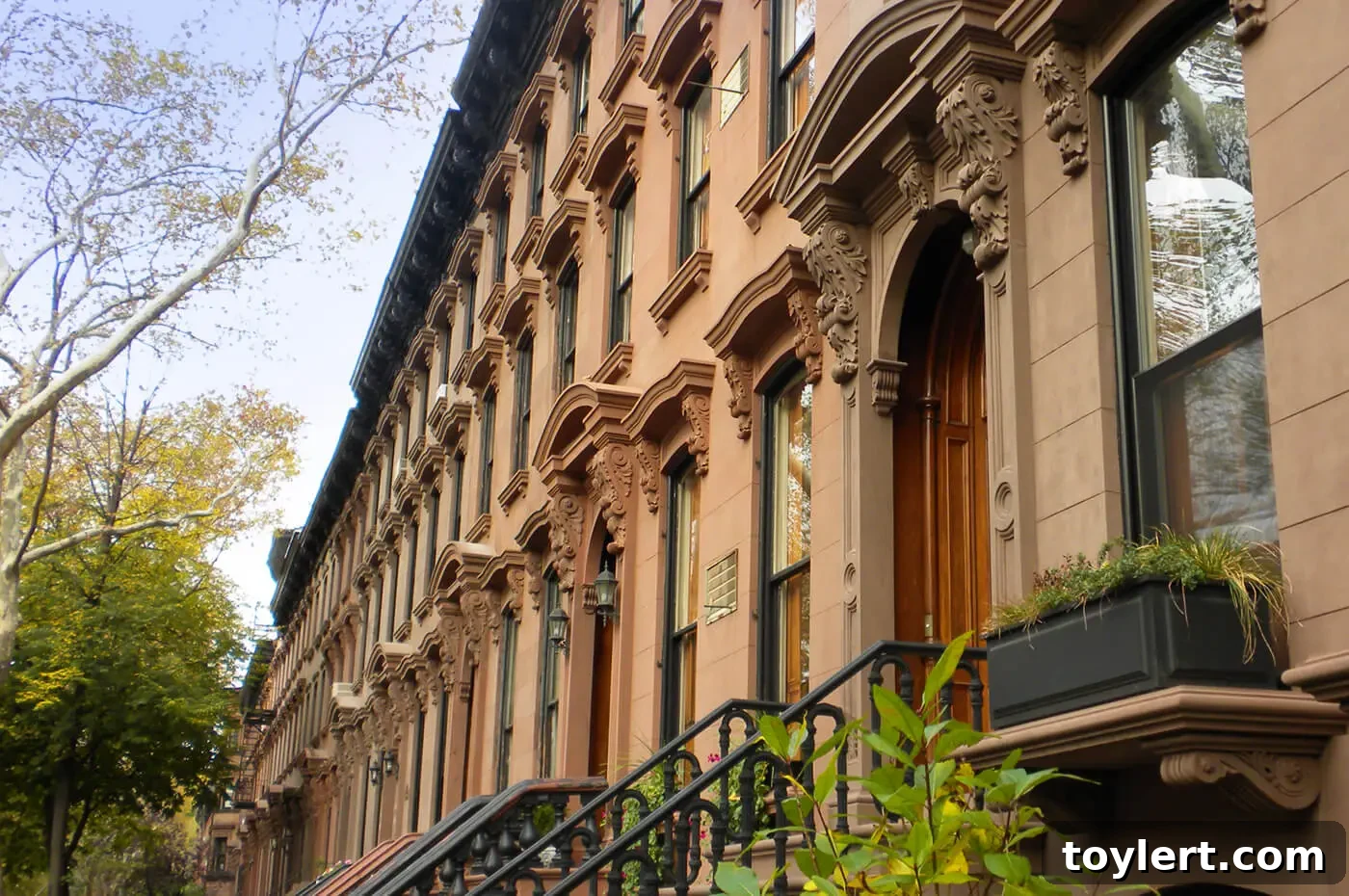
At its core, a brownstone is a type of row house, typically built from the mid-19th to early 20th centuries, distinguished primarily by its facade material: a reddish-brown sandstone. This sandstone, quarried predominantly from New Jersey and Pennsylvania, became a popular building material due to its relative affordability, ease of carving, and warm, inviting color. Beyond the material, brownstones are characterized by their multi-story design, often featuring a prominent stoop leading to the parlor level, large windows, and often intricate architectural details that reflect the prevailing styles of their construction era. These homes were designed to maximize space and convey status within the dense urban environment, offering a blend of privacy and community that remains highly sought after today.
A Journey Through Architectural Styles: The Brownstone’s Evolution
While the term “brownstone” refers to the material, the homes themselves adopted various architectural styles popular during their construction periods. The most renowned and arguably the quintessential brownstone style is the Italianate, a style that emerged in the United States in the 1840s and remained dominant through the 1870s. Its elaborate carved ornament, robust cornices, distinctive hooded windows, and elegant proportions were deliberately designed to project an image of prosperity and social standing. However, brownstones also showcase a rich tapestry of other architectural influences:
The Grandeur of Italianate Brownstones
The Italianate style, inspired by 16th-century Italian Renaissance villas, offered a sophisticated aesthetic that perfectly suited the aspirations of the burgeoning American middle and upper classes. These brownstones are often recognizable by their low-pitched roofs with wide overhanging eaves supported by decorative brackets, tall, narrow windows (often arched or topped with intricate stone hoods), and an imposing stoop leading to the main entrance. The facades are frequently adorned with elaborate cornices, heavy doorframes, and decorative ironwork, all contributing to an air of gravitas and refined elegance. Inside, Italianate brownstones often boast high ceilings, grand staircases, and spacious parlors designed for entertaining, making them ideal settings for the social life of the 19th century.
Beyond Italianate: Other Notable Brownstone Styles
As architectural tastes evolved, so too did the appearance of brownstones. While Italianate dominated, other styles left their indelible mark:
- Neo-Grec: Emerging in the late 1860s and popular into the 1880s, Neo-Grec brownstones represent a more restrained and linear interpretation of classical forms. They feature flatter facades, angular incised decoration rather than projecting carvings, and often more geometric patterns. The ornamentation tends to be less exuberant than Italianate, focusing on crisp lines and precise detailing, often around windows and doorways.
- Romanesque Revival: Popular from the 1870s through the 1890s, Romanesque Revival brownstones are characterized by their heavy, robust masonry, rounded arches (especially over windows and doors), and often rough-hewn, textured stone. Inspired by medieval European architecture, these homes exude a sense of strength and solidity, often featuring turrets, towers, and decorative terra cotta or stone carvings that add to their imposing presence.
- Renaissance Revival: Gaining popularity in the late 19th and early 20th centuries, Renaissance Revival brownstones drew inspiration from classical Roman and Greek architecture, as well as the Italian Renaissance. These homes typically feature more ordered and symmetrical facades, classical columns or pilasters, balustrades, and often smoother stone finishes. They project an air of formal dignity and sophisticated classicism, often appearing grander and more monumental.
- Queen Anne: While less common for pure brownstone facades, some late 19th-century brownstones incorporated elements of the Queen Anne style, known for its picturesque asymmetry, varied textures, turrets, bay windows, and decorative spindlework. These brownstones often combine brownstone with other materials like brick or terra cotta to achieve the characteristic eclectic look of Queen Anne architecture.
The Golden Age: Brownstones as Symbols of 19th-Century Prosperity
The mid-19th century marked the zenith of brownstone construction, particularly in rapidly expanding urban centers like New York City. As the city grew and its population swelled, the demand for elegant, well-built housing for the burgeoning middle and upper classes skyrocketed. Brownstones provided the perfect solution: they were relatively quick to construct in rows, offered spacious interiors, and their dignified facades immediately conveyed a sense of stability and success. Owning a brownstone became a clear indicator of one’s prosperity and social position, offering privacy and prestige in a bustling metropolis. Neighborhoods like Brooklyn Heights, Park Slope, and Greenwich Village rapidly filled with these homes, establishing the iconic urban fabric that defines them to this day. They were more than just residences; they were canvases for architectural expression and monuments to a thriving era.
Beyond the Facade: The Enduring Charm of Brownstone Interiors
The appeal of brownstones extends far beyond their impressive exteriors. Step inside, and you’re often greeted by a wealth of period details and a spacious layout that modern homes struggle to replicate. Typically, brownstones feature high ceilings, original hardwood floors, ornate plasterwork, intricate fireplace mantels, and grand staircases that wind through multiple levels. The traditional layout often includes a parlor floor (the main entertaining space) with expansive living and dining rooms, a garden level that might house a kitchen and family room opening onto a private backyard, and upper floors dedicated to bedrooms and private quarters. These homes offer a sense of scale and craftsmanship that speaks to a bygone era, providing a unique backdrop for contemporary living. The interplay of natural light through large windows further enhances their inherent warmth and character.
The Brownstone Revival: Blending History with Modern Living
After a period of neglect in the mid-20th century, brownstones have experienced a dramatic revival, reclaiming their status as some of the most coveted properties in New York City. This resurgence began in earnest in the latter half of the 20th century, driven by a renewed appreciation for historic architecture, spacious living, and the desire for community within urban environments. Today, brownstones are highly desirable, not just for their historical significance but also for their adaptable layouts that lend themselves beautifully to modern renovations. Homeowners are keen to preserve original details while integrating contemporary amenities, creating luxurious living spaces that celebrate both the past and the present. This blend of old-world charm and modern convenience makes brownstones a powerful draw for those seeking a unique urban lifestyle and a sound investment.
Brownstone Brooklyn: The Epicenter of Enduring Charm
While brownstones can be found in various parts of New York City, nowhere are they as iconic and prevalent as in Brooklyn. Neighborhoods like Park Slope, Brooklyn Heights, Fort Greene, Cobble Hill, Carroll Gardens, and Bed-Stuy are synonymous with brownstone living. These areas boast tree-lined streets adorned with unbroken rows of these magnificent homes, creating an architectural harmony that is globally recognized. Brownstone Brooklyn offers a unique blend of historical charm, vibrant community life, and access to green spaces, making it incredibly attractive to families and individuals alike. The cultural identity of these neighborhoods is inextricably linked to their brownstone heritage, fostering a strong sense of place and belonging that is rare in a fast-paced city. Walking through these streets is like stepping back in time, yet with all the conveniences and dynamism of contemporary urban life.
Preservation and Modernization: The Art of Maintaining a Legacy
Owning a brownstone comes with both immense rewards and unique responsibilities. Preservation efforts are crucial to maintaining the architectural integrity of these historic buildings. Many brownstone owners embark on careful restoration projects, meticulously repairing or replicating original details, from intricate cornices and stoops to interior moldings and fireplaces. Simultaneously, modernization is essential for comfortable 21st-century living. This often involves updating plumbing, electrical systems, and HVAC, as well as creating contemporary kitchens and bathrooms, all while respecting the building’s historical character. The challenge lies in striking a delicate balance between preserving the past and adapting for the future, ensuring these architectural treasures continue to stand proudly for generations to come. This careful stewardship contributes significantly to their ongoing value and appeal.
Living the Brownstone Dream: An Unmatched Urban Experience
The brownstone dream represents more than just owning a piece of real estate; it signifies a connection to history, an appreciation for architectural beauty, and a commitment to a distinctive urban lifestyle. These homes offer a rare combination of grandeur, comfort, and character, standing as testament to New York City’s enduring architectural legacy. From their elegant facades to their spacious, detail-rich interiors, brownstones continue to captivate and inspire, offering an unparalleled living experience that seamlessly blends the charm of yesteryear with the dynamism of modern city life. Their timeless appeal ensures they will remain highly sought-after icons of urban living for many years to come.