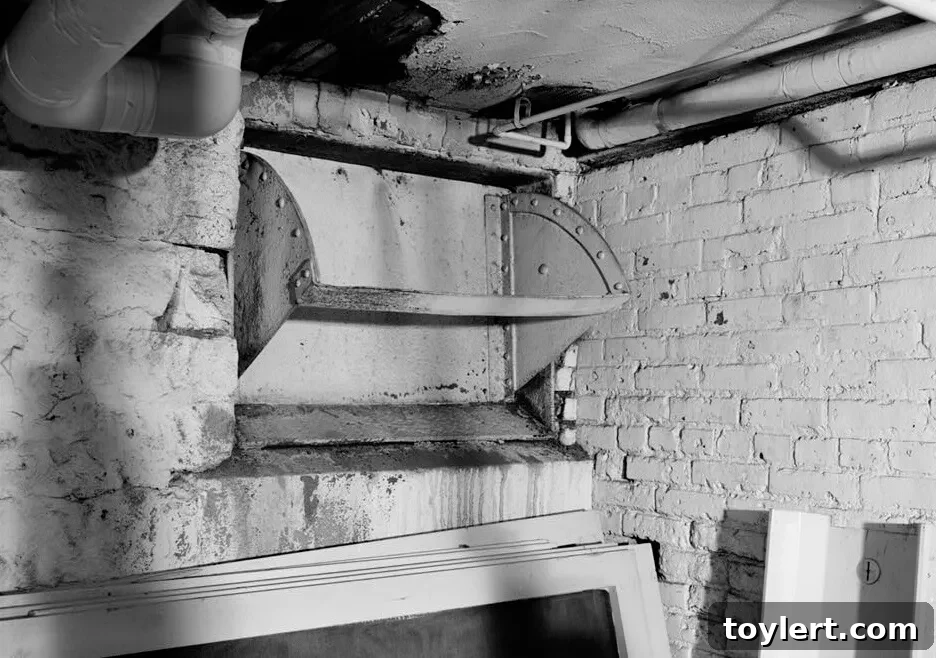
Sealing Your Old Coal Chute: A Comprehensive Guide to Water Management and Cellar Access
For many owners of older homes, particularly brownstones or properties built in the early 20th century, the presence of a relic from a bygone era often sparks both curiosity and consternation: the coal chute. Once a vital entryway for delivering fuel to heat homes, these openings in the foundation now frequently present a unique set of challenges. One common and pressing issue is water infiltration, transforming a historical feature into a potential liability for homeowners. If you’re grappling with a damp cellar or persistent moisture problems, the old coal chute is often a prime suspect, creating a direct path for rainwater and groundwater to enter your basement.
The dilemma faced by many homeowners, including our reader, is how best to address this antiquated access point. The core question revolves around a choice between two primary solutions: should the coal chute be permanently sealed, creating an impermeable barrier against the elements, or should it be repurposed with a modern, waterproof hatch that preserves a degree of access to the cellar? This decision isn’t merely about blocking a hole; it involves weighing functionality, long-term costs, potential future needs, and, most importantly, effective water management for the health and longevity of your home.
The Enduring Challenge of Old Coal Chutes in Modern Homes
Originally designed for the efficient delivery of coal, these foundational openings served their purpose admirably for decades. However, with the widespread shift away from coal as a primary heating source, many of these chutes were either crudely boarded up, loosely covered, or simply left neglected. Over time, the materials around these openings — often mortar, brick, or stone — can deteriorate, leading to cracks, gaps, and an inevitable pathway for moisture. Beyond just water, these compromised entry points can also lead to significant energy loss, allowing drafts into your basement, and provide convenient access for pests and rodents seeking shelter.
Addressing an old coal chute is not just about aesthetics; it’s a critical step in overall basement waterproofing and maintaining the structural integrity of your foundation. A persistent water issue can lead to serious problems like mold growth, wood rot, damage to stored items, and even foundational instability if left unaddressed. Therefore, a thoughtful approach to sealing or securing this opening is paramount for any homeowner looking to protect their property investment.
Understanding the Core Dilemma: Seal Permanently vs. Maintain Access
Homeowners typically find themselves at a crossroads with their old coal chute: achieve maximum protection by sealing it completely, or preserve the convenience of an additional access point. Each choice comes with its own set of advantages and disadvantages that warrant careful consideration. The right decision depends heavily on individual circumstances, including the current condition of the chute, the intended use of the cellar, your budget, and future aspirations for your property.
Option 1: Permanently Sealing the Coal Chute Opening
Choosing to permanently seal your coal chute is often seen as the most straightforward and definitive solution for combating water infiltration. This approach eliminates the opening entirely, integrating it seamlessly with the rest of your foundation and providing a robust barrier against external elements. When executed correctly, permanent sealing can offer numerous long-term benefits for your property.
Benefits of Permanent Sealing:
- Eliminates Water Infiltration: This is arguably the most significant advantage. A properly sealed coal chute can completely block a common entry point for rainwater, groundwater, and surface runoff, drastically reducing or eliminating dampness and flooding in your cellar. It provides peace of mind, knowing that a vulnerable spot has been fortified against the elements.
- Enhances Energy Efficiency: An unsealed or poorly sealed coal chute acts as a significant thermal bridge, allowing cold air to enter in winter and conditioned air to escape in summer. Permanent sealing, especially when combined with proper insulation, can dramatically improve your home’s energy efficiency, leading to lower heating and cooling bills.
- Deters Pests and Rodents: Openings in your foundation are clear invitations for rodents, insects, and other unwanted pests to enter your home. Sealing the chute permanently removes this access point, contributing to a healthier and more hygienic living environment by cutting off their pathway indoors.
- Improves Exterior Aesthetics: An old, rusted, or dilapidated coal chute cover can significantly detract from your home’s curb appeal. Permanently sealing and finishing the area with matching masonry, stucco, or siding can vastly improve the exterior appearance, blending it seamlessly with your home’s foundation.
- Reduces Maintenance: Once properly sealed with durable, waterproof materials, the area requires minimal to no ongoing maintenance, unlike an access hatch that might need periodic inspection, painting, lubrication, or seal replacement.
Drawbacks of Permanent Sealing:
- Loss of Cellar Access: The most obvious disadvantage is the permanent loss of an exterior access point to your cellar. While not always used for daily entry, this opening could potentially be useful for moving large items (e.g., furnaces, water heaters), future utility installations (e.g., new sewer lines, gas lines, HVAC equipment), or even as an emergency access point in some scenarios.
- Potential for Future Regret: Once sealed, reversing the decision is a costly, disruptive, and labor-intensive process. Homeowners might later find themselves needing to create a new opening if unforeseen circumstances arise, such as a major appliance replacement that won’t fit through interior doorways or if basement renovations require exterior material delivery.
- Irreversible Decision: This is a decision with long-term implications. It’s crucial to thoroughly consider all potential future needs for cellar access before committing to a permanent seal, as undoing the work is not a simple task.
When considering permanent sealing, it’s vital to use appropriate materials and techniques for a lasting and watertight solution. This often involves thoroughly cleaning the opening, removing any damaged or loose masonry, installing a robust concrete or cinder block infill, and applying professional-grade waterproofing membranes or sealants both on the interior and exterior of the new wall. Proper exterior drainage around the sealed area is also crucial to divert water away from the foundation and prevent hydrostatic pressure buildup.
Option 2: Installing a Waterproof Access Hatch
For homeowners who value flexibility and potential future utility, installing a waterproof access hatch presents a compelling alternative to permanent sealing. This option effectively addresses water infiltration while preserving a valuable, albeit often overlooked, entryway to the cellar. Modern access hatches are designed to be robust, secure, and highly resistant to the elements, providing a sophisticated solution that marries historical context with contemporary needs.
Benefits of an Access Hatch:
- Preserves Valuable Cellar Access: This is the primary benefit. An access hatch ensures that you can still move large items into or out of your basement, whether it’s for storage, appliance installation, or even as an emergency exit point in certain situations. This flexibility can be invaluable down the line, avoiding costly internal demolitions.
- Versatility for Future Use: Beyond mere access, a hatch can facilitate deliveries of building materials for basement renovations, allow for easier maintenance of exterior-facing cellar mechanicals, or even serve as a designated entry point for contractors working on specific basement projects. As homes evolve, this versatility can prove highly advantageous.
- Enhanced Property Value: In some markets, particularly for older homes or brownstones, the retention of original features or thoughtfully modernized, functional elements can add to property value. A well-installed, high-quality access hatch demonstrates a homeowner’s commitment to maintaining historical integrity while upgrading functionality and convenience.
- Improved Ventilation (if designed): While not all hatches are designed for ventilation, some models can incorporate features that allow for controlled airflow, which can be beneficial for reducing humidity and improving air quality in the cellar, provided it’s properly secured against pests and water.
Drawbacks of an Access Hatch:
- Higher Initial Cost: Installing a custom-built or high-quality pre-fabricated access hatch typically involves a greater upfront investment compared to simply sealing the opening with masonry and concrete. The cost includes not only the hatch itself but also professional installation to ensure watertight integrity, flashing, and proper sealing.
- Ongoing Maintenance Requirements: Depending on the material (e.g., painted steel, wood), an access hatch may require periodic maintenance such as painting, lubrication of hinges, inspection of seals, or clearing of any debris from its drainage channels to ensure it remains waterproof and fully functional over time.
- Potential for Leakage (if not installed correctly): While designed to be waterproof, an improperly installed hatch, or one with deteriorated seals, can still become a point of water entry. Precise flashing, durable caulking, and proper grading around the hatch are absolutely critical for its long-term effectiveness in preventing leaks.
- Security Concerns: An exterior access point, even with a robust hatch, can theoretically pose a security risk if not adequately secured with strong, tamper-proof locks and hardware. Selecting a high-security option with concealed hinges and robust locking mechanisms is paramount for peace of mind.
When opting for an access hatch, consider durable materials like heavy-gauge steel, aluminum, or composite materials that are highly resistant to rust, corrosion, and weathering. The design should include an overlapping frame, robust gasketing for a watertight seal, and an integrated drainage system to channel water away effectively. Professional installation is highly recommended to ensure the hatch is perfectly watertight, structurally sound, securely anchored into the foundation, and provides a reliable barrier against both water and potential intruders.
Critical Considerations Before Making Your Decision
The choice between permanently sealing a coal chute and installing an access hatch is significant and should not be rushed. Several factors warrant careful consideration to ensure the chosen solution aligns with your home’s specific needs, your budget, and your long-term plans.
- Local Building Codes and Permits: Before undertaking any structural modifications, always consult your local municipality’s building department. Some areas may have specific requirements for altering foundation openings, especially if it involves exterior structural work, changes to egress, or impacts historical preservation guidelines. Obtain necessary permits to avoid future legal complications.
- Your Cellar’s Future Use: How do you envision using your cellar in the future? Is it purely for storage, or do you plan to finish it into a living space, a workshop, a laundry room, or a mechanical room? If you anticipate needing to move large equipment (furnace, water heater, boiler, appliances) or furniture, maintaining an exterior access point might be invaluable.
- Budget and Long-Term Costs: While permanent sealing might have a lower initial cost, consider the potential future expenses if you later regret the loss of access and need to create a new opening. Conversely, a high-quality access hatch has a higher upfront cost but could save money on future access needs and add significant convenience. Factor in both initial expenses and any potential ongoing maintenance costs for a hatch.
- Professional Consultation: For complex issues like persistent water infiltration and structural modifications, it is highly recommended to consult with a qualified waterproofing specialist, a structural engineer, or an experienced general contractor specializing in older homes. They can accurately assess the root cause of your water problems, recommend the most effective and durable solutions, and provide detailed estimates for both options.
- Exterior Drainage and Landscaping: Regardless of whether you seal the chute or install a hatch, addressing exterior drainage around the foundation is paramount for comprehensive water management. Ensure that surrounding landscaping slopes away from the house, gutters are clean and properly extended, and downspouts discharge rainwater far from the foundation. Effective surface water management is often the first line of defense against basement dampness.
- Energy Efficiency Implications: Both options offer significant improvements over an open or poorly sealed chute. However, ensure that whichever solution you choose incorporates adequate insulation to prevent thermal bridging and improve your home’s overall energy performance, contributing to a more comfortable interior climate.
- Pest and Rodent Control: An adequately sealed opening, whether permanent or via a robust, tightly fitted hatch, will significantly reduce the entry points for pests and rodents into your home. This contributes to a healthier, more hygienic basement environment.
- Aesthetics and Curb Appeal: Consider how the chosen solution will impact the exterior appearance of your home. A neatly finished sealed wall, expertly matched to your foundation, or an attractive, well-integrated access hatch can significantly enhance your home’s curb appeal and overall presentation.
Step-by-Step Approach to Addressing Your Coal Chute
Once you’ve weighed the pros and cons and made an informed decision, approaching the project systematically will ensure its success, durability, and effectiveness in solving your water problems.
- Comprehensive Assessment: Thoroughly inspect the existing coal chute opening, the surrounding foundation, and the extent of any existing water damage or moisture issues inside the cellar. Identify potential sources of water infiltration beyond just the chute itself, such as cracks in the foundation, leaky windows, or inadequate exterior grading.
- Thorough Cleaning and Preparation: Remove all debris, loose mortar, rust, and any deteriorated materials from the coal chute opening. Clean the area meticulously to ensure proper adhesion for any new materials, sealants, or the secure installation of a new hatch. Address any existing mold or mildew.
- Choosing the Right Materials and Methods: Select high-quality, durable, and waterproof materials suitable for exterior use and foundation work. Whether it’s specialized concrete mixes, robust masonry, advanced waterproofing membranes, or a heavy-duty, weather-resistant access hatch, material quality is a critical factor for longevity and performance.
- Professional Installation or DIY with Caution: For complex waterproofing and ensuring structural integrity, professional installation by experienced contractors is strongly advised. If you possess significant DIY experience in masonry, waterproofing, and construction, and are confident in your abilities, proceed with extreme caution, adhering strictly to industry best practices and safety guidelines for foundation work.
- Ongoing Monitoring and Maintenance: After installation, periodically inspect the newly sealed area or access hatch for any signs of water intrusion, cracks, deterioration of seals, or operational issues. For hatches, ensure hinges are lubricated, seals are intact, and any drainage channels are clear of debris. Early detection of minor issues can prevent larger, more costly problems down the line.
Conclusion: Making an Informed Decision for Your Home’s Future
Addressing an old coal chute is more than just a simple home repair; it’s a strategic investment in the long-term health, safety, and energy efficiency of your property. The decision to permanently seal the opening or install a modern, waterproof access hatch hinges on a careful evaluation of your specific needs, budget, and future plans for your cellar and home as a whole. While permanent sealing offers a definitive solution to water entry, pest control, and energy loss, it comes at the cost of irreversible access and potential future limitations. Conversely, a high-quality access hatch provides invaluable flexibility, utility, and convenience, albeit with a higher initial investment and some ongoing maintenance requirements.
By thoughtfully considering all critical factors – from local building regulations and your cellar’s future use to exterior drainage, energy efficiency, and overall aesthetics – and ideally consulting with experienced waterproofing professionals and contractors, you can make an informed choice that not only solves your immediate water problems but also enhances your home for years to come. Your home’s foundation is its bedrock; ensuring its integrity, dryness, and proper functionality is a paramount responsibility for every homeowner. Whichever path you choose, prioritizing a robust, watertight, and durable solution will protect your investment and provide a drier, healthier, and more comfortable living environment for you and your family.