Discovering the Enduring Charm of 11-13 Stuyvesant Avenue: A Brooklyn Architectural Treasure
Brooklyn, one building at a time. Few urban landscapes tell a story as rich and compelling as Brooklyn, where every street, every block, and indeed, every building holds a piece of history. Among its countless architectural gems, the row houses stand as enduring symbols of the borough’s development and its unique character. Today, our journey takes us to the heart of Stuyvesant Heights, a vibrant sub-neighborhood within Bedford-Stuyvesant, to explore the captivating beauty and historical significance of 11-13 Stuyvesant Avenue. These particular row houses are not just structures of brick and brownstone; they are custodians of time, reflecting the craftsmanship and aspirations of a bygone era while continuing to thrive in the modern urban tapestry.
Stuyvesant Heights is renowned for its remarkably preserved streetscapes, characterized by long stretches of elegant brownstones and brick row houses that date primarily from the late 19th and early 20th centuries. This area developed rapidly following the expansion of public transportation and a growing desire among the burgeoning middle class to escape the increasingly crowded Manhattan. Builders and developers, often responding to economic surges and architectural trends, constructed thousands of these homes, creating cohesive and aesthetically pleasing residential districts. The row house typology itself, a direct descendent of European urban housing, proved incredibly efficient for developing densely populated yet desirable neighborhoods. Its inherent design allowed for shared walls, maximizing land use and creating a strong sense of community along the sidewalks.
The Architectural Story of 11-13 Stuyvesant Avenue
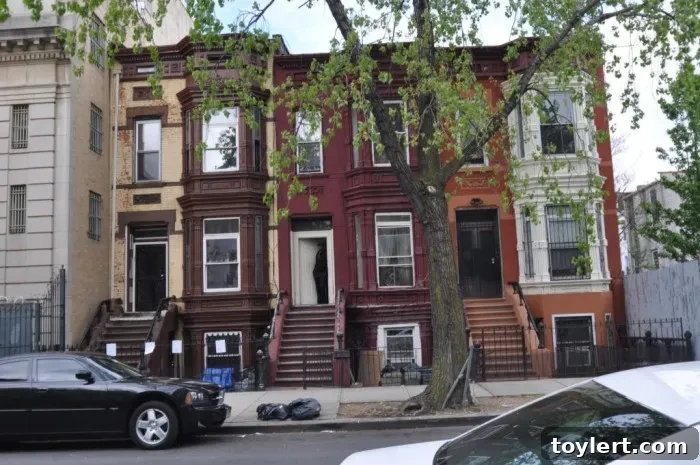
The row houses at 11-13 Stuyvesant Avenue exemplify the meticulous design and robust construction prevalent during Brooklyn’s golden age of residential architecture. While specific historical records might detail their exact construction dates and architects, their visual cues strongly suggest a period of vibrant architectural experimentation, likely late 1800s to early 1900s. These homes are typically characterized by their distinctive facades, often crafted from a combination of reddish-brown brick and intricately carved brownstone details. The choice of materials was not merely aesthetic; brownstone, easily quarried in New Jersey, became a signature element, lending a uniform yet stately appearance to whole blocks.
A closer look at these structures reveals several key architectural features that contribute to their timeless appeal and historical value. Often, one can observe elements borrowed from popular Victorian-era styles such as the Queen Anne or Romanesque Revival. Queen Anne influences might manifest in varied wall textures, decorative terra cotta panels, turrets, or bay windows that project outward, breaking the flat plane of the facade to allow more light and provide varied interior spaces. Romanesque Revival, on the other hand, often features robust, rusticated stone bases, round-arched windows and doorways, and heavy, imposing forms, conveying a sense of solidity and grandeur. It’s not uncommon to see a blend of these styles, where builders would incorporate popular elements to appeal to the tastes of the time.
Key Architectural Details to Admire:
- The Stoop: A defining feature of Brooklyn row houses, the grand stoop at 11-13 Stuyvesant Avenue serves not only as an entrance but also as a social space, elevating the main living floor above street level for privacy and status. These stoops are often adorned with ornate iron railings, a testament to the metalwork craftsmanship of the era.
- Facade Materials and Ornamentation: The rich texture of the brickwork, often laid in intricate patterns, is frequently contrasted with the smooth, carved details of brownstone or terra cotta. Look for decorative lintels above windows, carved keystones, and decorative panels that add visual interest and sophistication. These embellishments often feature floral motifs, geometric patterns, or classical references.
- Window Design: The windows themselves are integral to the facade’s composition. Bay windows, common in row houses, often span multiple stories, providing panoramic views of the street and enhancing interior light. Original sash windows, with their delicate muntins, further reflect the period’s design sensibilities.
- Cornice and Roofline: The cornice, the decorative molding that crowns the building, is a significant element. Often made of pressed metal or wood, it features intricate patterns, brackets, and overhangs that add to the building’s overall height and elegance. The rooflines, while often flat or gently sloped, would have been carefully designed to manage rainwater and maintain a cohesive streetscape.
Beyond their outward appearance, these row houses were designed with practicality and comfort in mind for the urban family. Interiors typically boast high ceilings, intricate plasterwork, hardwood floors, and fireplaces in most principal rooms. The layout usually consists of a parlor floor (the main entertaining space), a garden level (often housing the kitchen and dining area, with direct access to a rear yard), and two or more upper floors for bedrooms. This vertical living arrangement was efficient and offered distinct zones for daily activities, a design principle that remains highly desirable today.
The Enduring Significance in a Modern Brooklyn
The row houses of Stuyvesant Avenue, including numbers 11-13, are more than just homes; they are vital components of Brooklyn’s historical narrative and cultural identity. They represent a significant chapter in American urban development, showcasing how communities were built and how architectural styles evolved. Their presence today serves as a physical link to the past, reminding residents and visitors alike of the borough’s rich heritage.
In an age where new construction often prioritizes efficiency and modern aesthetics, the preservation of these historic row houses is paramount. Organizations and local communities in Stuyvesant Heights and beyond work tirelessly to maintain the integrity of these structures, advocating for sensible renovation practices that respect original details while allowing for contemporary living. The careful restoration of facades, the retention of original windows, and the thoughtful modernization of interiors contribute to keeping Brooklyn’s architectural legacy alive and vibrant.
Living in a Brooklyn row house today offers a unique blend of historical charm and urban convenience. While these homes present specific challenges – such as the upkeep of aged materials and the adherence to historical district guidelines – they also provide immense rewards. Residents benefit from spacious layouts, unique architectural details, and the undeniable prestige of owning a piece of Brooklyn’s storied past. Moreover, the tightly knit communities formed along these tree-lined streets foster a strong sense of belonging, a quality often sought but rarely found in rapidly developing cities.
These homes are highly sought after in the real estate market, not just for their aesthetic appeal but for their intrinsic value as pieces of history. They represent a sustainable form of urban housing, built to last for generations, and adaptable to changing needs. The continuous demand underscores their timeless appeal and the enduring desire for homes that possess character, history, and a connection to a vibrant community.
A Testament to Time and Craftsmanship
As we conclude our spotlight on 11-13 Stuyvesant Avenue, it’s clear that these row houses are more than just addresses on a map. They are a testament to the vision of their original builders, the skills of the craftsmen who meticulously constructed them, and the generations of residents who have called them home. They stand proudly, weathered by time yet resilient, embodying the spirit of Stuyvesant Heights and the broader Brooklyn ethos of preserving beauty and history while embracing progress.
Each brick, each carved detail, and each grand stoop tells a part of Brooklyn’s story. By appreciating and preserving these magnificent structures, we ensure that the architectural heritage of Brooklyn continues to inspire and inform future generations, reinforcing the idea that true beauty lies not just in the new, but in the enduring charm of the past, thoughtfully woven into the fabric of the present.