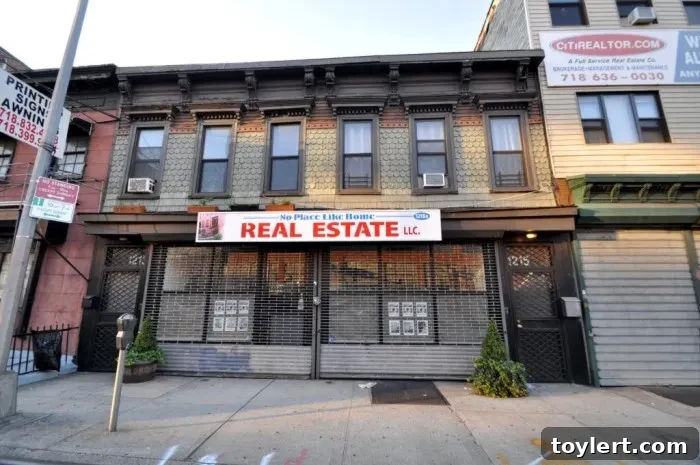
1213-1215 Atlantic Avenue: Unveiling the Historic Wood-Framed Row Storefronts of Brooklyn
Brooklyn, a borough synonymous with architectural marvels, tells its rich history one building at a time. Among its iconic brownstones and grand apartment complexes, often overlooked but equally significant are structures like the wood-framed row storefront/houses at 1213-1215 Atlantic Avenue. These buildings stand as quiet testaments to Brooklyn’s evolving commercial and residential landscape, embodying a unique blend of practicality, heritage, and enduring charm. They offer a tangible connection to the borough’s past, reflecting the ingenuity and spirit of early Brooklynites who shaped its vibrant streetscapes.
Nestled within the bustling thoroughfare of Atlantic Avenue, these specific properties encapsulate a fascinating chapter in urban development. Far from mere utilitarian structures, they represent a distinct architectural genre that played a crucial role in supporting local commerce and housing generations of Brooklyn residents. Understanding their significance requires delving into the historical context of their construction, their design principles, and their continued presence amidst a rapidly modernizing borough. From their sturdy wooden frames to their adaptable storefronts, these buildings at 1213-1215 Atlantic Avenue provide a compelling narrative of resilience and transformation.
The Enduring Appeal of Wood-Framed Architecture in Brooklyn
When one thinks of Brooklyn architecture, brownstones often come to mind first. However, long before the proliferation of these grand stone and brick residences, wood-framed buildings were the backbone of many Brooklyn neighborhoods. They offered an affordable, accessible, and versatile construction method for a rapidly growing city. Structures like the row storefront/houses at 1213-1215 Atlantic Avenue are prime examples of this early architectural style, characterized by their timber construction, often clad in clapboard or decorative shingles, and their distinctive dual-purpose design.
These wood-framed buildings typically feature a ground-floor commercial space, designed to accommodate various businesses, from bakeries and dry goods stores to tailor shops and small eateries. Above these bustling storefronts, one or more floors were dedicated to residential use, providing convenient living quarters for the proprietor or rental income for the building owner. This ingenious combination allowed for a vibrant street life and self-sustaining communities, where residents could live and work within the same structure, fostering a strong sense of local identity and convenience. The material choice – wood – was pragmatic, offering quicker construction times and lower costs compared to masonry, making urban development accessible to a broader range of developers and entrepreneurs during periods of rapid expansion.
A Legacy Etched in Timber: The Evolution of Row Houses
The concept of the “row house” itself is deeply embedded in urban planning history, offering efficient land use in densely populated areas. Wood-framed row houses extended this efficiency, allowing for the rapid creation of cohesive streetscapes. In Brooklyn, these structures emerged prominently during the 19th century, particularly as the borough experienced significant industrial growth and an influx of new residents seeking opportunities. Areas like Atlantic Avenue, with their strategic location and access to transportation networks, became prime candidates for this type of development.
The architectural detailing on these wood-framed buildings, while often simpler than their brownstone counterparts, still showcased period-specific aesthetics. Features might include decorative cornices, ornate window trim, or even subtle Victorian-era embellishments. These elements, combined with the varying colors of painted wood, created visually interesting and diverse street facades, contributing significantly to the urban fabric. The preservation of structures like those at 1213-1215 Atlantic Avenue allows us to appreciate this foundational layer of Brooklyn’s architectural heritage, offering insights into construction techniques, material preferences, and the aesthetic sensibilities of a bygone era. They represent a crucial step in the borough’s journey from a collection of towns to a modern metropolis.
Atlantic Avenue: A Corridor of Commerce and History
Atlantic Avenue itself holds a storied place in Brooklyn’s history. Stretching across a significant portion of the borough, it has always been a vital artery, initially serving as a major transportation route and later transforming into a bustling commercial hub. The presence of wood-framed storefronts along its length speaks volumes about its historical role as a gateway for commerce and community interaction. For centuries, Atlantic Avenue has been a melting pot of cultures, businesses, and dreams, reflecting the diverse narratives that define Brooklyn.
From its origins as a turnpike in the early 19th century to its development as a major rail corridor and, subsequently, a vibrant retail and residential street, Atlantic Avenue has witnessed countless changes. Buildings like 1213-1215 Atlantic Avenue were constructed during periods of significant growth, designed to meet the demands of an expanding populace and a burgeoning economy. They were the original mixed-use developments, anticipating the modern trend of integrating living and working spaces. The specific location of these buildings on Atlantic Avenue means they have been at the heart of daily life, experiencing everything from horse-drawn carriages to electric trolleys, and now, modern vehicular and pedestrian traffic. Their continuous occupation and adaptation over decades underscore the avenue’s enduring importance and capacity for evolution.
Tracing the Urban Tapestry of Brooklyn’s Main Thoroughfare
The streetscape of Atlantic Avenue is a rich tapestry woven from different architectural styles and periods, with the wood-framed structures standing as enduring threads from earlier eras. These buildings often provided essential services to the surrounding neighborhoods, contributing to a self-sufficient local economy long before the advent of large chain stores. They were places where neighbors met, news was exchanged, and community bonds were forged.
Over time, Atlantic Avenue has undergone various phases of revitalization and redevelopment. While many older structures have been replaced by newer, larger buildings, the survival of properties like 1213-1215 Atlantic Avenue highlights their inherent value and adaptability. They offer a unique counterpoint to the more contemporary glass and steel constructions, reminding us of the human scale and craftsmanship that once defined urban development. Their continued utility, whether as active businesses or residential units, ensures their place in the ongoing narrative of Atlantic Avenue, a street that continually reinvents itself while retaining echoes of its past.
Beyond Brownstones: Understanding Wood-Framed Structures
To truly appreciate Brooklyn’s architectural diversity, it’s essential to look beyond the iconic brownstone. While brownstones represent a particular era of affluence and grandiosity, wood-framed buildings embody a different, equally vital aspect of the borough’s history: its working-class roots, entrepreneurial spirit, and pragmatic approach to urban development. These structures often predate many of the grander brownstone districts, offering a glimpse into what Brooklyn looked like before its major expansion in the latter half of the 19th century.
The materials and methods used in wood-framed construction tell a story of resourcefulness. Local timber, skilled carpenters, and simpler tools allowed for rapid construction, meeting the urgent demand for housing and commercial spaces as Brooklyn’s population swelled. Unlike the more standardized brownstone facades, wood-framed buildings often display a charming individuality, influenced by the carpenter’s skill, the owner’s budget, and the prevailing vernacular styles of the time. This gives each building a unique character, preventing a monotonous streetscape and adding to the visual interest of areas where they still stand.
Architectural Characteristics and Construction Techniques
The construction of wood-framed row storefront/houses like those at 1213-1215 Atlantic Avenue typically involved a balloon frame or platform frame system, which was revolutionary for its time, allowing for faster and more efficient building. This structural integrity, combined with regular maintenance and adaptive modifications over the years, has allowed many of these buildings to survive into the 21st century.
Key characteristics often include:
- Mixed-Use Functionality: Ground floor commercial, upper floors residential.
- Timber Framing: The primary structural material, often exposed in interior renovations.
- Facade Materials: Typically clapboard, shingle, or sometimes even early stucco or brick veneer on the front, protecting the underlying wood.
- Window Styles: Double-hung sash windows are common, often with original or period-appropriate frames.
- Entrances: Separate entrances for the commercial and residential units, maintaining privacy and business flow.
- Simpler Ornamentation: While some might have elaborate details, many feature simpler, functional designs that reflect their utilitarian purpose.
These features, visible at 1213-1215 Atlantic Avenue, provide a tangible link to construction practices that shaped much of America’s urban landscape during the 19th century. Their design facilitated adaptability, allowing them to evolve with changing commercial needs and residential preferences over decades.
Preserving Brooklyn’s Architectural Heritage: Challenges and Triumphs
The continued existence of buildings like 1213-1215 Atlantic Avenue is not a given; it’s a testament to ongoing preservation efforts and the recognition of their historical value. In a rapidly gentrifying and redeveloping borough like Brooklyn, older structures constantly face threats from demolition and unsympathetic renovations. The challenges are numerous, ranging from maintenance costs for aging infrastructure to pressures from developers seeking to maximize property value with larger, modern constructions.
However, there’s a growing appreciation for Brooklyn’s diverse architectural heritage, extending beyond just the most famous landmarks. Community groups, historical societies, and city preservation commissions are increasingly working to identify, protect, and advocate for these more modest yet historically significant structures. The adaptive reuse of these buildings, where their original function may change but their architectural integrity is maintained, represents a triumph of preservation. It shows that historical significance and modern utility are not mutually exclusive but can coexist harmoniously, breathing new life into old forms.
The Delicate Balance of Development and Preservation
For structures on prominent commercial corridors like Atlantic Avenue, the balance between economic development and historical preservation is particularly delicate. High property values and demand for new commercial and residential spaces often put immense pressure on older buildings. Yet, it’s these very historic structures that contribute significantly to the unique character and appeal of Brooklyn neighborhoods, drawing in residents, businesses, and tourists alike.
Successful preservation initiatives often involve a combination of thoughtful zoning, tax incentives for historical renovation, and community engagement. By highlighting the intrinsic value – both aesthetic and economic – of retaining these historic wood-framed buildings, their future can be secured. They offer a sense of place, authenticity, and a visible connection to the past that modern buildings, no matter how grand, simply cannot replicate. The story of 1213-1215 Atlantic Avenue is, in many ways, the story of this ongoing struggle and the hope for a future where Brooklyn’s past is cherished and integrated into its vibrant present.
1213-1215 Atlantic Avenue in Context: A Microcosm of Brooklyn’s Story
The specific properties at 1213-1215 Atlantic Avenue serve as a microcosm for the larger story of Brooklyn. Their continued existence tells of the borough’s growth, its economic fluctuations, and its ability to adapt. These buildings have likely seen numerous businesses come and go, witnessed shifts in demographics, and stood firm through periods of both prosperity and decline. They represent the everyday architecture that formed the backbone of communities, quietly facilitating life and commerce for generations.
Their architectural type – the wood-framed row storefront/house – is inherently flexible. A dry goods store might become a pharmacy, then a restaurant, and perhaps even a modern boutique or gallery, while the upper residential units continue to house families or individuals. This inherent adaptability is key to their longevity and relevance in a constantly changing urban environment. They are not static monuments but living pieces of history, constantly interacting with and responding to the pulse of Atlantic Avenue and the broader Brooklyn community.
Adaptive Reuse and the Future of Historic Storefronts
The concept of adaptive reuse is particularly pertinent to buildings like 1213-1215 Atlantic Avenue. Instead of tearing down and rebuilding, adaptive reuse champions the repurposing of existing structures, preserving their historical shell while updating interiors for contemporary needs. This approach is not only sustainable, reducing waste and the carbon footprint of new construction, but it also maintains the character and continuity of a neighborhood.
For wood-framed storefronts, adaptive reuse might involve modernizing commercial spaces with new layouts and utilities while retaining original facade elements. Residential units can be updated with modern amenities, creating desirable living spaces that blend historical charm with contemporary comfort. This future-oriented approach ensures that these buildings continue to be viable and valuable assets, contributing to Brooklyn’s economy and its unique identity for many years to come. They stand as a testament to the idea that the old and the new can not only coexist but thrive together.
The Undeniable Value of Historic Properties in Modern Brooklyn
In today’s competitive real estate market, historic properties like those at 1213-1215 Atlantic Avenue possess undeniable value. Beyond their intrinsic historical and architectural merit, they offer a unique aesthetic and character that new constructions often struggle to replicate. Businesses occupying these spaces benefit from a sense of authenticity and rootedness, which can be a significant draw for customers seeking unique experiences. Similarly, residents living in these units often appreciate the charm, space, and individual character that older buildings provide.
Furthermore, investing in and preserving such properties contributes to the overall stability and desirability of a neighborhood. They help maintain a diverse urban fabric, preventing the homogenization that can occur with widespread new development. The presence of well-maintained historic buildings enhances property values across an area, attracting further investment and fostering a strong sense of community pride. These buildings are not just relics; they are active contributors to Brooklyn’s cultural and economic vitality.
Investment, Community, and Cultural Significance
From an investment perspective, well-preserved historic buildings in prime Brooklyn locations tend to appreciate steadily, offering both financial returns and the satisfaction of contributing to urban heritage. Their rarity and unique features make them highly sought after. Culturally, they serve as powerful reminders of the borough’s evolution, offering tangible links to the past for current and future generations. They provide context, telling stories of immigration, industry, and the everyday lives of those who built Brooklyn.
For the community, these buildings are often anchors, housing beloved local businesses that have served residents for decades, or providing homes that contribute to the neighborhood’s residential character. Their facades, proportions, and materials are integral to the visual identity of their street. In a borough that constantly reinvents itself, the enduring presence of structures like the wood-framed row storefronts at 1213-1215 Atlantic Avenue offers a comforting sense of continuity and a powerful connection to the rich tapestry of Brooklyn’s past.
Conclusion: The Timeless Appeal of Brooklyn’s Architectural Gems
The wood-framed row storefront/houses at 1213-1215 Atlantic Avenue represent far more than just bricks and mortar, or in this case, timber and clapboard. They are living artifacts that embody the spirit of Brooklyn’s development, its commercial ambition, and its residential charm. They stand as a testament to the versatility of early urban planning and the enduring quality of thoughtful construction. These buildings remind us that Brooklyn’s architectural story is diverse and multifaceted, extending beyond its most famous landmarks to include the more modest yet equally significant structures that shaped its neighborhoods.
As Brooklyn continues its journey of transformation, the preservation and appreciation of these historic wood-framed buildings become increasingly vital. They offer character, context, and a tangible connection to the borough’s layered past. Through careful stewardship and adaptive reuse, structures like those on Atlantic Avenue can continue to serve as vibrant hubs for commerce and community, ensuring that Brooklyn’s unique architectural heritage remains an integral part of its dynamic future. They are, indeed, a cornerstone of what makes Brooklyn, Brooklyn – one beautifully preserved building at a time.