Rediscovering Brooklyn’s Industrial Heritage: The Enduring Legacy of the Pincus & Tobias Shoe Factory on Lexington Avenue
Brooklyn, a borough renowned for its vibrant neighborhoods, cultural diversity, and stunning architecture, also holds a profound history as a pivotal industrial powerhouse. Among the myriad structures that once buzzed with activity, telling tales of innovation and craftsmanship, stands the former Pincus & Tobias Shoe Factory. Located at 13-17 Lexington Avenue, this building is more than just brick and mortar; it’s a tangible link to an era when Brooklyn’s factories fueled a burgeoning nation and shaped the lives of countless immigrants and workers. Exploring such buildings allows us to connect with the borough’s past, understanding its economic evolution and the social fabric it once sustained. This article delves into the fascinating story of the Pincus & Tobias factory, its architectural significance, and its place in the grand narrative of Brooklyn’s industrial legacy.
The Rise and Impact of Pincus & Tobias: A Chapter in Brooklyn’s Shoemaking Prowess
In the late 19th and early 20th centuries, Brooklyn emerged as a significant hub for manufacturing, with industries ranging from shipbuilding to textiles, and notably, shoemaking. The Pincus & Tobias Shoe Factory was a prominent player in this landscape, embodying the entrepreneurial spirit and industrial ambition of the era. Founded by astute businessmen, Pincus & Tobias established itself as a reputable name in the shoe manufacturing industry, likely producing a range of footwear, from durable work boots to stylish dress shoes, catering to a diverse clientele across the burgeoning American market. Their products were known for quality and craftsmanship, characteristics that were highly valued by consumers of the time.
The success of companies like Pincus & Tobias was intrinsically linked to Brooklyn’s strategic advantages. Proximity to port facilities, a robust transportation network, and an ever-growing labor pool of skilled and semi-skilled workers—many of whom were immigrants seeking new opportunities—provided the perfect ecosystem for industrial growth. The factory, therefore, wasn’t just a place of production; it was a community cornerstone, offering employment and contributing significantly to the local economy. It represented a beacon of stability for many families, offering steady wages and a sense of purpose in a rapidly industrializing society. The company’s operations would have involved intricate processes, from leather cutting and stitching to lasting and finishing, each step requiring specialized skills passed down through generations of artisans.
As the shoe industry evolved, Pincus & Tobias would have adapted to changing fashion trends, technological advancements, and shifts in consumer demand. Their story is a microcosm of the broader American manufacturing narrative – a testament to innovation, hard work, and the relentless pursuit of quality. While the exact dates of its operation as a shoe factory might fade into history, its physical manifestation on Lexington Avenue remains a powerful reminder of a time when Brooklyn’s workshops and factories churned out goods that shaped everyday life.
Architectural Grandeur and Utilitarian Design: 13-17 Lexington Avenue
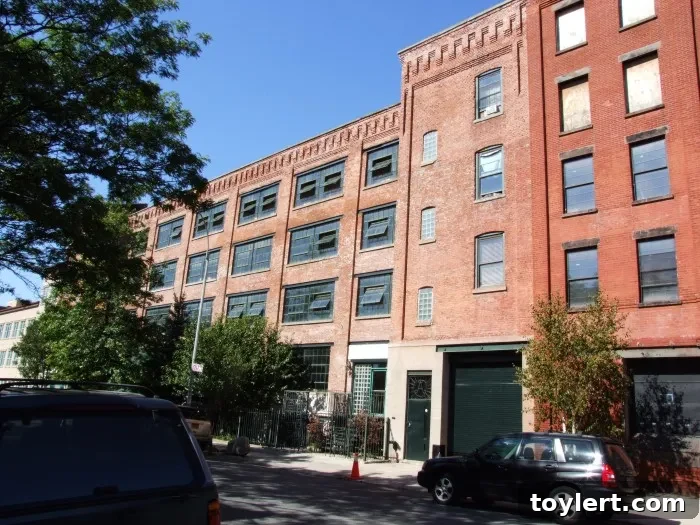
The building at 13-17 Lexington Avenue stands as a remarkable example of early 20th-century industrial architecture in Brooklyn. While designed primarily for functionality, factory buildings of this period often possessed a distinctive aesthetic appeal, blending utilitarian practicality with elements of prevailing architectural styles. The Pincus & Tobias factory likely features robust construction, characterized by its sturdy brick facade, large multi-pane windows, and imposing structure, typical of the industrial loft buildings common in New York City during that period. These architectural choices were not merely stylistic; they were driven by the practical needs of manufacturing.
Large windows, for instance, were crucial for allowing ample natural light to flood the factory floors, essential for intricate tasks like shoemaking, especially before widespread electric lighting. High ceilings and expansive open floor plans maximized space for machinery, production lines, and the movement of goods and workers. The robust construction materials, often brick and heavy timber or steel, ensured the building could withstand the vibrations and weight of industrial machinery. The exterior might also display subtle decorative elements, such as intricate brickwork patterns, stone lintels, or cornices, which added a touch of architectural dignity to an otherwise functional edifice. These details reflect a period when even industrial buildings were expected to contribute to the visual appeal of their urban surroundings, rather than merely existing as bare functional structures.
The Pincus & Tobias factory’s architecture therefore tells a dual story: one of its practical purpose in manufacturing and another of the architectural sensibilities of its time. It is a testament to an era when design considered both the efficiency of production and the urban environment, creating structures that were both resilient and aesthetically respectable. Today, these features make such buildings highly desirable for adaptive reuse, celebrated for their spaciousness, natural light, and authentic historical character.
Lexington Avenue: A Snapshot of Brooklyn’s Evolving Urban Fabric
The choice of Lexington Avenue for the Pincus & Tobias Shoe Factory was no accident. In the early 20th century, neighborhoods like Bedford-Stuyvesant and its immediate surroundings were strategically vital locations for industry. These areas offered excellent access to transportation infrastructure, including railways and expanding subway lines, facilitating the efficient transport of raw materials and finished products. Moreover, they were close to burgeoning residential areas, providing a readily available workforce. This integration of residential and industrial zones was a hallmark of urban development during this period, creating bustling communities where people lived, worked, and socialized within close proximity.
Lexington Avenue, like many streets in Brooklyn, has undergone significant transformation over the decades. What might have once been a bustling street lined with factories, workshops, and tenements, has evolved into a vibrant residential corridor, punctuated by historic brownstones and newer developments. The presence of the former Pincus & Tobias factory serves as a historical anchor, reminding residents and visitors of the area’s rich industrial past. It illustrates how urban landscapes adapt and reinvent themselves, preserving vestiges of their heritage while embracing new identities.
Understanding the context of Lexington Avenue is crucial to appreciating the factory’s legacy. It helps us visualize the daily lives of those who worked within its walls and lived in the surrounding blocks, contributing to Brooklyn’s growth. The street itself becomes a living museum, where each building tells a part of the larger story of urban development, economic shifts, and community resilience.
The Golden Age of Brooklyn Manufacturing: Beyond Shoe Production
The Pincus & Tobias Shoe Factory was just one component of a much larger industrial tapestry that defined Brooklyn for over a century. From the mid-19th century through the mid-20th century, Brooklyn stood as a manufacturing colossus. The Brooklyn Navy Yard, for instance, was a shipbuilding marvel, producing some of the nation’s most formidable vessels. Beyond heavy industry, the borough was famous for its diverse production, including textiles, furniture, machinery, chemicals, and even iconic food products like Domino Sugar, Pfizer Pharmaceuticals, and Ebbetts Field beer.
This industrial boom created a melting pot of cultures and communities. Immigrants from across Europe and beyond flocked to Brooklyn, seeking work in its bustling factories and workshops. They brought with them skills, traditions, and an unparalleled work ethic, contributing immensely to the borough’s economic and cultural vibrancy. Factory jobs, while often demanding, provided a pathway to upward mobility and a sense of belonging in a new land. Unionization also played a significant role, advocating for better working conditions and fair wages, further shaping the social and political landscape of industrial Brooklyn.
However, by the latter half of the 20th century, deindustrialization swept across many American cities, and Brooklyn was no exception. Economic shifts, globalization, and the rise of service industries led to the decline of traditional manufacturing. Factories closed, jobs disappeared, and many industrial buildings stood vacant, signaling the end of an era. The former Pincus & Tobias factory, like many others, faced an uncertain future, prompting questions about preservation and new purpose.
Adaptive Reuse: Preserving History in a Modern Brooklyn Landscape
In the wake of deindustrialization, cities like Brooklyn faced the challenge of what to do with their vast inventory of empty factory buildings. Many were demolished, making way for new construction. However, an increasing appreciation for historical preservation and the unique character of these industrial structures led to the rise of adaptive reuse. Adaptive reuse is the process of converting old buildings for new purposes, breathing new life into structures that have outlived their original function while retaining their historical integrity.
Buildings like the former Pincus & Tobias Shoe Factory are ideal candidates for adaptive reuse. Their robust construction, high ceilings, large windows, and open floor plans are perfectly suited for conversion into residential lofts, artist studios, creative office spaces, or retail establishments. This approach offers numerous benefits: it preserves architectural heritage, reduces waste by reusing existing materials, and creates unique, character-filled spaces that are often highly sought after in today’s urban markets. For 13-17 Lexington Avenue, adaptive reuse would mean that the spirit of innovation and craftsmanship that once defined its shoe production could be re-imagined for a new generation of Brooklynites, perhaps as modern apartments that tell stories of the past, or as a vibrant commercial space that anchors the local community.
The conversion of industrial buildings into residential or mixed-use spaces has become a hallmark of Brooklyn’s revitalization. These former factories, once symbols of gritty labor, are now celebrated as desirable properties, embodying a blend of history, authenticity, and contemporary living. They offer a tangible connection to the borough’s past while actively participating in its dynamic present and future.
A Testament to Resilience: The Enduring Charm of Brooklyn’s Factory Buildings
The former Pincus & Tobias Shoe Factory at 13-17 Lexington Avenue is more than just an old building; it is a vital piece of Brooklyn’s identity. It stands as a silent testament to the ingenuity, hard work, and evolving spirit of a borough that has continually reinvented itself. These industrial relics remind us of the hands that built this city, the products that fueled its economy, and the communities that thrived around them. They offer a physical narrative of Brooklyn’s journey from a manufacturing hub to a cultural and residential mecca.
By recognizing and preserving these architectural treasures, Brooklyn honors its past while shaping a sustainable future. The legacy of Pincus & Tobias, alongside countless other factories, underscores the importance of historical memory in urban development. They contribute to the unique charm and character that define Brooklyn, making it a place rich in stories, history, and architectural beauty. Exploring these buildings allows us to step back in time, appreciate the foundations upon which modern Brooklyn was built, and imagine the lives that once unfolded within their walls. Such structures are not merely old; they are enduring symbols of resilience, transformation, and the unceasing pulse of urban life.