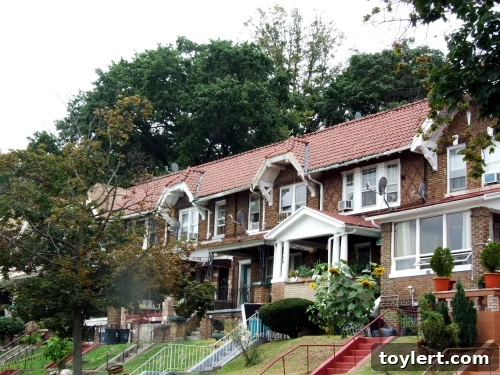
Discovering Brooklyn’s Enduring Charm: An Ode to the Iconic Row Houses
Brooklyn, one building at a time – a journey through its architectural masterpieces.
Brooklyn stands as a monumental borough in New York City, celebrated not only for its vibrant culture and diverse communities but also for its distinctive architectural heritage. Among its most cherished treasures are the ubiquitous and historically significant Brooklyn row houses. These structures, often referred to as brownstones, bricks, or limestone beauties, are more than just homes; they are the very fabric of many of Brooklyn’s most beloved neighborhoods, each telling a story of the city’s past, present, and enduring appeal. From the stately elegance of Park Slope to the charming streets of Carroll Gardens, these row houses offer a unique blend of historical grandeur and modern urban living, captivating residents and visitors alike. This article delves into the fascinating world of Brooklyn’s row houses, exploring their origins, diverse architectural styles, the neighborhoods they define, and their lasting legacy in the urban landscape.
The Genesis of Brooklyn’s Row Houses: A Historical Perspective
The proliferation of row houses in Brooklyn began in earnest during the 19th century, spurred by rapid population growth and the burgeoning industrialization of New York City. As the city expanded, there was an urgent need for efficient and aesthetically pleasing housing solutions for a growing middle class. Builders and developers recognized the economic advantages of constructing homes in a contiguous fashion, maximizing land use while still offering individual residences. This period saw the transformation of vast stretches of farmland into meticulously planned urban streetscapes, characterized by long blocks of unified facades that exuded a sense of order and prosperity. The appeal was undeniable: these homes offered privacy, space, and a touch of elegance that was accessible to a wider segment of the population than sprawling estates.
Early row houses often reflected the prevailing architectural tastes of the era, borrowing heavily from European design trends. Their construction was a testament to the skilled craftsmanship of the time, utilizing durable materials that have allowed many of these homes to stand resiliently for over a century. This historical foundation is what gives Brooklyn’s row houses their profound character and deep-rooted connection to the borough’s development, making them invaluable architectural landmarks that define much of Brooklyn’s visual identity. The strategic development of these homes laid the groundwork for the distinct residential patterns that continue to shape Brooklyn’s neighborhoods today, serving as a constant reminder of its dynamic growth and rich history.
A Kaleidoscope of Styles: Architectural Diversity in Brooklyn Row Houses
While often generically referred to as “brownstones,” Brooklyn’s row houses encompass a fascinating array of architectural styles, each contributing to the borough’s rich visual tapestry. Understanding these styles provides a deeper appreciation for the thought and artistry embedded in these historical structures and highlights the evolution of design sensibilities over the decades. This architectural diversity is a key reason why exploring Brooklyn’s streets is always an engaging experience for history buffs and design enthusiasts.
The Dominance of Brownstone and Other Materials
- Brownstone: Perhaps the most iconic material, brownstone is a reddish-brown sandstone quarried primarily in New Jersey and Connecticut. Its popularity in the mid-19th century gave rise to the term “brownstone Brooklyn.” These homes often feature elaborate stoops, detailed cornices, and decorative window lintels, embodying a sense of robust elegance and a distinctive warmth. Its relatively soft nature allowed for intricate carving, making it a favorite for decorative architectural elements.
- Brick: Many row houses, particularly those built in earlier periods or in more modest neighborhoods, utilize brick. Brick homes can range from simple, utilitarian designs to more ornate Federal or Greek Revival styles, often painted or left in their natural earthy tones, showcasing different patterns and pointing techniques. Brick offered durability and a readily available construction material, making it a pragmatic choice that still allowed for aesthetic variation.
- Limestone and Terra Cotta: As architectural tastes evolved towards the late 19th and early 20th centuries, materials like limestone and terra cotta gained popularity. These offered greater design flexibility, allowing for more intricate carvings, classical motifs, and lighter, more refined facades, particularly seen in Beaux-Arts and Renaissance Revival styles. Limestone provided a lighter, more formal appearance, while terra cotta offered vibrant colors and highly detailed, molded decorative elements that could mimic stone carvings at a lower cost.
Key Architectural Styles You’ll Find
- Federal and Greek Revival (c. 1820-1850): Characterized by their restrained elegance, these early row houses often feature flat facades, modest stoops, and classic architectural elements like columns and symmetrical window arrangements. They project a sense of civic pride and understated grandeur.
- Italianate (c. 1850-1880): Known for their ornate details, deep cornices, rounded arch windows, and elaborate doorframes, Italianate brownstones often have tall, elegant stoops leading to the parlor floor. This style was highly fashionable, emphasizing decorative richness and often featuring bracketed eaves and cast-iron details.
- Gothic Revival (c. 1840-1870): Less common for entire row houses but often present in details, Gothic Revival elements include pointed arch windows, steeply pitched gables, and decorative tracery, giving a romantic, medieval feel. These details brought a sense of historical narrative and picturesque charm to urban residences.
- Neo-Grec (c. 1870-1890): A transitional style, Neo-Grec often features strong, incised lines, geometric patterns, and classical Greek motifs, offering a more austere but equally sophisticated look than Italianate. It represented a move towards a more refined classicism, emphasizing clean lines and robust forms.
- Romanesque Revival (c. 1880-1900): Inspired by Romanesque architecture, these homes are characterized by heavy masonry, rusticated stone, broad arches, and often robust, almost fortress-like appearances. Prominent examples in Brooklyn showcase deep-set windows and a powerful, grounded aesthetic.
- Queen Anne (c. 1880-1910): Known for their picturesque asymmetry, varied textures, turrets, bay windows, and vibrant use of color (though often painted over today), Queen Anne homes are among the most decorative. They celebrate individuality and eclectic ornamentation, creating lively streetscapes.
- Renaissance Revival and Beaux-Arts (c. 1890-1920): These styles reflect a return to classical proportions and grandeur, often featuring smooth stone facades, classical columns, balustrades, and intricate carvings, exuding a sense of stately opulence. They often incorporated elements from French and Italian Renaissance architecture, showcasing wealth and cultural sophistication.
This immense diversity ensures that a stroll through Brooklyn’s historic districts is a continuous architectural lesson, with each block presenting new details and stylistic nuances to admire, making every turn a discovery.
Iconic Neighborhoods: Where Brooklyn Row Houses Reign Supreme
Certain Brooklyn neighborhoods have become synonymous with the quintessential row house experience, each offering its own unique charm and community spirit. These areas are not just residential zones; they are living museums of urban history and design, attracting visitors and homeowners who cherish their distinctive character.
- Brooklyn Heights: As Brooklyn’s first historic district, Brooklyn Heights boasts some of the oldest and most meticulously preserved row houses, offering unparalleled views of the Manhattan skyline and a serene, tree-lined environment. Its quiet streets and grand Federal and Greek Revival homes make it a prime example of urban elegance.
- Park Slope: Famous for its grand brownstones and limestone mansions, Park Slope is characterized by wide avenues, proximity to the magnificent Prospect Park, and a strong sense of community, making it one of Brooklyn’s most desirable neighborhoods. The architectural scale here is often more expansive, reflecting its development during the late 19th century.
- Carroll Gardens and Cobble Hill: These charming neighborhoods are known for their picturesque streets, deep front gardens (a rarity in row house architecture, often referred to as “Carroll Gardens type”), and well-preserved Federal and Greek Revival homes. Their village-like atmosphere, coupled with historic architecture, creates a highly sought-after living experience.
- Fort Greene and Clinton Hill: With a rich history and vibrant cultural scene, these areas feature an impressive collection of Italianate and Neo-Grec brownstones, often with intricate details and a stately presence. The architectural grandeur here often reflects the success of their original inhabitants and the craftsmanship of the era.
- Bedford-Stuyvesant (Bed-Stuy): Home to one of the largest concentrations of Victorian architecture in the United States, Bed-Stuy offers an astonishing variety of brownstones, brick row houses, and limestones, showcasing the borough’s architectural evolution. Its expansive blocks are a testament to late 19th and early 20th-century development, and ongoing revitalization efforts highlight its enduring appeal.
- Bushwick and Bay Ridge: While perhaps less heralded than their central Brooklyn counterparts, these neighborhoods also possess beautiful, often more affordable, row houses reflecting different eras and styles, contributing significantly to Brooklyn’s overall housing stock. They offer a diverse range of architectural expressions and continue to attract new residents seeking historic charm outside the more well-known districts.
Exploring these neighborhoods provides a tangible connection to Brooklyn’s past and present, revealing how these architectural gems shape the character and identity of each distinct community and contribute to the borough’s unique charm.
Living in a Legacy: The Enduring Appeal and Modern Adaptations
The appeal of a Brooklyn row house extends far beyond its historical facade. These homes offer a unique blend of spaciousness, architectural character, and often, a connection to a vibrant community that is hard to replicate in modern developments. Originally designed as single-family residences for affluent families, many row houses underwent transformations over the decades, being subdivided into multi-unit apartments, particularly during periods of economic hardship or increased population density. Today, there’s a strong trend towards restoring these homes to their single-family grandeur, blending historic details with contemporary amenities to create luxurious and comfortable living spaces.
Modern adaptations often involve sensitive renovations that preserve original elements like intricate moldings, ornate fireplaces, parquet floors, and grand pocket doors, while seamlessly integrating modern kitchens, spa-like bathrooms, and smart home technology. The vertical layout of a row house, typically featuring multiple floors, provides distinct living zones, offering privacy and versatility for families or individuals to create separate spaces for living, working, and entertaining. The potential for private outdoor space, whether a small garden, a rooftop deck with city views, or a rear patio, is another highly sought-after feature that adds immensely to their allure in a dense urban environment, offering a tranquil escape from city life.
Preservation and Future: Safeguarding Brooklyn’s Architectural Jewels
The immense value and beauty of Brooklyn’s row houses have not gone unnoticed. Preservation efforts, led by local community groups, dedicated historical societies, and the New York City Landmarks Preservation Commission, play a crucial role in safeguarding these architectural jewels for future generations. Designations as historic districts or individual landmarks provide a layer of protection, ensuring that alterations and renovations respect the original character and aesthetic integrity of the buildings. This commitment to preservation helps maintain the cohesive streetscapes and the unique historical ambiance that make Brooklyn so special and appealing to residents and tourists alike.
However, preservation comes with its challenges. The costs associated with restoring and maintaining historic properties can be substantial, requiring specialized craftsmanship, adherence to strict guidelines, and a significant investment of time and resources. Yet, for many homeowners and enthusiasts, the investment is well worth it, representing a tangible connection to history, a commitment to architectural excellence, and a sense of stewardship over a piece of the city’s heritage. As Brooklyn continues to evolve and modernize, the row house remains a steadfast symbol of its enduring identity, a testament to timeless design and the continuous effort to honor and adapt its rich heritage, ensuring its place in the city’s future.
Conclusion: The Timeless Allure of Brooklyn’s Row Houses
From their historical origins as practical housing solutions to their current status as highly coveted architectural gems, Brooklyn’s row houses stand as a powerful symbol of the borough’s enduring legacy. They represent a harmonious blend of historical narratives, diverse architectural styles, and vibrant community life. Each stoop, each cornice, and each detailed facade contributes to the grand narrative of Brooklyn, one building at a time, creating a visual symphony that tells the story of generations.
Whether you’re a long-time resident, a prospective homeowner, or simply an admirer of urban architecture, the row houses of Brooklyn offer an inexhaustible source of fascination and beauty. They are not merely structures; they are living testaments to craftsmanship, history, and the continuous spirit of a borough that thrives on its unique identity. Their timeless allure ensures that these iconic homes will continue to define the charm and character of Brooklyn for many centuries to come, solidifying their place as an irreplaceable and beloved part of New York City’s architectural tapestry, inviting exploration and appreciation from all who encounter them.