135-139 Kent Avenue: Unveiling the Architectural Heritage of Brooklyn’s Flats Buildings
Brooklyn is a borough rich with stories, and many of these narratives are etched into the very fabric of its buildings. Each structure, from grand mansions to humble row houses, contributes to the unique mosaic that defines this vibrant New York City district. In our ongoing exploration of Brooklyn’s architectural gems, we turn our attention to the Flats buildings at 135-139 Kent Avenue. These structures, often overlooked in favor of more ornate or historically prominent landmarks, are vital threads in the borough’s historical tapestry, representing an era of significant urban growth and demographic shifts.
Nestled in the dynamic landscape of Williamsburg, 135-139 Kent Avenue stands as a testament to the enduring practicality and understated elegance of early 20th-century residential architecture. While not always boasting the intricate details of a Victorian brownstone or the imposing presence of a Beaux-Arts edifice, “flats buildings” like these played a crucial role in housing Brooklyn’s rapidly expanding population. They offered comfortable, multi-family living solutions during a period of industrial boom and immigration, shaping the urban environment we recognize today.
A Glimpse into Brooklyn’s Past: The Rise of Flats Buildings
The term “flats building” typically refers to multi-unit apartment houses, often spanning several stories and designed to accommodate multiple households within a single structure. Unlike the opulent apartments designed for the wealthy elite in Manhattan, Brooklyn’s flats buildings were primarily conceived for the middle and working classes. They emerged as a popular housing solution in the late 19th and early 20th centuries, a period marked by rapid urbanization and the need for efficient, affordable housing in growing cities.
Brooklyn, with its burgeoning industries and expanding transportation networks, was a prime location for the development of such residential complexes. As ferries, bridges, and eventually subway lines connected Brooklyn more intimately with Manhattan, the borough transformed from a collection of independent towns into a bustling urban center. This growth brought waves of new residents, creating an immense demand for housing that traditional single-family homes or two-family brownstones could no longer meet. Flats buildings, with their stackable units and shared amenities, offered a practical and scalable answer.
These buildings were characterized by their pragmatic design, often featuring sturdy brick facades, multiple windows to allow light and air into each unit, and a straightforward layout. While some might showcase decorative cornices, lintels, or entrance surrounds, their primary appeal lay in their functionality and capacity. They were built for longevity and utility, reflecting a utilitarian aesthetic that nonetheless possessed its own distinct charm and architectural honesty. The flats building became a staple of Brooklyn’s streetscapes, a quiet workhorse of urban development that continues to serve residents to this day.
Architectural Features of 135-139 Kent Avenue
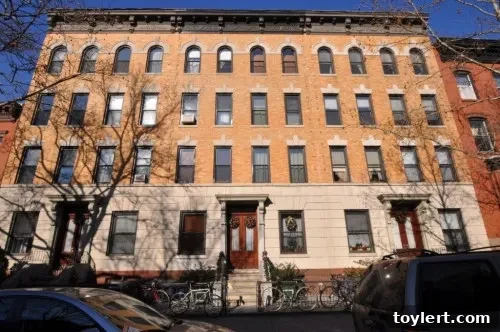
The buildings at 135-139 Kent Avenue exemplify many of the typical features found in Brooklyn’s historic flats architecture. As captured in the accompanying image, the structure likely presents a robust brick facade, a common and durable material chosen for its longevity and relative affordability. The brickwork itself often reveals skilled craftsmanship, with patterns and bonding styles that add subtle texture and visual interest to the exterior.
Observation of similar buildings from the era suggests that these structures would typically feature a series of generously sized windows, often arranged in rhythmic patterns across the facade. These windows, essential for natural light and ventilation in each apartment, might be adorned with simple stone sills and lintels, providing a touch of classical detail without being overly ostentatious. The entrances, usually recessed or slightly projecting, often include a modest canopy or decorative surround, serving as a welcoming focal point for residents and visitors alike.
The overall architectural style tends to be practical and functional, often drawing loosely from late Romanesque Revival, Neo-Grec, or even simplified Queen Anne influences, distilled into a form suitable for multi-unit housing. The rooflines are typically flat or low-pitched, sometimes featuring decorative cornices that articulate the building’s upper edge. These subtle details, when viewed collectively, contribute to a cohesive and enduring aesthetic that has defined many Brooklyn neighborhoods for over a century. The endurance of these design principles highlights a period when architectural choices balanced aesthetic appeal with the practical demands of urban living.
The Evolving Landscape of Kent Avenue, Williamsburg
The location of 135-139 Kent Avenue is particularly significant. Kent Avenue, running along the East River waterfront in Williamsburg, has undergone a dramatic transformation over the past century. Historically, this area was a bustling industrial corridor, home to factories, warehouses, and docking facilities that powered much of Brooklyn’s economy. The presence of residential buildings like the flats at 135-139 Kent Avenue during this era indicates a blend of industrial and residential life, where workers lived in close proximity to their workplaces.
Williamsburg itself has a storied history, evolving from an independent city in the 19th century to a vibrant and diverse neighborhood within Brooklyn. Its industrial decline in the latter half of the 20th century led to a period of economic hardship, but also paved the way for its incredible renaissance in the late 20th and early 21st centuries. Artists, musicians, and young professionals were drawn to its affordable rents and spacious lofts, slowly transforming it into a cultural and residential hotspot. Today, Kent Avenue is synonymous with modern luxury developments, trendy restaurants, and scenic waterfront parks.
Amidst this rapid change, buildings like 135-139 Kent Avenue stand as historical anchors. They represent a tangible link to Williamsburg’s past, providing a stark contrast and a sense of continuity against the backdrop of glittering new construction. Their presence reminds us of the neighborhood’s industrial roots and its journey through various stages of urban development. These historic flats are not just old buildings; they are living artifacts that tell the story of Brooklyn’s relentless evolution.
Preserving Brooklyn’s Architectural Legacy One Building at a Time
The ongoing appeal and preservation of historic flats buildings like those on Kent Avenue are crucial for maintaining Brooklyn’s distinctive character. In a rapidly developing city, where new construction often prioritizes scale and modern aesthetics, the value of older structures can sometimes be overlooked. However, these buildings offer irreplaceable architectural details, robust construction, and a connection to the past that modern designs cannot replicate.
Many of these pre-war buildings, with their solid construction and adaptable layouts, continue to serve as highly desirable residences. Their high ceilings, large windows, and often charming original details appeal to a broad range of residents seeking authenticity and character. Moreover, the adaptive reuse of these structures contributes to sustainable urban development, reducing the environmental impact associated with new builds and preserving embodied energy.
Efforts to recognize and protect such buildings, whether through landmarking initiatives or sensitive renovations, ensure that future generations can appreciate the layers of history embedded in Brooklyn’s streetscapes. The flats buildings at 135-139 Kent Avenue are more than just addresses; they are integral components of Williamsburg’s heritage, silent witnesses to decades of change, and continuing contributors to the vibrant community that defines this iconic Brooklyn neighborhood.
Conclusion: The Enduring Significance of 135-139 Kent Avenue
In conclusion, the flats buildings at 135-139 Kent Avenue embody a significant chapter in Brooklyn’s architectural and social history. They represent the practical yet resilient spirit of urban development that characterized the borough in the early 20th century. Far from being mere background structures, these buildings tell a story of housing solutions for a growing population, the industrial prowess of Williamsburg, and the enduring quality of thoughtful, functional design.
As Brooklyn continues its remarkable journey of transformation, it is buildings like these that ground us in its past, offering invaluable insights into its evolution. They remind us that the rich tapestry of Brooklyn’s architecture is woven not only from its grandest landmarks but also from the quiet dignity of its everyday structures. By appreciating “one building at a time,” we gain a deeper understanding of the borough’s enduring legacy and its continuous adaptation to the rhythm of urban life.