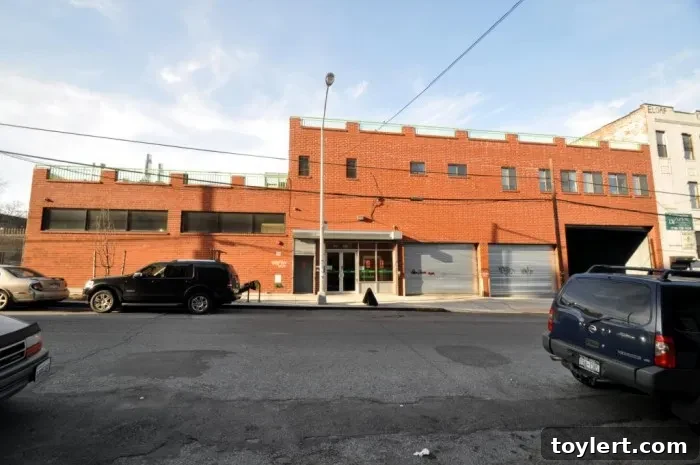
261-267 Meserole Street: Unveiling the Industrial Soul of Bushwick’s Reimagined Factory
In the heart of Brooklyn’s dynamic Bushwick neighborhood stands a testament to architectural resilience and urban transformation: the historic factory building at 261-267 Meserole Street. Once a cornerstone of the area’s robust industrial past, this edifice has undergone a remarkable metamorphosis, embodying the spirit of “Brooklyn, one building at a time.” Its story is a vivid reflection of the borough’s journey from an industrial powerhouse to a vibrant hub of creativity, culture, and community.
A Glimpse into Brooklyn’s Industrial Heritage
The tale of 261-267 Meserole Street begins in an era when Brooklyn was a bustling center of manufacturing and commerce. Constructed likely in the early 20th century, a period of significant industrial growth, this building, simply known as “The Factory,” played a crucial role in the local economy. While its exact original purpose might be lost to some, its robust construction and large, utilitarian windows are tell-tale signs of a building designed for production. Many such factories in Bushwick were dedicated to textile manufacturing, garment production, or light industry, contributing to the borough’s reputation as a workshop for the burgeoning New York City metropolis.
These buildings were not merely structures; they were the engines of a community, providing livelihoods and shaping the character of neighborhoods like Bushwick. The factory at Meserole Street would have witnessed countless shifts, the hum of machinery, and the tireless efforts of its workers, each day adding another layer to its historical narrative. Its presence marked Meserole Street as part of a thriving industrial corridor, a far cry from the artistic and residential landscape it now helps define.
Architectural Grandeur of an Industrial Era
The architecture of 261-267 Meserole Street speaks volumes about its origins. Characterized by its sturdy brick facade, towering multi-story presence, and generously proportioned windows, it epitomizes the “industrial loft” aesthetic. Architects of the era prioritized functionality, durability, and abundant natural light – crucial for factory operations. These design principles, once purely practical, are now highly coveted features in modern urban living and working spaces.
Inside, the building likely boasted high ceilings, expansive open floor plans, and exposed structural elements like timber beams or steel columns. Such features were essential for accommodating large machinery and efficient workflow. Today, these very elements contribute to the building’s unique charm and appeal, offering a tangible connection to its past while providing the perfect canvas for contemporary design. The sheer volume and robust materials lend a sense of timelessness and authenticity that newer constructions often struggle to replicate. This blend of form and function makes the building not just a historical relic, but a living piece of industrial art.
The Transformation: Adaptive Reuse in Action
The journey of 261-267 Meserole Street from a factory to a modern, vibrant space is a prime example of adaptive reuse, a sustainable urban development practice gaining momentum across cities worldwide. As Brooklyn’s industrial landscape shifted, many factories like this one faced obsolescence. However, visionary developers and architects recognized the inherent potential within these forgotten giants. Instead of demolition, they embarked on ambitious projects to breathe new life into these structures, preserving their historical integrity while reimagining them for the 21st century.
The transformation of “The Factory” at 261-267 Meserole Street likely involved a meticulous renovation process. This often includes gutting interiors to reveal original architectural features, upgrading infrastructure to meet modern codes and comfort standards, and carefully designing new layouts that respect the building’s historical footprint. We can envision its cavernous spaces being cleverly subdivided into spacious residential lofts, innovative artist studios, contemporary office spaces, and perhaps even ground-floor retail or culinary establishments. This mixed-use approach not only creates diverse living and working environments but also fosters a dynamic, self-sustaining community within the building itself.
Blending Past and Present: Design Philosophy
A key aspect of successful adaptive reuse, particularly evident at Meserole Street, is the harmonious blend of old and new. Original features such as exposed brick walls, timber ceilings, and industrial-style windows are often meticulously restored and integrated into modern designs. These raw, authentic elements are then complemented by sleek, contemporary finishes, state-of-the-art appliances, and thoughtful amenities. This creates an aesthetic known as “industrial chic” – a look that celebrates the building’s heritage while offering all the conveniences of modern urban living. The result is a series of unique, character-rich spaces that tell a story, unlike the bland uniformity of many new developments.
Bushwick’s Renaissance: A Neighborhood Transformed
The evolution of 261-267 Meserole Street is inseparable from the larger narrative of Bushwick’s remarkable renaissance. For decades, Bushwick was an unassuming industrial district, often overshadowed by its more famous Brooklyn counterparts. However, beginning in the early 2000s, an influx of artists, musicians, and young professionals, drawn by its spacious former industrial buildings and authentic character, began to reshape the neighborhood. Today, Bushwick is renowned for its vibrant street art scene, eclectic dining, independent businesses, and thriving creative community.
Buildings like the one at Meserole Street are central to this transformation. They provide the physical infrastructure for the neighborhood’s burgeoning creative industries and offer unique residential opportunities that attract a diverse populace. The adaptive reuse of these factories helps to maintain Bushwick’s gritty, authentic charm while simultaneously elevating its appeal as a desirable place to live and work. The building’s strategic location on Meserole Street places it within easy reach of Bushwick’s myriad attractions, including art galleries, cafes, bars, and efficient public transportation links to Manhattan and other parts of Brooklyn.
Living and Creating at Meserole Street
For those seeking a lifestyle that blends historical character with modern urban amenities, the residences and workspaces at 261-267 Meserole Street offer an unparalleled experience. Imagine living in a spacious loft with soaring ceilings, oversized windows flooding the space with natural light, and the texture of exposed brick walls telling tales of a bygone era. These are not just apartments or offices; they are canvases for creative expression and havens of unique design.
Beyond the individual units, such conversions often foster a strong sense of community. Residents and tenants often share a common appreciation for art, history, and urban living. Communal spaces, if integrated, might include shared rooftops with stunning city views, artist workshops, or collaborative co-working areas, enriching the living and working experience. The building contributes to a walkable, dynamic streetscape, encouraging interaction with local businesses and the wider Bushwick community. It represents more than just a place to live; it symbolizes a conscious choice to embrace a vibrant, historically infused urban existence.
A Legacy Continues: Brooklyn’s Enduring Spirit
The story of 261-267 Meserole Street is far from over. As Brooklyn continues to evolve, this reimagined factory will stand as a beacon of sustainable development and architectural heritage. It reminds us that the past is not something to be discarded but rather a foundation upon which to build a dynamic future. By preserving and repurposing these magnificent industrial structures, Brooklyn reinforces its commitment to honoring its history while embracing innovation and progress.
This building, like so many others across the borough, embodies the enduring spirit of Brooklyn – a place constantly reinventing itself, one magnificent structure at a time. It’s a place where history and modernity converge, creating unique spaces that resonate with character, inspire creativity, and contribute to the rich tapestry of New York City.