The Enduring Legacy of Brooklyn’s Telephone Exchange Building at 611-619 Throop Avenue
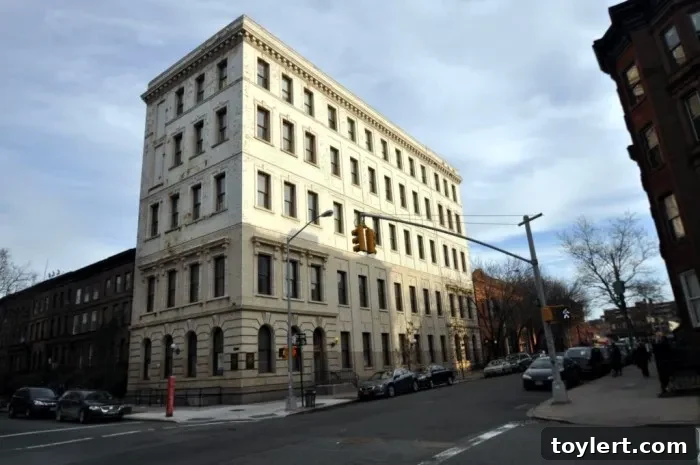
Brooklyn, one building at a time, reveals stories of innovation, community, and enduring design. Among these silent sentinels stands the formidable Telephone Exchange Building of the New York & New Jersey Telephone Company, located at 611-619 Throop Avenue. This structure, a testament to a bygone era of burgeoning technology, once served as a vital hub connecting Brooklynites to the world, and its architectural presence continues to shape the character of its vibrant neighborhood.
A Glimpse into Brooklyn’s Telecommunications Past
The turn of the 20th century marked a period of rapid expansion and technological marvels, none more transformative than the widespread adoption of the telephone. As New York City, and particularly its burgeoning borough of Brooklyn, grew exponentially, so too did the demand for sophisticated communication networks. The New York & New Jersey Telephone Company was at the forefront of this revolution, constructing purpose-built exchange buildings across the region to house the complex equipment and operators necessary to connect calls.
The building at 611-619 Throop Avenue represents a crucial piece of this technological infrastructure. These exchange buildings were more than just offices; they were nerve centers, processing countless calls daily and symbolizing the modern age’s promise of instant connection. For residents and businesses in the surrounding areas of Bedford-Stuyvesant and beyond, this building was the silent orchestrator of their daily conversations, commerce, and emergencies. Its very existence underscored the company’s commitment to providing essential public service, a role that was pivotal in urban development.
The Evolution of Connectivity
Before the digital age and automated switching, telephone exchanges were bustling environments filled with switchboard operators manually connecting calls. These skilled individuals, predominantly women, played a vital role in linking subscribers, physically plugging cords into jacks to complete circuits. The Telephone Exchange Building on Throop Avenue would have housed dozens, if not hundreds, of these operators and vast rooms filled with electromechanical switching equipment. It was a place of constant activity, ensuring that the intricate web of communication remained robust and reliable for the growing Brooklyn populace.
Architectural Significance and Design Aesthetics
While often designed for functionality, early 20th-century utility buildings frequently showcased an impressive architectural presence, reflecting the importance and stability of the institutions they served. The Telephone Exchange Building at 611-619 Throop Avenue is a prime example of this trend. Its robust construction and classical detailing, common for public service buildings of its era, speak to a period when even utilitarian structures were endowed with dignity and a sense of permanence.
Typically, such buildings featured durable materials like brick and stone, often employing a restrained yet elegant architectural style. The specific design elements of the Throop Avenue building, visible in its imposing structure, likely include sturdy brickwork, well-defined window patterns, and perhaps some decorative stone or terracotta elements that articulate its facade. The building’s scale and solid construction would have projected an image of reliability and advanced technology, befitting a company providing such a critical service.
A Legacy of Industrial Elegance
The architectural style can often be characterized as a form of industrial classicism or a pragmatic adaptation of Beaux-Arts principles, where classical proportions and robust materials met the demands of modern infrastructure. These structures were built to last, with ample natural light for operators and strong foundations to support heavy machinery. The deliberate choice of such architecture not only ensured structural integrity but also served to visually anchor the telephone company as an indispensable, monumental presence within the community.
Location and Community Impact: Throop Avenue in Brooklyn
Throop Avenue runs through several historic and diverse Brooklyn neighborhoods, including the vibrant community of Bedford-Stuyvesant. The placement of a major telephone exchange building here was strategic, serving a dense residential and commercial area experiencing significant growth. In the early 20th century, Bed-Stuy was flourishing, with an increasing population and a growing number of businesses, all requiring dependable communication services.
The Telephone Exchange Building, therefore, became an integral part of the local landscape, a landmark that residents would recognize and rely upon. Its substantial presence would have contributed to the avenue’s character, blending the necessities of modern infrastructure with the evolving urban fabric of Brooklyn. These buildings were more than just points on a map; they were centers of employment and vital nodes in the invisible network that connected people’s lives.
Shaping Urban Development
The construction of such essential public service buildings often spurred further development in their immediate vicinity, attracting ancillary businesses and residents who sought proximity to reliable services and employment opportunities. Thus, the building on Throop Avenue was not merely a passive structure but an active participant in the socio-economic and spatial development of its part of Brooklyn, influencing the flow of daily life and contributing to the neighborhood’s dynamic evolution.
From Communication Hub to Modern Landmark
With the advent of advanced automatic switching systems, digital technology, and eventually fiber optics, the role of large, centralized telephone exchange buildings began to shift dramatically. The need for manual operators diminished, and the vast spaces once housing complex electro-mechanical equipment became increasingly redundant. Many such historic buildings across the nation faced uncertain futures, some repurposed, others demolished.
The fate of the Telephone Exchange Building at 611-619 Throop Avenue reflects the broader story of adaptive reuse in historic urban centers. While the precise details of its current occupancy may vary, it is common for these robust, well-built structures to find new life. They might be converted into residential lofts, commercial spaces, or even retain some lesser utility function. Their solid construction and distinctive architecture often make them attractive candidates for renovation, preserving a piece of urban history while meeting contemporary needs.
Preserving Brooklyn’s Architectural Heritage
Preserving buildings like the Throop Avenue Telephone Exchange is crucial for understanding Brooklyn’s growth and technological progress. They stand as tangible reminders of a time when communication was a more tangible, physically manifested process. These structures embody the ingenuity of their era and provide a valuable link to the past, reminding us of the foundations upon which our hyper-connected present was built. As architectural preservation efforts gain momentum, these former industrial and public service giants are increasingly recognized for their historical and aesthetic value.