Discovering Brooklyn’s Architectural Charms: The Enduring Legacy of Wood-Framed Row Houses on 43rd Street, Sunset Park
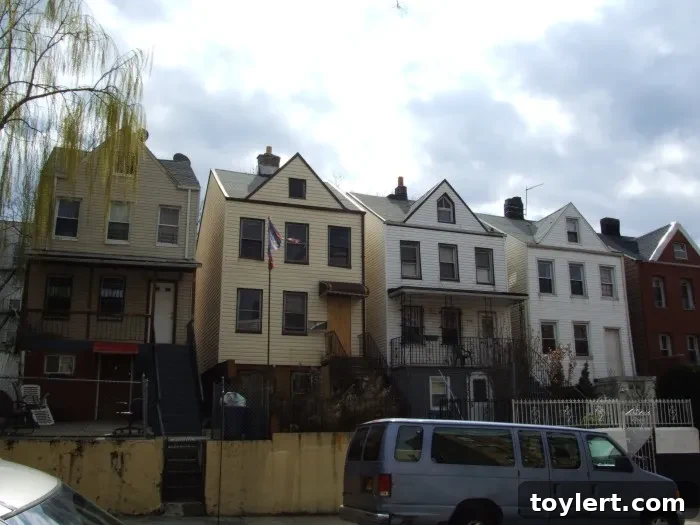
Brooklyn, one building at a time – a journey through the borough’s unique architectural heritage, focusing on structures that tell a story.
Name: Wood-Framed Row Houses – A Glimpse into Sunset Park’s Past
Nestled within the vibrant and historically rich neighborhood of Sunset Park, Brooklyn, stand the charming wood-framed row houses at 322-354 43rd Street. These structures are more than just homes; they are a tangible link to Brooklyn’s development, embodying a specific period of urban expansion and architectural style that often gets overshadowed by the grandeur of brownstones and limestone mansions. Exploring these modest yet significant buildings offers a deeper understanding of the borough’s diverse character and the enduring appeal of its residential streetscapes.
Often overlooked in favor of their brick and stone counterparts, wood-framed row houses represent a crucial chapter in Brooklyn’s residential history. They provided affordable and attractive housing options for the burgeoning middle and working classes during the late 19th and early 20th centuries, contributing significantly to the urban fabric of neighborhoods like Sunset Park. These particular homes on 43rd Street stand as excellent examples, showcasing a blend of practicality, understated elegance, and the resilient spirit of Brooklyn architecture.
The Historical Context of Sunset Park’s Development
Sunset Park, named for its stunning views of the Manhattan skyline, the Statue of Liberty, and the New York Harbor, boasts a history deeply intertwined with industrial growth and immigration. In the late 19th century, as industries boomed along the waterfront, the need for housing for factory workers, dockworkers, and their families skyrocketed. This demand led to rapid development in areas like Sunset Park, transforming it from a collection of farms into a bustling urban community.
During this period, wood-framed houses became a popular and cost-effective solution for developers. Wood was readily available, relatively inexpensive, and allowed for quicker construction compared to brick or stone. This speed and affordability were critical in meeting the housing crunch of a rapidly growing city. The row houses on 43rd Street likely emerged during this era of intensive growth, providing comfortable, multi-family dwellings that formed the backbone of the neighborhood’s residential landscape. Their construction reflects a pragmatic approach to urban planning, balancing aesthetic appeal with economic viability.
These homes are not isolated relics but integral parts of a larger historical narrative. They speak to the waves of immigrants – Scandinavians, Irish, Italians, and later Hispanic and Asian communities – who have called Sunset Park home, each contributing to the neighborhood’s unique cultural tapestry. The architecture itself often hints at the styles popular at the time of construction, even if executed with simpler materials than more opulent homes. They represent the everyday elegance and functional beauty that defined much of urban America’s expansion.
Architectural Features and Enduring Appeal
The wood-framed row houses at 322-354 43rd Street, while sharing a common typology, each possess subtle variations that give the street a cohesive yet distinct character. Typically, these homes feature two to three stories, often with bay windows that extend outwards, providing additional light and a sense of spaciousness within the interior, while also adding architectural interest to the facade. Front stoops or small porches are common, serving as transitional spaces between the public street and private residence, fostering a sense of community interaction.
Exterior detailing on these homes can range from simple clapboard siding to more decorative elements like fish-scale shingles, intricate cornice work, or carved wood accents, especially around windows and doorways. While less ornate than their brownstone neighbors, these details contribute significantly to their charm and historical authenticity. The variety in window styles, door designs, and paint colors further personalizes each unit, despite their shared structure. Their narrow footprints are characteristic of row house design, maximizing urban density while still providing individual homes with direct street access.
Inside, these homes often feature practical layouts designed for efficient living. High ceilings, original hardwood floors, and period details like fireplace mantels or decorative moldings can still be found in many well-preserved units. These architectural elements are highly valued today, not just for their aesthetic appeal but also for their historical significance, offering a unique connection to the past. The robust construction techniques of the era, though utilizing wood, have allowed many of these houses to stand for over a century, a testament to their inherent quality and the care taken in their initial construction.
The Craftsmanship of Wood Construction
Building with wood offered flexibility in design and construction. Carpenters of the era were highly skilled, creating sturdy frames and elegant finishes. While modern perceptions often associate wood with flimsiness, the quality of old-growth timber and the craftsmanship employed in late 19th-century construction meant these houses were built to last. The wood frames allowed for relatively easy modifications over time, adapting to changing family needs and modern amenities without compromising structural integrity. This adaptability has been key to their longevity and continued relevance in today’s housing market.
The Significance of Wood-Framed Homes in Brooklyn’s Urban Landscape
In a borough renowned for its brownstones, the presence and prevalence of wood-framed row houses offer an important counter-narrative. They highlight the economic realities and construction trends that shaped vast swathes of Brooklyn beyond its most affluent enclaves. While brownstones were often the choice for the wealthy, wood-framed homes provided attainable housing for a broader demographic, enabling more residents to achieve homeownership in a rapidly expanding city.
These buildings also represent a sustainable approach to urban development for their time. Utilizing locally sourced or easily transported timber, they maximized available resources. Today, their continued existence contributes to the architectural diversity that makes Brooklyn so visually appealing and historically rich. They offer a living museum of urban residential architecture, each street and block telling a different story of the borough’s growth and evolution.
Preservation efforts for wood-framed homes are crucial. As Brooklyn continues to evolve, these structures face pressure from redevelopment. Recognizing their historical and architectural value is essential for maintaining the unique character of neighborhoods like Sunset Park. Organizations and local residents often advocate for the protection of these homes, understanding that they contribute significantly to the sense of place and community identity that makes Brooklyn so cherished.
Sunset Park Today: A Resilient Community
Today, Sunset Park remains a vibrant and diverse community, a testament to its enduring resilience. The wood-framed row houses on 43rd Street continue to be cherished residences, blending seamlessly into a neighborhood that is constantly evolving while holding onto its roots. The area boasts a dynamic mix of independent businesses, a bustling Fifth Avenue commercial corridor, and beautiful public parks that offer residents and visitors alike a connection to nature and unparalleled views.
The presence of these historic homes contributes significantly to the neighborhood’s charm and authenticity. They offer a sharp contrast to newer, often uniform developments, reminding us of a time when craftsmanship and local character were paramount in home building. For many, living in a wood-framed row house in Sunset Park is not just about owning property; it’s about connecting with Brooklyn’s past, enjoying a strong community spirit, and appreciating a piece of architectural history that continues to thrive.