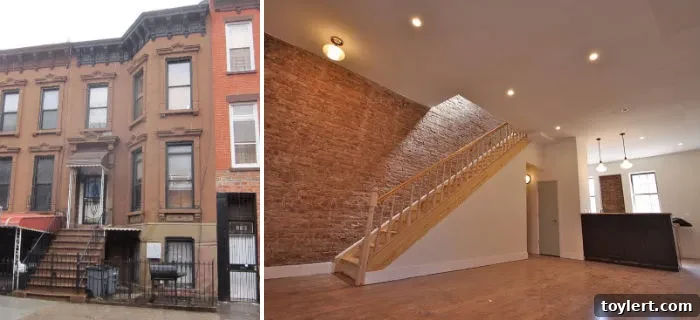
Discovering Bed-Stuy’s Charm: An In-Depth Look at 900 Lafayette Avenue’s Recent Flip
Bedford-Stuyvesant, affectionately known as Bed-Stuy, stands as a vibrant testament to Brooklyn’s rich history and architectural grandeur. Renowned for its tree-lined streets and magnificent brownstones, this neighborhood has become a focal point for real estate development and homeownership dreams. In recent years, a noticeable trend has emerged: a surge in meticulously “flipped” row houses hitting the market. These properties, purchased by developers, undergo extensive renovations before being reintroduced to eager buyers looking for modern amenities fused with historic charm. Among the latest contenders, 900 Lafayette Avenue presents a compelling case study, embodying both the promise and the potential pitfalls of this popular development strategy. We delve into this particular property, dissecting its appeal, questioning its design choices, and ultimately, contemplating its market value in a highly competitive landscape.
The Allure of 900 Lafayette Avenue: First Impressions and Modern Touches
Upon initial inspection, 900 Lafayette Avenue immediately captures attention with its clean lines and thoughtfully conceived layout. The developer has clearly aimed for an aesthetic that speaks to contemporary sensibilities while trying to nod to the building’s inherent character. The overall impression is one of brightness and spaciousness, a critical factor for urban dwellers seeking respite from the city’s hustle. The home’s flow appears intuitive, guiding visitors seamlessly from one area to the next, suggesting a comfortable living experience for its future inhabitants. This property’s presentation is a strong indicator of the care taken in its recent transformation, making a solid first impression on potential buyers.
A Kitchen Designed for Contemporary Living
The heart of any modern home, the kitchen at 900 Lafayette Avenue, truly shines as a highlight of the renovation. It boasts an array of desirable features that blend functionality with sleek design. The choice of countertops, possibly quartz or a similar high-end material, adds a touch of luxury and promises durability, making it ideal for both everyday cooking and entertaining. Complementing these surfaces are stylish pendant lights, strategically placed to illuminate key work areas while contributing to the kitchen’s sophisticated ambiance. This thoughtful lighting choice not only enhances visibility but also creates a focal point, drawing the eye to the contemporary fixtures. Coupled with what appear to be modern appliances and ample storage, this kitchen is clearly designed to meet the expectations of today’s discerning homeowner, offering a space that is both practical and visually appealing. It represents a significant investment by the developers, recognizing the kitchen’s role as a primary decision-making factor for many buyers in the current market.
Navigating Design Choices: Where History Meets Modern Renovation
While 900 Lafayette Avenue presents many appealing features, it also raises questions about certain design decisions that underscore the ongoing tension between preserving historical integrity and embracing modern aesthetics. Developers often walk a tightrope, attempting to create a marketable product that appeals to a broad audience without alienating those who cherish the architectural nuances of Bed-Stuy’s past. This property, like many of its flipped counterparts, showcases specific choices that invite discussion and scrutiny, particularly concerning material juxtaposition and heating systems. Understanding these decisions is crucial for evaluating the home’s long-term value and its appeal to various buyer segments.
The Exposed Brick and Plaster Conundrum
One of the more contentious design elements observed in this specific renovation is the mixing of exposed brick cutouts with plastered sections on the same wall. On one hand, exposed brick is a highly coveted feature in Brooklyn brownstones, celebrated for its rustic charm, textural depth, and historical authenticity. It instantly adds character and warmth, evoking the building’s storied past. However, the decision to reveal only “cutouts” rather than a full wall of exposed brick, alongside sections that have been smoothly plastered, creates a hybrid aesthetic that can be polarizing. Some might view this as a clever way to introduce historical elements without committing to a fully industrial or rustic look, offering a unique blend of old and new. Others might perceive it as an incomplete or disjointed approach, lacking the cohesive vision that either fully embracing or subtly referencing the original materials would provide. This “half-and-half” strategy can sometimes dilute the impact of both elements, leaving a sense of unresolved design. It reflects a developer’s attempt to satisfy multiple aesthetic preferences, but it also risks not fully satisfying any, leading to questions about the integrity of the renovation’s design philosophy.
The Debate Over Heating Systems: Baseboard in a Historic Setting
Another point of contention for potential buyers of historic properties is the choice of heating system. The installation of baseboard heating in a traditional row house, particularly one with the historical character of those found in Bed-Stuy, raises eyebrows among purists and practical buyers alike. While baseboard heating can be relatively inexpensive to install and offers individual room control, its aesthetic presence often clashes with the architectural elegance of older homes. Traditional row houses typically feature ornate radiators or, in more modern renovations, discreet forced-air systems that can be integrated seamlessly. Baseboard units, by contrast, can interrupt the flow of a room, limit furniture placement, and are generally not considered a high-end or historically sensitive choice. From a performance standpoint, while effective, baseboard heating can sometimes be less energy-efficient than other modern alternatives, particularly if the home’s insulation isn’t top-tier. For a property aiming for a premium price point, an argument can be made that a more sophisticated and aesthetically integrated heating solution, such as radiant floor heating or a high-efficiency forced-air system, would align better with the overall quality and historical context of the home. This choice signals a potential compromise, possibly driven by cost or ease of installation, that might impact the home’s perceived luxury and long-term operating costs for the homeowner.
Bed-Stuy’s Vibrant Real Estate Landscape: Context for 900 Lafayette
Bed-Stuy’s real estate market has experienced an incredible transformation over the last two decades, evolving from an often-overlooked gem into one of Brooklyn’s most sought-after neighborhoods. Its rich cultural heritage, impressive stock of brownstones and limestones, and growing array of independent businesses—from bustling cafes to artisanal boutiques and renowned restaurants—have drawn a diverse influx of residents. This revitalization has naturally led to a significant appreciation in property values. The demand for homes in Bed-Stuy is consistently high, driven by its relatively affordable prices compared to neighboring areas like Fort Greene or Clinton Hill, coupled with excellent public transportation options and a strong sense of community. The trend of “flipping” homes, where properties are purchased, renovated, and resold for a profit, is a direct response to this high demand. Developers are keen to capitalize on the neighborhood’s upward trajectory, often investing heavily in interior upgrades to appeal to buyers looking for turnkey solutions. This dynamic market context provides the backdrop against which 900 Lafayette Avenue is being presented, with its success hinging on how well it aligns with both current market expectations and the unique character of Bed-Stuy.
Analyzing the Asking Price: Is $949,000 Justified?
The asking price of $949,000 for 900 Lafayette Avenue immediately positions it within a competitive segment of the Bed-Stuy market. To determine if this price is justified, several factors must be considered. Firstly, the property’s location on Lafayette Avenue is generally desirable, offering good access to amenities and transit. Secondly, the overall quality of the renovation, particularly in high-impact areas like the kitchen and bathrooms (though specific bathroom details aren’t provided, they are typically key in flipped homes), plays a crucial role. The “clean” and “well-laid out” aspects contribute positively to its perceived value. However, the design choices previously discussed—the mixed exposed brick/plaster and the baseboard heating—could be perceived by some as compromises that detract from a premium valuation. Potential buyers might factor in the cost or effort required to alter these elements to better suit their preferences or to enhance historical authenticity. Comparables in the immediate vicinity, including recently sold flipped homes of similar size and finish quality, would be essential benchmarks. If other renovated row houses in the neighborhood are selling for similar or higher amounts with more cohesive design or superior heating systems, 900 Lafayette might struggle to achieve its ask. Conversely, if it offers unique advantages not immediately apparent, or if the market continues its strong upward trend, the price could be within reach. The developer’s reputation, in this case, Crown Investments, also implicitly plays a role, as buyers often consider the track record of those behind the renovation.
The Buyer’s Perspective: Weighing Pros and Cons
For a potential buyer, 900 Lafayette Avenue presents a mixed bag of compelling advantages and potential considerations. On the positive side, the home offers a renovated, move-in-ready experience in a highly desirable Brooklyn neighborhood, eliminating the often-stressful process of undertaking one’s own renovation. The kitchen, with its modern aesthetics and functional design, is a significant draw, promising ease of use and a stylish environment for cooking and entertaining. The overall clean and well-laid-out interior ensures a comfortable living space from day one. However, prospective homeowners might pause to consider the implications of the design choices. The blended exposed brick and plaster could be an acquired taste, potentially requiring further aesthetic adjustments for those seeking a more uniform or historically accurate look. Similarly, the baseboard heating, while functional, might raise questions about energy efficiency and long-term comfort, especially if a buyer prefers radiant heat or forced air. Ultimately, the decision will come down to individual preferences, budget constraints, and the willingness to overlook or adapt specific design elements in exchange for the benefits of a prime Bed-Stuy location and a largely updated property. It’s a balance between embracing the convenience of a flipped home and assessing the quality and sensibility of those flips.
Conclusion: A Glimpse into Bed-Stuy’s Future Homeownership
The emergence of properties like 900 Lafayette Avenue highlights a fascinating chapter in Bed-Stuy’s real estate narrative. It symbolizes the ongoing efforts by developers to meet the insatiable demand for modern, turn-key homes within the fabric of a historic neighborhood. This particular row house, with its commendable cleanliness and well-thought-out kitchen, undoubtedly possesses strong selling points that will appeal to a segment of the market. Yet, its distinct design choices—specifically the unique approach to exposed brick and the preference for baseboard heating—serve as reminders of the compromises that can arise when balancing contemporary renovation with historical context. The question of whether it will achieve its $949,000 asking price hinges on a delicate interplay between market demand, comparative properties, and how potential buyers weigh its strengths against its perceived drawbacks. Ultimately, 900 Lafayette Avenue stands as more than just a house for sale; it’s a barometer for the evolving tastes and expectations within one of Brooklyn’s most dynamic real estate markets, offering a valuable insight into what it truly means to own a piece of Bed-Stuy today.
900 Lafayette Avenue [Crown Investments] GMAP P*Shark