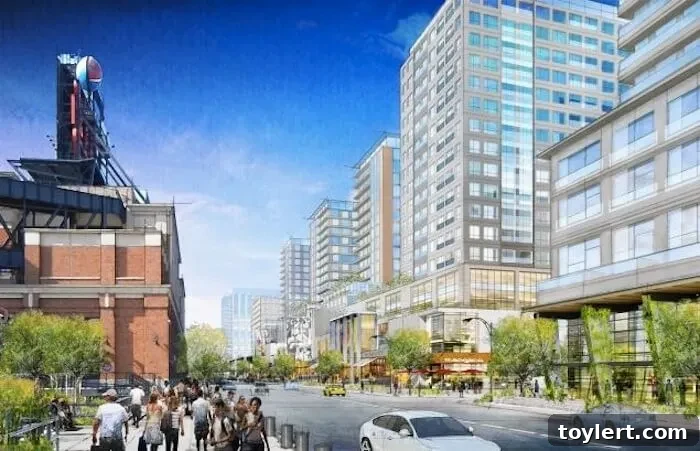
Queens’ Ascending Horizon: Unveiling the Mega-Developments Reshaping New York City’s Fastest-Growing Borough
Queens, a borough renowned for its rich diversity, vibrant neighborhoods, and strategic location within New York City, stands on the cusp of an unprecedented urban transformation. Over the next two decades, its skyline is set to undergo a dramatic metamorphosis, punctuated by a series of ambitious mega-developments that promise to redefine urban living, create thousands of new homes, and stimulate significant economic growth. This wave of construction signals Queens’ emergence as a pivotal hub for residential and commercial expansion, attracting a new generation of residents and businesses alike. From the revitalized waterfronts of Long Island City and Astoria to the bustling urban centers of Flushing and the ambitious overhaul of Willets Point, these projects are not merely buildings; they are blueprints for the future, meticulously designed to meet the evolving demands of a dynamic global city.
The sheer scale and scope of these upcoming projects, many of which involve towering residential buildings, mixed-use complexes, and integrated community facilities, are poised to irrevocably alter the visual landscape and socio-economic fabric of Queens. Spearheaded by prominent developers, these ventures address critical needs such as housing scarcity, infrastructure modernization, and the creation of vibrant public spaces. As these high-rises begin to pierce the clouds, they will collectively narrate a compelling story of progress, innovation, and an unwavering commitment to building a more resilient and inclusive New York City. Here’s a detailed breakdown of the monumental developments that will soon punctuate the Queens skyline:
Transformative Towers: A Closer Look at Queens’ Future Landmarks
Rockrose Development: 43-25 Hunter Street, Long Island City’s New Icon
Poised to become a defining feature of the Long Island City (LIC) skyline, Rockrose Development’s plans for 43-25 Hunter Street represent a significant milestone in Queens’ residential evolution. This ambitious project aims to construct the borough’s tallest residential building, soaring an impressive 500 feet into the air. Affectionately dubbed “Citibank’s girlfriend” due to its proximity to the iconic Citibank tower, this structure is more than just a tall building; it’s a testament to LIC’s rapid urbanization and its transformation into a sought-after residential destination. With an anticipated opening in 2016, this development, now a reality, has introduced hundreds of new housing units to an already booming neighborhood, contributing substantially to its vibrant street life and burgeoning economy. The tower’s contemporary design and prime location offer residents unparalleled access to Manhattan, making it a cornerstone of Long Island City’s appeal to urban professionals and families seeking modern living spaces.
The Wolkoff Family’s 5Pointz Site Redevelopment
The redevelopment of the iconic 5Pointz site in Long Island City marks a significant, albeit at times controversial, chapter in Queens’ urban narrative. The Wolkoff family is bringing a pair of imposing 41- and 48-story towers to this historically significant location. While the site was once a global canvas for graffiti artists, its transformation into a residential complex underscores the immense pressure for housing in NYC. These towers collectively house approximately 1,000 housing units, injecting a substantial number of new residents into the neighborhood. Beyond the residential offerings, the project also incorporates retail spaces and a commitment to art, aiming to honor the site’s artistic legacy in new forms. This development exemplifies the complex interplay between preserving cultural heritage and meeting the demands of urban growth, ultimately reshaping a once-industrial area into a high-density, mixed-use community.
Willets Point Project: A Vision for a New Urban Community
The Willets Point project represents one of Queens’ most ambitious and long-term revitalization efforts. Envisioned as a comprehensive mixed-use district, this sprawling development is expected to introduce buildings as tall as 20 stories, fundamentally transforming an area historically known as the “Iron Triangle” due to its automotive repair shops and industrial character. The master plan for Willets Point includes the creation of 2,500 housing units, a crucial step in addressing New York City’s persistent housing shortage. Before the full residential build-out, the project prioritizes the construction of a mega-mall, aiming to establish an economic anchor and draw visitors to the area. This monumental endeavor goes beyond residential and retail, promising significant infrastructure improvements, open green spaces, and a vision for a sustainable, pedestrian-friendly community that will serve as a new gateway to Flushing and Citi Field.
Hunters Point South: Waterfront Living with a Focus on Affordability
Along the picturesque waterfront of Long Island City, the Hunters Point South project stands as a shining example of thoughtful urban planning that balances luxury and affordability. Upon its completion, this impressive development will feature towers rising as high as 41 stories, providing breathtaking views of the Manhattan skyline and the East River. What truly sets Hunters Point South apart is its commitment to inclusive growth: it will ultimately hold 5,000 apartments, with a remarkable 60 percent designated as affordable housing. This significant allocation ensures that a wide range of income levels can benefit from living in a vibrant, amenity-rich waterfront community. The project also integrates expansive parkland, a new school, and retail spaces, fostering a holistic environment where residents can live, work, and recreate. Hunters Point South is not just building apartments; it’s cultivating a thriving, diverse neighborhood.
Hallets Point Project: Reshaping Astoria’s East River Waterfront
Astoria’s East River waterfront is experiencing its own renaissance with the colossal Hallets Point project. This extensive development encompasses 2,400 apartment units distributed across seven distinct towers, with some reaching up to 31 stories. Slated for completion around 2022, Hallets Point is designed to revitalize a previously underutilized stretch of the Astoria shoreline, transforming it into a dynamic residential enclave. Beyond the sheer volume of housing, the project includes crucial infrastructure upgrades, new retail establishments, and enhanced public access to the waterfront, including a promenade and green spaces. Its integration into the existing Astoria fabric is expected to bring new life and economic activity, solidifying Astoria’s reputation as one of Queens’ most desirable and rapidly evolving neighborhoods, offering a blend of modern amenities and traditional charm.
Astoria Cove Project: A Sister Development Enhancing Astoria’s Appeal
Located in close proximity to the Hallets Point development, the Astoria Cove project further contributes to the revitalization of Astoria’s waterfront. Arriving with an initial wave of development around 2015, this ambitious undertaking includes five towers, some soaring as tall as 30 stories, and will introduce an impressive 2,400 units to the area. Astoria Cove is designed as a mixed-use community, envisioning a vibrant ecosystem where residents have access to housing, retail, and community facilities all within walking distance. These integrated developments along the Astoria waterfront, including Astoria Cove, signify a broader trend of leveraging Queens’ strategic riverfront locations to create dense, walkable, and transit-accessible neighborhoods that cater to the demands of modern urban living, enhancing connectivity and quality of life for thousands of New Yorkers.
Flushing Commons: Urban Sophistication in a Historic Hub
The Flushing Commons development, a project long in the making, has finally gotten underway, promising a profound transformation for downtown Flushing. This comprehensive mixed-use complex is set to bring 600 luxury condos, a state-of-the-art YMCA, and a vibrant retail complex to a site formerly occupied by a municipal parking lot. Flushing, a historically significant and densely populated commercial hub, is poised to welcome a new era of urban sophistication with this development. With an estimated completion around 2021, Flushing Commons will not only provide upscale residential options but also enhance community services and retail offerings, making downtown Flushing an even more dynamic and attractive destination. This project encapsulates the trend of maximizing urban land use, converting underutilized spaces into thriving centers that combine residential, commercial, and recreational functions, thereby enriching the urban experience in one of Queens’ most culturally rich neighborhoods.
The Future of Queens: A Borough Defined by Growth and Innovation
The cumulative impact of these mega-developments extends far beyond individual buildings; they collectively signal a new era for Queens. The borough is rapidly evolving from a collection of diverse neighborhoods into a unified force in New York City’s urban landscape, capable of housing a growing population, fostering economic prosperity, and providing an enhanced quality of life. The emphasis on mixed-use projects ensures that new residential units are accompanied by essential services, retail opportunities, and public amenities, creating self-sufficient and vibrant communities.
While challenges such as infrastructure demands and community integration remain, the foresight and investment poured into these projects underscore a clear vision: Queens is not just growing; it is strategically building for a sustainable, prosperous, and inclusive future. As these towering structures continue to rise, they will stand as enduring symbols of Queens’ ascendancy, fundamentally reshaping its identity and cementing its status as one of New York City’s most exciting and dynamic boroughs for decades to come. The transformation of the Queens skyline is more than just construction; it’s the tangible manifestation of a thriving metropolis continually striving for innovation and progress.