Unveiling Brooklyn’s Transformation: A Journey Through Time Around Borough Hall
Brooklyn, a borough renowned for its vibrant culture, historic brownstones, and dynamic urban landscape, has undergone a breathtaking metamorphosis over the centuries. Few areas encapsulate this profound evolution as vividly as the blocks surrounding Brooklyn Borough Hall. Standing as an enduring testament to the borough’s rich past, Borough Hall itself, once proudly known as Brooklyn City Hall, remains a familiar landmark amidst an ocean of change. Yet, if not for its majestic presence, one might barely recognize this vital heart of Brooklyn, so radically have the surrounding streets and structures reshaped themselves over the past hundred years.
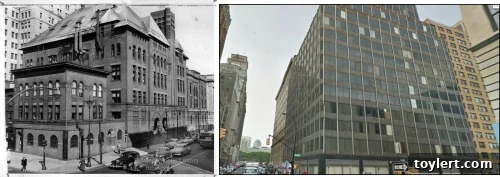
This central district, now known as Brooklyn’s Civic Center, pulsates with the rhythm of modern city life. Its array of municipal and commercial buildings are meticulously designed to facilitate the complex operations of a bustling metropolis. Towering courthouses preside over legal proceedings, meticulous record-keeping offices safeguard essential documents, and numerous law firms provide crucial legal services. Educational institutions, alongside various municipal headquarters, contribute to the area’s intellectual and administrative vibrancy. Yet, tracing back a mere century, the architectural tapestry of this very same neighborhood presented an entirely different scene. The block directly across Fulton Street from Borough Hall, for instance, bears no resemblance to its former self; not a single building standing there today existed back then.
Brooklyn Borough Hall: An Enduring Architectural Gem
At the very core of this ever-evolving landscape stands Brooklyn Borough Hall, a magnificent example of Greek Revival architecture. Completed in 1848, it originally served as the City Hall for the independent City of Brooklyn, a proud municipality that rivaled Manhattan in stature and ambition. Its grand façade, adorned with columns and a distinctive cupola, projects an air of authority and timeless elegance. For decades, it was the seat of municipal power, witnessing the dramatic growth and industrialization of Brooklyn. Even after Brooklyn’s consolidation with New York City in 1898, it retained its significance, transitioning into Brooklyn Borough Hall and continuing to serve as a pivotal administrative hub.
The survival of Borough Hall, largely intact and beautifully preserved, offers a crucial anchor for understanding the area’s transformation. It stands as a silent observer, its stone façade reflecting generations of Brooklynites and countless urban narratives. Its persistence is a testament to its architectural merit and historical importance, a reassuring constant in a neighborhood defined by perpetual flux.
The Evolution of Brooklyn’s Civic Center
The concept of a “Civic Center” implies a concentrated area dedicated to public administration and legal functions. While this designation feels natural today, the development of such a concentrated hub around Borough Hall was a gradual process, responding to the escalating demands of an expanding population and economy. In the late 19th and early 20th centuries, as Brooklyn burgeoned into a major urban center, the need for centralized government services became paramount. This spurred the construction of dedicated courthouses, public record buildings, and offices for various city departments.
The design of these early civic structures often mirrored the classical influences of Borough Hall itself, aiming for an aesthetic of permanence and gravitas. However, as the 20th century progressed, architectural styles shifted, and urban planning began to prioritize efficiency and modern infrastructure. The post-World War II era, in particular, saw significant urban renewal efforts that reshaped many American cities, and Brooklyn was no exception. These initiatives often involved the demolition of older, smaller structures to make way for larger, more functional government complexes and commercial skyscrapers, a process evident in the dramatic changes across Fulton Street.
Fulton Street Then and Now: A Visual Chronicle of Change
The statement that “the block across Fulton Street from Borough Hall looked totally different” a century ago, with “not a building there now that stood back then,” paints a vivid picture of radical urban renewal. Imagine bustling Fulton Street, then a primary commercial artery, lined with an entirely different array of buildings. A hundred years ago, this block might have hosted a mix of smaller retail establishments, residential brownstones, and perhaps a few modest commercial offices, typical of a vibrant, growing borough. The scale would have been more intimate, the streetscape characterized by a finer grain of architecture.
Today, that same block is dominated by imposing, modern structures – perhaps a towering office building, a contemporary municipal annex, or a large commercial complex. These new buildings, while serving essential functions, represent a stark departure from the past. Their construction often involved the consolidation of multiple smaller lots and the complete erasure of previous architectural layers. This transformation across Fulton Street is a microcosm of the larger story of urban development, where the demands of density, modernity, and economic progress often necessitate the complete reinvention of space.
The Legacy of Brooklyn Collegiate & Polytechnic Institute
The history of the area around Borough Hall is also inextricably linked to significant educational institutions, notably the Brooklyn Collegiate & Polytechnic Institute, which has played a formative role in Brooklyn’s intellectual and economic life. Established in 1854, the institution was founded with a dual mission: to provide a classical collegiate education alongside practical instruction in engineering and applied sciences – a forward-thinking approach for its time. It was an institution deeply embedded in the borough’s fabric, educating generations of engineers, scientists, and leaders who contributed to Brooklyn’s industrial prowess and beyond.
Initially located near the Civic Center area, the Polytechnic Institute grew alongside Brooklyn, adapting to its changing needs. Its presence contributed to the intellectual vibrancy of the downtown area, attracting students and faculty and fostering innovation. Over its long history, the institution underwent several transformations. Eventually, it evolved into the Polytechnic University, and later, became the NYU Tandon School of Engineering. This trajectory reflects a broader trend of educational institutions adapting to technological advancements and consolidating resources, while still maintaining a profound link to their historical roots and the communities they serve.
The “Collegiate” aspect of its original name highlighted its commitment to a broad, liberal arts education, complementing its technical focus. This blend was crucial in shaping well-rounded individuals capable of both critical thinking and practical application. While the physical campus may have moved or integrated into larger university systems, the legacy of innovation and academic excellence initiated by the Brooklyn Collegiate & Polytechnic Institute continues to resonate, contributing significantly to Brooklyn’s reputation as a center for higher education and technological advancement.
Forces Driving Urban Evolution in Brooklyn
The dramatic changes witnessed around Brooklyn Borough Hall are not random but the result of powerful socio-economic and demographic forces. Early industrialization in the 19th century fueled Brooklyn’s growth, drawing in waves of immigrants and necessitating robust infrastructure. The subsequent waves of urban planning, driven by desires for modernization, efficiency, and sometimes, a perceived need for slum clearance, led to large-scale redevelopments in the 20th century.
Post-World War II, many American downtowns faced challenges, including suburbanization and economic shifts. Urban renewal projects, often supported by federal funding, aimed to revitalize these core areas. While these projects sometimes led to the destruction of historically valuable structures and displaced communities, they also paved the way for new public buildings, commercial centers, and improved transportation networks. In Brooklyn, this meant the construction of modern office towers, expanded governmental facilities, and infrastructure improvements to handle increasing traffic and population density. The blocks around Borough Hall became prime targets for such modernization, reflecting the borough’s ambition to remain a vital economic and administrative center.
More recently, Brooklyn has experienced another renaissance, characterized by gentrification, a tech boom, and a renewed appreciation for its historic architecture. This has led to a different kind of development, often focusing on adaptive reuse of existing buildings, luxury residential towers, and vibrant cultural spaces. Yet, the core function of the Civic Center remains, continually adapting its physical form to serve the needs of a dynamic, ever-growing urban populace.
Connecting Past and Present: The Enduring Spirit of Brooklyn
Walking through the streets around Brooklyn Borough Hall today is to embark on a journey through time. The venerable façade of Borough Hall stands in stark contrast to the sleek glass and steel of contemporary skyscrapers, each telling a distinct chapter of Brooklyn’s story. This juxtaposition of old and new is not merely architectural; it symbolizes the enduring spirit of a borough that reveres its history while boldly embracing the future.
The transformation of this vital urban core is a continuous narrative. From its days as an independent city’s administrative heart, through periods of industrial might and urban renewal, to its current status as a bustling metropolitan hub, the area around Borough Hall mirrors Brooklyn’s relentless evolution. Understanding this historical arc provides invaluable context for appreciating the Brooklyn of today – a place where the echoes of the past resonate within the vibrant pulse of the present, constantly shaping its identity and charting its course forward.