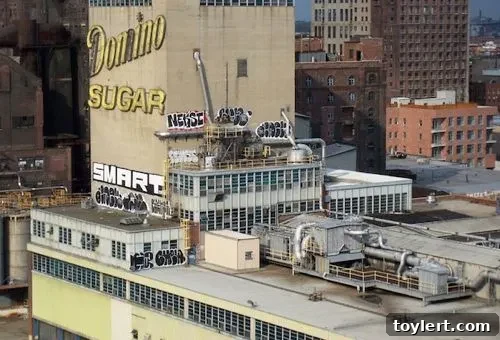
Two Trees Management Secures Iconic Domino Sugar Factory Site: A Landmark Deal for Williamsburg’s Future
The urban development landscape of New York City is poised for a significant transformation following the official announcement: Two Trees Management has successfully finalized a deal to acquire the sprawling 11-acre site of the former Domino Sugar Factory on the vibrant Williamsburg Waterfront. This acquisition marks a pivotal moment for one of Brooklyn’s most iconic and strategically important brownfield sites, promising a future blend of historical preservation, community integration, and cutting-edge urban design. The highly anticipated redevelopment project, with an estimated total value ranging from $1.4 billion to $2 billion, is now firmly in the hands of one of the city’s most reputable and experienced developers.
A New Chapter for a Historic Landmark
The Domino Sugar Factory, a towering symbol of Brooklyn’s industrial past, has long dominated the Williamsburg skyline. For over a century, its operations were central to the economic and social fabric of the borough, processing vast quantities of sugar and employing generations of local residents. After its closure, the immense site stood as a testament to a bygone era, simultaneously representing a challenge and an unparalleled opportunity for urban revitalization. Its commanding presence on the East River offers unparalleled views of Manhattan and direct access to a burgeoning community, making its redevelopment a subject of intense public and professional interest.
The journey to this significant acquisition has been long and complex. Previous attempts to redevelop the site faced numerous hurdles, including financial complexities, community concerns, and the sheer scale of the undertaking. The project had stalled under the previous ownership structure involving C.P.C. Resources and the Katan Group, leaving the future of the invaluable waterfront parcel uncertain. The community, urban planners, and real estate experts alike have eagerly awaited a resolution that could unlock the site’s immense potential, envisioning a future that respects its heritage while addressing contemporary urban needs.
Navigating the Intricate Acquisition Deal
The path to Two Trees’ ownership was not without its twists and turns, reflecting the high stakes involved in such a marquee acquisition. Reports had circulated that the Walentas-owned development company was deeply engaged in negotiations with C.P.C. Resources to take over the stalled project. Initially, the proposed purchase price for the 11-acre site was reported at $160 million. However, the existing partner, the Katan Group, expressed significant reservations, publicly disputing the sufficiency of the offer and actively seeking a higher bid.
This led to a dramatic turn of events, with Katan Group claiming to have secured a competing offer of $185 million from a consortium comprising the Chetrit Group and David Bistricer. Interestingly, David Bistricer was at the time also involved in another prominent Brooklyn project, the acquisition and conversion of the historic Bossert Hotel, a move that had already drawn criticism from some Brooklyn Heights residents. Faced with this new development, Two Trees Management, known for its strategic foresight and commitment, swiftly matched the increased price, securing their position as the preferred buyer for the Domino Sugar Factory site.
Despite Two Trees matching the higher bid, the Katan Group continued to voice discontent, stating, “We have serious reservations about the propriety of the Two Trees deal.” This posturing was widely interpreted within real estate circles as a strategic attempt to extract additional concessions or a larger financial payout before the finalization of the deal. The irony of Katan Group questioning the propriety of a developer with the sterling reputation of Two Trees Management, known for its high-quality developments and ethical practices across New York City, was not lost on industry observers. Ultimately, the previous owners, C.P.C. Resources and partners, owed approximately $130 million to lenders on the project, suggesting that even after repayment, there would be a substantial sum to be divided amongst the stakeholders, ensuring a profitable exit for all parties involved.
Two Trees’ Vision: Blending Innovation with Community Needs
With the acquisition now complete, attention turns to Two Trees Management’s vision for the Domino Sugar Factory site. Jed Walentas, a principal at Two Trees, has hinted at an exciting future, stating, “There are probably some opportunities to make improvements on the plans.” This statement resonates with Two Trees’ established reputation for transformative urban development, notably seen in their revitalization efforts in DUMBO, another historic Brooklyn waterfront neighborhood. Their approach typically involves a keen eye for architectural excellence, the creation of vibrant public spaces, and a deep understanding of urban dynamics.
The “improvements” Jed Walentas refers to are likely to encompass a holistic approach to development. This could involve enhancing the architectural designs to better integrate the factory’s iconic structures, optimizing the flow of public spaces along the waterfront, and incorporating advanced sustainability features. Two Trees has a history of not just building structures but creating entire neighborhoods that enhance the quality of life for residents and visitors alike. Their vision for Domino is expected to be no different, focusing on creating a thriving mixed-use environment that respects the site’s heritage while fostering a dynamic future.
Prioritizing Affordable Housing and Community Promises
A central and highly anticipated aspect of the Domino Sugar Factory redevelopment is the commitment to affordable housing. From the outset, community advocates and local leaders have emphasized the critical importance of preserving the 660 units of affordable housing that were originally negotiated as part of the project. In a rapidly gentrifying neighborhood like Williamsburg, the provision of affordable housing is not merely a policy point; it is a vital component for maintaining economic diversity and ensuring that existing residents can continue to thrive in their community.
Rob Solano, Executive Director of Churches United for Fair Housing, articulated this sentiment clearly, telling The New York Times, “We’re happy that someone can take this over and build it. It’s extremely important that the Domino project is built with all the affordable housing that was promised.” Similarly, Councilwoman Diana Reyna underscored the community’s expectations, stating, “We’re looking forward to seeing how the new developer will deliver on the promises made to the community.” These statements highlight the profound impact such a large-scale project can have on the social fabric of a neighborhood and the unwavering expectation that developers will honor agreements made with the local populace.
Two Trees Management has a track record of engaging with communities and understanding the socio-economic impact of their projects. Their commitment to these affordable housing units will be a crucial benchmark for the success and acceptance of the Domino redevelopment. Integrating these units seamlessly into the larger mixed-use scheme will be essential, ensuring that the new community is diverse, inclusive, and truly reflective of Brooklyn’s spirit.
Challenges and Opportunities for a Transformed Waterfront
The redevelopment of the Domino Sugar Factory presents both significant challenges and unparalleled opportunities. On the challenge front, the sheer scale of the 11-acre site demands meticulous planning for infrastructure, traffic management, and environmental remediation, given its industrial past. Regulatory hurdles, public review processes, and the complexities of financing a multi-billion dollar project are also formidable. Moreover, managing the high expectations of the community, which includes ensuring accessible public spaces and integrated amenities, requires continuous engagement and transparent communication.
However, the opportunities presented by this project are equally immense. The site’s prime waterfront location offers the chance to create extraordinary public access, including parks, promenades, and recreational areas that will serve not only the new residents but also the wider Brooklyn community. The redevelopment can be a powerful engine for economic development, generating thousands of construction jobs and hundreds of permanent positions in retail, hospitality, and other services. Architecturally, it provides a canvas for innovative design, allowing for the sensitive integration of historic structures with contemporary architecture. Furthermore, the potential for sustainable design and green building practices can establish a new benchmark for urban development in New York City.
The Impact on Williamsburg and Beyond
The Domino Sugar Factory redevelopment by Two Trees Management is set to profoundly transform the Williamsburg waterfront and leave an indelible mark on Brooklyn’s future. It envisions a vibrant, mixed-use district that will seamlessly blend residential living, dynamic retail spaces, cultural institutions, and expansive public parks. The project aims to create a destination that respects the historical significance of the factory while ushering in a new era of urban vitality.
This transformative project is not merely about constructing buildings; it is about crafting a sustainable, inclusive, and thriving community. By revitalizing an iconic industrial landmark, Two Trees is poised to set a new standard for urban redevelopment, creating a legacy that will benefit New Yorkers for generations to come. The Domino Sugar Factory site, once a symbol of Brooklyn’s industrial might, is now on the cusp of becoming a beacon of its innovative and community-focused future.
The journey from a stalled project to a bustling, reimagined waterfront is now officially underway. With Two Trees Management at the helm, the Williamsburg waterfront is set to welcome a landmark development that balances progress with preservation, and economic growth with community well-being.
Developer to Revive a Project in Brooklyn [NY Times]