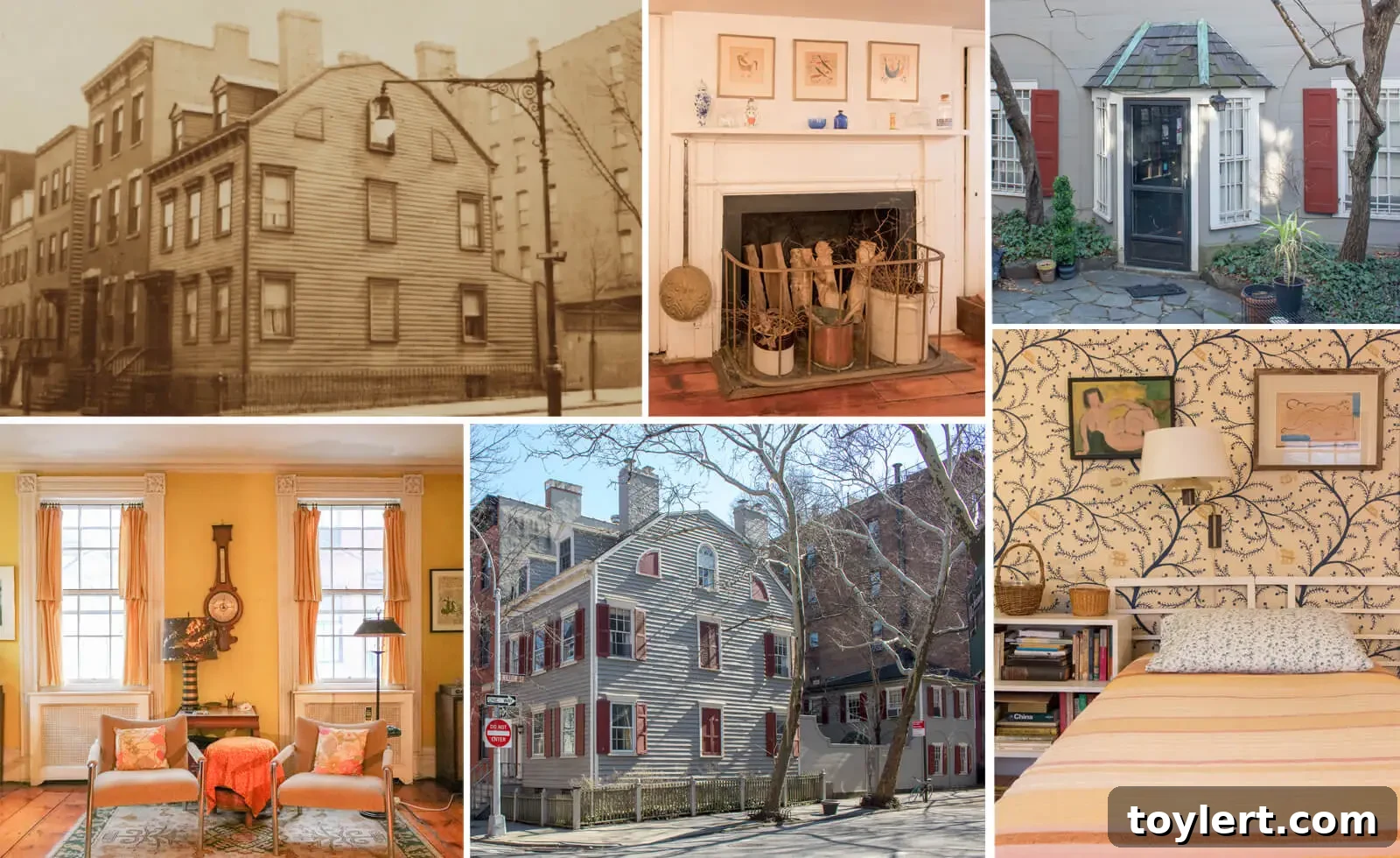
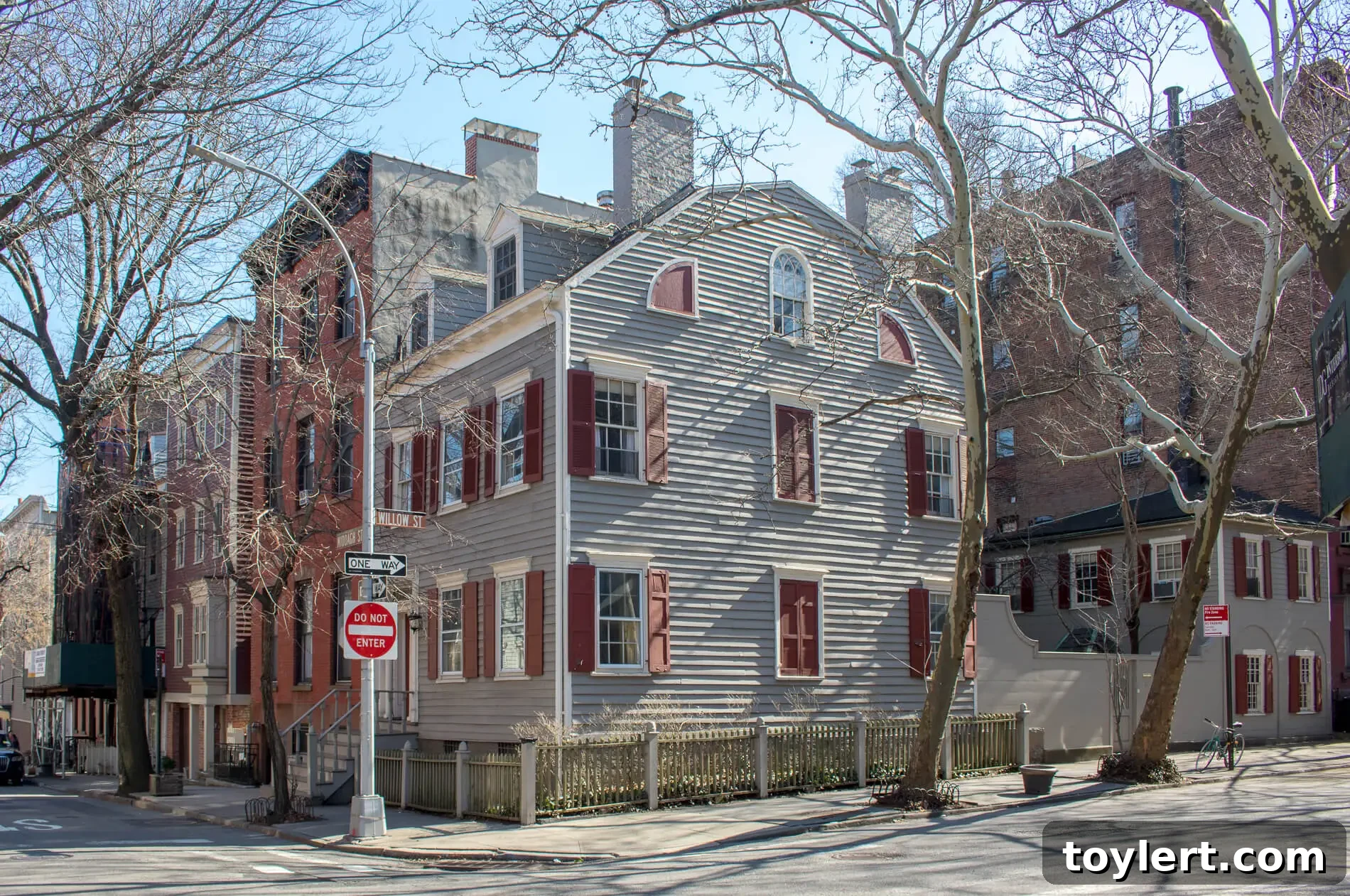
Nestled on a charming corner lot in the prestigious Brooklyn Heights neighborhood stands 24 Middagh Street, a Federal-style house steeped in a history as rich as it is mysterious. For generations, tales of taverns, daring sea captains, and centuries-old secrets have clung to its venerable walls, passed down from owner to owner, solidifying its status as a local legend. Often rumored to be one of the oldest residences in Brooklyn Heights, the exact date of its construction remains a captivating enigma, with historical estimates ranging widely from the late 18th century, around 1790, to the early 19th century, closer to 1829. The truth, like many fascinating historical narratives, likely lies somewhere within this intriguing timeframe, blurring the lines between documented fact and cherished folklore.
The sheer volume of legends surrounding this particular Brooklyn Heights gem is a testament to the complex and often challenging process of historical research. Tracing the lineage of ancient properties through conveyance records, tax assessments, and antiquated maps can be a labyrinthine journey, especially when addresses evolve over time and significant gaps plague official documents. In such a landscape, rumors flourish, and separating genuine historical fact from captivating local fiction becomes an arduous, yet endlessly rewarding, endeavor for historians and enthusiasts alike. 24 Middagh Street perfectly embodies this historical detective work, inviting us to delve deeper into its storied past.
The Enduring Enigma of Its Origins: When Was 24 Middagh Street Truly Built?
The debate over 24 Middagh Street’s precise construction date is central to its allure. While some historical accounts confidently point to 1790, suggesting it predates much of Brooklyn’s urban development, others place its birth around 1829, coinciding with the rapid growth and formal planning of Brooklyn Heights as New York City’s first suburb. A construction date of 1790 would position it as a rare survivor from the post-Revolutionary War era, a period when Brooklyn was primarily a collection of scattered farms and small settlements, deeply connected to its agricultural and maritime roots. A house built at this time would represent a tangible link to a very different Brooklyn, predating the iconic ferry service that truly catalyzed the neighborhood’s development.
Conversely, a date closer to 1829 aligns with the active development phase of Brooklyn Heights, a period characterized by the strategic sale of lots by Hezekiah B. Pierrepont and other prominent landowners, who envisioned a refined residential enclave for wealthy merchants and professionals. If built in 1829, 24 Middagh Street would still be an incredibly early example of the Federal style in the area, a testament to the architectural trends of the burgeoning community. The discrepancy highlights the fluid nature of early American record-keeping and the challenges in definitively dating structures from centuries past without an explicit cornerstone or indisputable deed. Research into property transactions, local censuses, and even stylistic architectural cues often provides clues, but rarely a definitive answer without robust documentation.
Whispers of the Past: Taverns, Sea Captains, and Brooklyn’s Maritime Soul
The legends of taverns and sea captains associated with 24 Middagh Street are not mere embellishments; they are echoes of Brooklyn Heights’ profound connection to the sea. Historically, Brooklyn’s waterfront was a bustling hub of trade, shipping, and seafaring life. The proximity of Middagh Street to the harbor made it a natural location for residents involved in maritime industries – shipbuilders, merchants, and, indeed, sea captains who piloted vessels across vast oceans. It’s easy to imagine a weary captain returning from a long voyage, seeking solace and camaraderie in a local tavern, perhaps even one housed within the very walls of 24 Middagh Street, or at least a structure on its site.
Taverns, in the 18th and early 19th centuries, were not just places for drink; they were vital community centers. They served as post offices, meeting places, temporary accommodations, and forums for political and social discourse. The idea that 24 Middagh Street might have once served such a purpose adds an incredible layer of historical texture, painting a vivid picture of a time when the rhythm of life in Brooklyn Heights beat to the pulse of the nearby docks. These stories, whether entirely factual or embellished through generations of retelling, contribute significantly to the house’s unique character and its status as a vessel of local memory. They connect the present-day residence to a vibrant, industrious past, reminding us of the human stories embedded within bricks and mortar.
The Architect’s Canvas: A Federal-Style Masterpiece
Beyond its enigmatic history, 24 Middagh Street stands as a beautiful example of Federal-style architecture, a popular aesthetic in the United States from roughly 1780 to 1830. This style, named for the early Federal period following the American Revolution, represented a move away from the more ornate Georgian style towards a simpler, more elegant, and classically inspired design. Key characteristics visible in homes like 24 Middagh Street include a symmetrical façade, often with a central door, and regularly spaced windows. The building typically features low-pitched roofs, often hidden behind a parapet, and decorative elements like fanlights above doorways, delicate pilasters, and intricate cornices, all drawing inspiration from Roman and Greek classical forms.
The Federal style emphasized refinement and proportion, reflecting the new nation’s desire for an architectural identity that conveyed sophistication and order. The Federal-style corner-lot house at 24 Middagh Street likely boasted a dignified appearance, perhaps with finely detailed window sills, brickwork (or clapboard, given early Brooklyn Heights homes were often wood-frame), and a stately entrance. Its position on a corner lot would have provided ample natural light and a prominent presence within the streetscape, signifying the status of its early inhabitants. This architectural choice underscores the aspiration and taste of the original builder and owners, placing the house firmly within the context of early American prosperity and design sensibilities.
The Challenge of Historical Preservation in Brooklyn Heights
The ongoing efforts to understand and preserve buildings like 24 Middagh Street highlight the broader importance of historic preservation in Brooklyn Heights. This neighborhood, a designated historic district, is renowned for its unparalleled collection of 19th-century architecture. However, beneath the well-maintained facades lie complex histories, often obscured by the very passage of time that makes them valuable. Property deeds might be incomplete, names might be misspelled in old records, and street numbers could have changed multiple times, making a definitive timeline incredibly difficult to construct.
For buildings that predate the systematic record-keeping of later eras, researchers often rely on a patchwork of resources: fire insurance maps (like the Sanborn Maps), city directories, old newspaper clippings, family genealogies, and even anecdotal evidence passed down through generations. Each piece of information acts like a puzzle piece, slowly contributing to a more complete picture. The stories of 24 Middagh Street — its fluctuating construction date, its rumored past as a tavern or a sea captain’s abode — are not simply charming tales; they are crucial elements that connect us to the earliest days of Brooklyn and New York City, offering invaluable insights into urban development, social history, and architectural evolution.
24 Middagh Street Today: A Living Legacy
Today, 24 Middagh Street stands as a living testament to Brooklyn Heights’ enduring charm and rich historical tapestry. It continues to be a point of fascination for locals and visitors alike, a house that silently speaks volumes about the past, even as its exact stories remain partially hidden in the mists of time. Its meticulously maintained exterior, characteristic of the Federal style, contributes significantly to the aesthetic appeal of the neighborhood, drawing admiration from architectural enthusiasts. While it may no longer serve as a tavern for sea captains, its presence evokes the spirited bygone era when the streets of Brooklyn Heights teemed with maritime activity and pioneering residents.
The continued existence of such a venerable structure is a powerful reminder of the importance of preserving our architectural heritage. Houses like 24 Middagh Street are more than just buildings; they are historical artifacts, cultural touchstones that embody the spirit of their age. They offer tangible connections to the lives of those who came before us, providing context and character to our modern urban landscapes. Its story, full of both certainty and speculation, makes 24 Middagh Street a uniquely compelling subject, inviting endless contemplation about the lives lived within its walls and the secrets it continues to hold.
Conclusion: A Timeless Jewel in Brooklyn Heights
From its debated origins in the late 18th or early 19th century to its rumored past of boisterous taverns and seasoned mariners, 24 Middagh Street remains an iconic landmark in Brooklyn Heights. It perfectly encapsulates the challenges and rewards of exploring local history, where every old document and every whispered legend adds another layer to a building’s identity. As a splendid example of Federal-style architecture, it stands not just as a house, but as a silent chronicler of Brooklyn’s transformation from a colonial outpost to a thriving urban center. Its enduring mystery only enhances its appeal, ensuring that 24 Middagh Street will continue to captivate imaginations and inspire historical inquiry for generations to come, truly making it a timeless jewel of Brooklyn Heights.