The Icicle House: Unveiling a 19th-Century Gothic Revival Masterpiece in Durham, NY
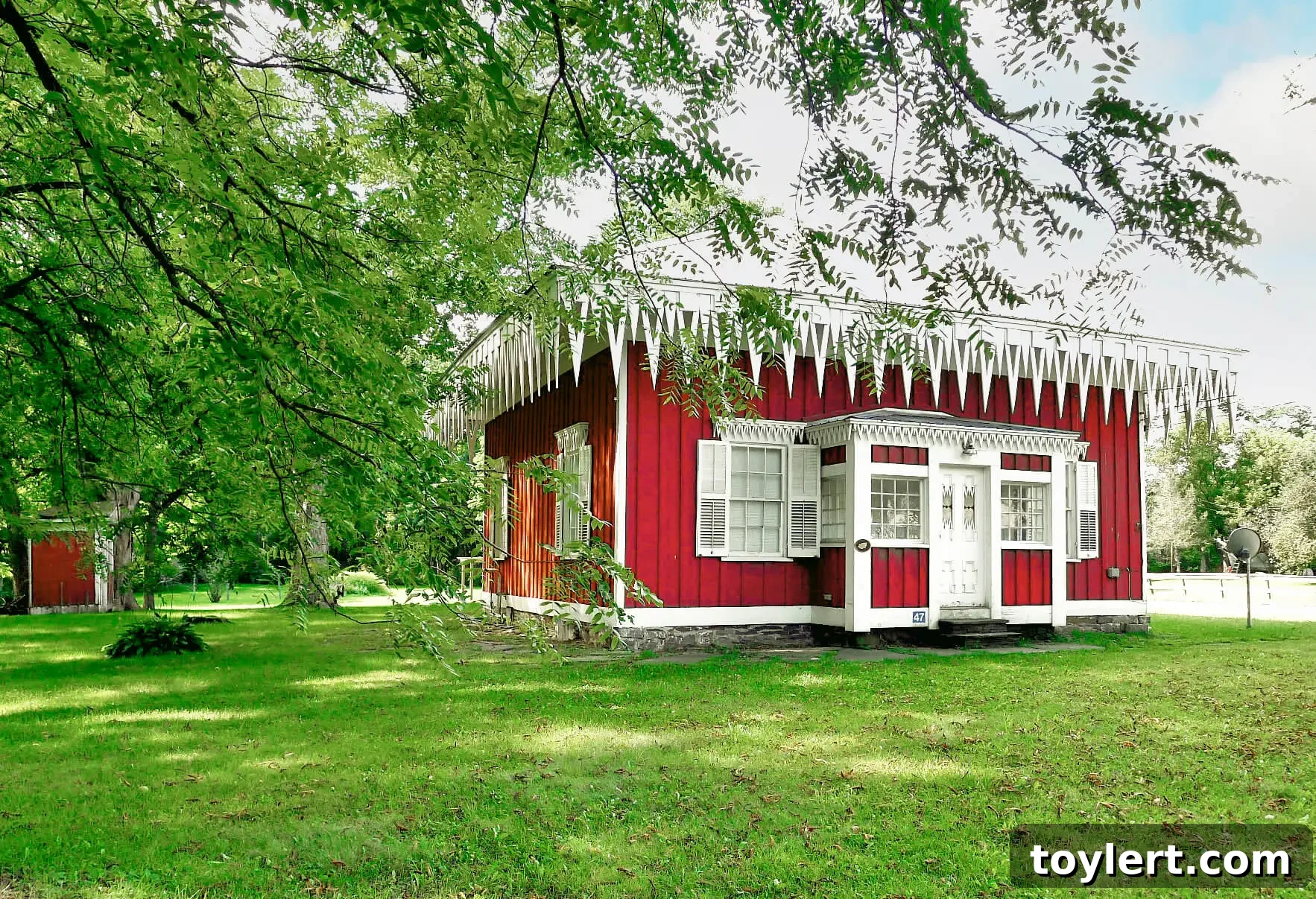
Nestled amidst the tranquil beauty of Greene County, New York, stands a dwelling that transcends ordinary architecture, earning the enchanting and memorable moniker, “The Icicle House.” This exceptional property, located at 47 Oak Hill Road in Durham, N.Y., is a quintessential example of the 19th-century picturesque country house ideal, pushing its decorative elements to remarkable extremes. Its most striking and defining feature — the dramatically elongated bargeboards adorning its gables — conjures vivid imagery of delicate, frozen ornaments, giving the home its unique name and an undeniably captivating presence within the landscape.
Currently on the market, The Icicle House offers more than just a residence; it presents an opportunity to own a tangible piece of American architectural history. Its distinctive character, rooted in the romantic ideals of the Gothic Revival, makes it a rare find for those who appreciate heritage, craftsmanship, and a home with a truly compelling story.
Architectural Splendor: A Deep Dive into Gothic Revival Aesthetics
The Icicle House is a magnificent testament to the enduring allure of Gothic Revival architecture, a style that swept across America in the mid-19th century. This movement sought to infuse domestic dwellings with the intricate detailing, dramatic forms, and romantic spirit reminiscent of medieval Gothic cathedrals. The house immediately captivates with its prominent board-and-batten siding, painted a vibrant, eye-catching red. This vertical cladding not only adds a rustic yet sophisticated texture characteristic of the style but also enhances the perceived height and grandeur of the cottage, creating a striking visual contrast against the surrounding greenery.
However, it is in its intricate woodwork that The Icicle House truly lives up to its name. The namesake bargeboards are exquisite examples of Victorian-era craftsmanship, extending gracefully and dramatically beyond the eaves to create a pronounced, almost theatrical effect. These decorative timbers, typically found along the gables of Gothic Revival homes, are here exaggerated to form long, pointed embellishments that uncannily resemble icicles dripping from the roofline. This imaginative use of architectural elements defines the home’s distinctive character and whimsical charm. Complementing these magnificent features, the windows themselves are crowned with scaled-down versions of this “icy ornament”—delicate finials, drip molds, and decorative trim that echo the larger theme, adding a consistent layer of intricate detail to every opening. These elements collectively transform the dwelling into a living work of art, a harmonious blend of historical design, masterful craftsmanship, and playful imagination.
The architectural choices speak volumes about the period’s aesthetic values, emphasizing asymmetry, verticality, and a connection to nature through ornate detailing. The careful preservation of these original features ensures that The Icicle House remains a shining example of this beloved style, offering future owners a direct link to the architectural trends and artistic expressions of the mid-1800s. Its bold color, unique siding, and iconic “icicle” detailing guarantee that this home stands out as a treasured landmark, a true architectural jewel in the Greene County landscape.
The Historic Hamlet of Oak Hill: A Setting Steeped in Time
While the official mailing address of this remarkable home is Durham, it is firmly and proudly rooted within the enchanting and historically significant hamlet of Oak Hill. This distinction is paramount, as Oak Hill itself is a veritable treasure trove of 19th-century Americana, offering a rare glimpse into a bygone era. Much of the hamlet, including this very property at 47 Oak Hill Road, holds a coveted position within the prestigious Oak Hill National Register Historic District. This esteemed designation is not merely an honor; it underscores the area’s profound historical and architectural significance, providing a protective framework that ensures its preservation for future generations to appreciate and enjoy.
The Oak Hill National Register Historic District is predominantly characterized by a cohesive collection of structures dating from the mid to late 19th century. This period precisely aligns with a time of robust growth and substantial economic prosperity within the region. During these vibrant decades, Oak Hill emerged as a bustling hub, its economy propelled by a diverse array of industries that contributed significantly to its lively and thriving community. Imagine a time when local foundries hummed with activity, mills processed raw materials, and local businesses flourished, all contributing to the distinct character of the hamlet.
To walk through the streets of Oak Hill today is to embark on a captivating journey back in time. The well-preserved homes and buildings stand as silent storytellers, each facade whispering tales of past generations, their lives, and their contributions to the community. The presence of such a cohesive and remarkably intact collection of historical architecture immeasurably enhances the value and appeal of The Icicle House. It places the property within a rich tapestry of cultural heritage and deep-seated community pride. Owning a home within a National Register Historic District not only promises a unique and deeply enriching living experience but also connects residents to a broader, ongoing narrative of regional development, architectural evolution, and the enduring spirit of a historic American community. It’s an immersive experience where history is not just observed but lived.
Unraveling the Past: The Legacy of Calvin Adams
The precise construction date of The Icicle House has been a fascinating subject of historical inquiry and nomination. Evidence suggests it dates to circa 1845, placing it squarely within the nascent years of the Gothic Revival in America. However, historical records also present a compelling alternative, indicating that its construction might more accurately align with the early 1850s. This period coincides with a pivotal moment in the property’s history: its acquisition by the renowned local figure, Calvin Adams.
Calvin Adams was far more than just a property owner; he was a dynamic embodiment of 19th-century American ingenuity, entrepreneurship, and industrial spirit. Born right there in the small, yet burgeoning, community of Oak Hill, his early life saw him venture beyond the familiar confines of Greene County. In the 1830s, Adams made the significant move to Pittsburgh, Pennsylvania, a city that was rapidly transforming into a formidable industrial powerhouse. While specific details of his early endeavors in Pittsburgh may not be extensively documented in all surviving records, it is reasonable to infer that this period was instrumental in shaping his career. It was likely here that he gained invaluable practical experience in manufacturing, absorbed innovative industrial techniques, and honed the entrepreneurial skills that would later define his substantial contributions to Oak Hill.
His eventual return to his hometown marked a profound turning point, not only for Adams himself but for the local community of Oak Hill. Leveraging his acquired expertise and perhaps a newfound capital, he established a successful foundry that rapidly became an indispensable cornerstone of Oak Hill’s burgeoning industrial landscape. According to a meticulously documented 1850s history of Greene County, Adams’s foundry was a bustling hub of productivity, manufacturing a range of essential items crucial for both agricultural advancement and domestic comfort. His diverse product line included highly practical yet vital goods such as “coffee mills, corn shellers, door trimmings, etc.” These items were fundamental to daily life and economic activity in the 19th century, underscoring Adams’s significant contribution to the regional economy and the daily lives of its residents. The presence of such an innovative and successful manufacturer like Calvin Adams highlights the vibrant and dynamic industrial spirit that characterized Oak Hill during this era. Given his prosperity and entrepreneurial drive, it is highly probable that the architectural elegance, quality craftsmanship, and distinctive style of The Icicle House directly reflect the sophisticated taste and substantial means of its esteemed owner.
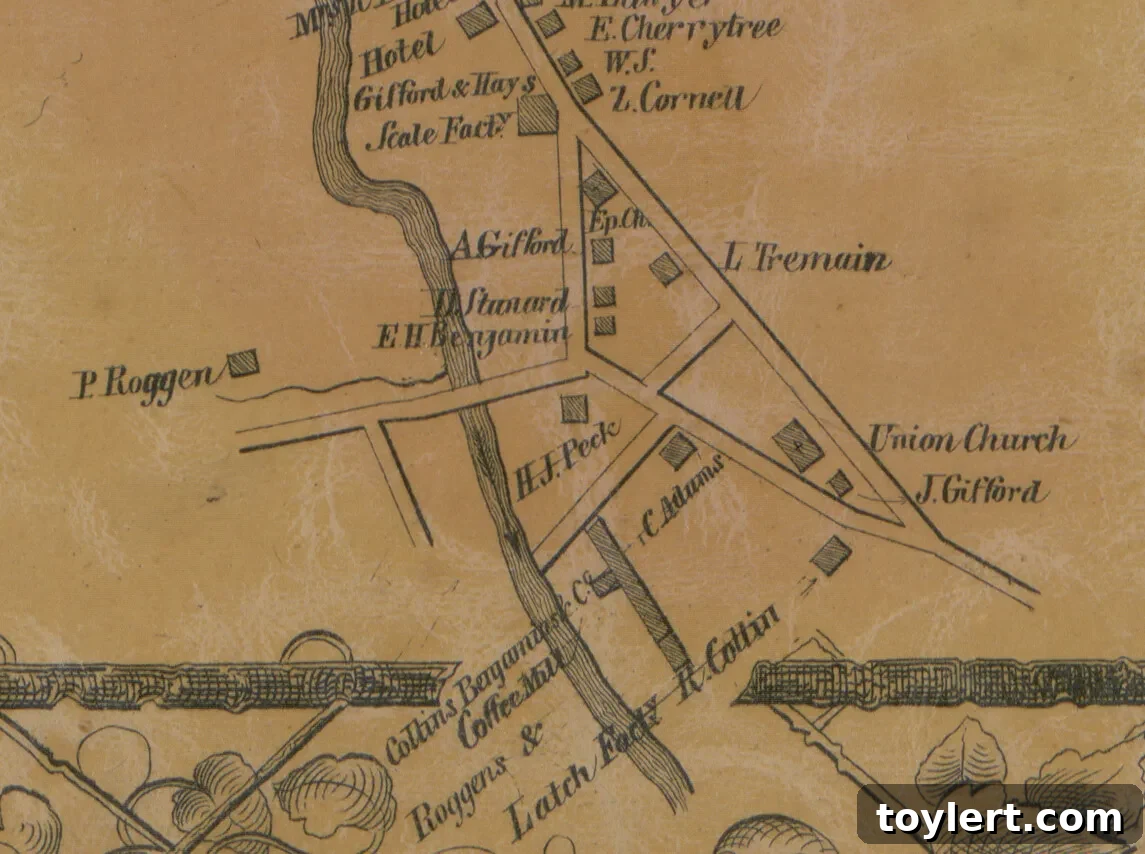
This 1856 map provides powerful, concrete visual evidence, confirming C. Adams as the owner of this specific property during a crucial period. Such meticulously detailed cartographic records are indispensable tools for historians, genealogists, and preservationists alike, allowing them to precisely trace property ownership, verify historical accounts, and accurately date structures. The clear attribution of The Icicle House on such an early map to a prominent local figure like Calvin Adams only deepens its historical resonance and adds another compelling layer to its already rich and fascinating story. It strongly suggests that the home was a significant and well-regarded property within the hamlet, even in its formative years, reflective of its owner’s standing and the burgeoning prosperity of Oak Hill.
A Timeless Appeal: Owning a Piece of Greene County History
The Icicle House at 47 Oak Hill Road is far more than just a residence; it is a living artifact, a beautiful and tangible embodiment of Greene County’s rich historical past and a striking example of 19th-century American architectural ingenuity. From its instantly recognizable “icicle” bargeboards and its bold, vibrant red board-and-batten siding, to its deep historical roots within the charming Oak Hill Hamlet and its intriguing connection to the innovative industrialist Calvin Adams, every facet of this remarkable home tells a captivating and unique story.
For discerning individuals seeking a truly unique property that seamlessly blends profound historical significance with exceptional visual appeal and architectural distinction, this Gothic Revival gem offers an unparalleled opportunity. It promises not merely a house, but a lifestyle steeped in history, surrounded by the undeniable charm of a meticulously preserved historic district, and offering a tranquil, idyllic escape in the heart of Upstate New York. As it stands proudly on the market today, The Icicle House warmly invites a new chapter in its long and storied existence, eagerly awaiting to charm its next steward with its timeless beauty, enduring legacy, and the promise of a truly unique living experience.