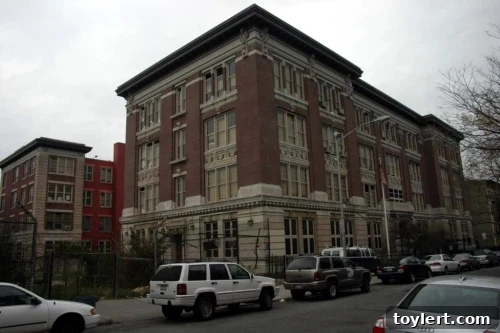
Unveiling 760 Prospect Place: The Enduring Legacy of Public School 138 and Brooklyn’s Teacher Training Heritage
Brooklyn, one building at a time. This philosophy guides us as we delve into the rich tapestry of the borough’s architectural and educational history. Today, our spotlight shines brightly on Public School 138, a majestic edifice at 760 Prospect Place. This isn’t just another school building; it’s a living monument that once served as the esteemed Brooklyn Training School for Teachers, playing a pivotal role in shaping the educational landscape of an entire generation.
Nestled in a vibrant part of Brooklyn, 760 Prospect Place stands as a testament to the borough’s commitment to education and civic grandeur at the turn of the 20th century. Its robust construction and stately facade whisper tales of ambition, learning, and the countless individuals who passed through its formidable doors, either as aspiring educators or eager young students. The building’s history is a microcosm of Brooklyn’s own journey—from a burgeoning urban center in need of skilled professionals to a diverse community valuing its historic educational institutions.
The Genesis: Brooklyn Training School for Teachers
Before it became Public School 138, this magnificent structure was conceived with a profound purpose: to educate the educators. The Brooklyn Training School for Teachers emerged during a critical period in American history when the demand for qualified teachers skyrocketed, particularly in rapidly expanding urban centers like Brooklyn. As the population swelled with immigrants and native-born citizens seeking new opportunities, the need for a robust public school system became paramount. And at the heart of any successful school system were well-prepared teachers.
Opened at a time when formal teacher training was becoming standardized, the Brooklyn Training School for Teachers was at the forefront of pedagogical innovation. It was designed to provide comprehensive instruction in curriculum, classroom management, child psychology, and the practical skills necessary for effective teaching. The institution attracted aspiring teachers from across Brooklyn and beyond, instilling in them not just knowledge, but a deep sense of civic duty and dedication to their future students. Its curriculum was rigorous, combining theoretical study with practical observation and supervised teaching experiences in local schools. This blend ensured that graduates were not only academically proficient but also capable of immediately contributing to the classroom environment.
The establishment of such a specialized institution underscored Brooklyn’s commitment to educational excellence. It wasn’t enough to have schools; the borough recognized the imperative of nurturing a highly skilled teaching force to uplift its communities and prepare its youth for the future. The school’s legacy is deeply etched into the fabric of Brooklyn’s educational system, as many of its graduates went on to teach in the very public schools that served the borough’s burgeoning neighborhoods, laying the foundation for generations of learners.
Architectural Grandeur at 760 Prospect Place
The building itself is an architectural marvel, reflecting the aspirations and aesthetic values of its era. Public buildings from the late 19th and early 20th centuries were often designed to convey authority, permanence, and civic pride, and 760 Prospect Place is no exception. While specific architectural details might vary depending on its precise style, buildings of this stature often incorporated elements of Classical Revival, Romanesque Revival, or Beaux-Arts architecture, characterized by their impressive scale, symmetry, and decorative detailing.
Imagine grand entrances framed by sturdy columns or intricate stonework, large arched windows that flood interior spaces with natural light, and facades crafted from durable materials like brick, limestone, or terra cotta. These elements not only ensured the building’s longevity but also created an inspiring environment conducive to learning. The architects likely paid meticulous attention to the exterior’s ornamentation, incorporating decorative motifs that symbolized learning, wisdom, or civic virtue. The sheer size of the structure would have been imposing, signaling its importance as a center of knowledge and community life.
Inside, the building would have featured spacious classrooms, lecture halls, and possibly a library, all designed to facilitate serious study and intellectual growth. High ceilings, wide corridors, and robust construction would have created a sense of stability and permanence, fostering an atmosphere of respect for education. The design wasn’t merely functional; it was intended to inspire, to uplift, and to serve as a beacon of educational opportunity within the neighborhood. Even today, walking past 760 Prospect Place, one can appreciate the thoughtful craftsmanship and the enduring presence of a building built to last, a testament to the belief in the power of public institutions.
Evolution to Public School 138: A Community Landmark
Over time, as educational needs evolved and the role of specialized training schools shifted within New York City’s larger educational framework, the Brooklyn Training School for Teachers transitioned into Public School 138. This transformation likely occurred as the city streamlined its teacher training programs and as the demand for local elementary and middle schools grew with population shifts and urban development in Brooklyn.
As Public School 138, the building continued its vital role in the community, albeit with a different focus. It became a neighborhood school, serving generations of children from the surrounding areas. For decades, it has been a formative place for countless Brooklynites, providing fundamental education, fostering friendships, and instilling foundational values. The robust structure that once housed aspiring teachers now welcomed young learners, echoing with the laughter and lessons of elementary school life.
The shift to a community public school meant that 760 Prospect Place remained an active and integral part of daily life for local families. It became a familiar landmark, a place where children started their educational journeys, where parents gathered for school events, and where the rhythm of the academic year marked the passage of time for the neighborhood. PS 138 continues to adapt to contemporary educational standards and community needs, serving as a pillar of learning and a hub for community engagement.
A Pillar of the Community: Beyond Education
Beyond its primary function as an educational institution, Public School 138, originally the Brooklyn Training School for Teachers, has served as a cultural and social anchor for its community. Its imposing presence at 760 Prospect Place makes it an unmistakable landmark, guiding residents and visitors alike. Historic school buildings often hold a special place in the hearts of those who attended them, becoming symbols of childhood memories and formative experiences.
For many, this building represents continuity and stability in an ever-changing urban environment. It stands as a physical manifestation of Brooklyn’s enduring values: a commitment to public service, the pursuit of knowledge, and the nurturing of future generations. Local events, community meetings, and after-school programs have likely utilized its spaces, further embedding it into the social fabric of the neighborhood. The preservation of such a building is not merely about maintaining architectural integrity; it is about honoring a shared history and recognizing the profound impact these institutions have on civic identity and communal well-being.
The Broader Context: Historic Brooklyn Schools
Public School 138 at 760 Prospect Place is part of a larger, magnificent architectural heritage of Brooklyn’s school buildings. Throughout the borough, one can find numerous examples of these grand, often ornate, structures that speak volumes about the period in which they were constructed. Many of these buildings, designed by prominent architects of their time, were built to last, employing high-quality materials and craftsmanship that are rarely seen in modern construction.
These historic schools were often designed with an aesthetic that blended functionality with civic idealism, featuring grand entrances, intricate brickwork, detailed carvings, and sturdy foundations. They were not just places of instruction but symbols of progress and investment in the future of the city. Preserving these buildings is crucial not only for their architectural merit but also for their historical significance. They tell the story of Brooklyn’s growth, its dedication to public education, and the architectural styles that defined its urban landscape.
As Brooklyn continues to evolve, these historic school buildings stand as proud reminders of its past, serving new generations while connecting them to the rich legacy of those who came before. Public School 138 is a prime example of this enduring heritage, a structure that has successfully adapted its purpose while maintaining its historical dignity and significance.
Visiting and Appreciating 760 Prospect Place
For anyone interested in Brooklyn’s history, architecture, or educational heritage, a visit to 760 Prospect Place is highly recommended. While the interior is naturally private and dedicated to the students and staff of Public School 138, the exterior alone offers a captivating glimpse into the past. Take a moment to admire its stately facade, the details of its construction, and its commanding presence within the vibrant Crown Heights neighborhood.
The area around Prospect Place is rich with other historic buildings and cultural sites, making it an excellent destination for a leisurely stroll. As you walk through these streets, you can imagine the generations of teachers who trained within its walls and the countless students who have started their educational journeys here. It’s a powerful reminder of how vital these institutions are to the heart and soul of a community.
A Lasting Legacy
From its origins as the foundational Brooklyn Training School for Teachers to its current incarnation as Public School 138, the building at 760 Prospect Place has served with unwavering dedication for well over a century. It embodies Brooklyn’s commitment to education, its architectural prowess, and its deep-rooted community spirit. This building is more than just bricks and mortar; it is a repository of history, a beacon of learning, and a beloved landmark that continues to shape lives and contribute to the rich tapestry of Brooklyn, one building at a time.