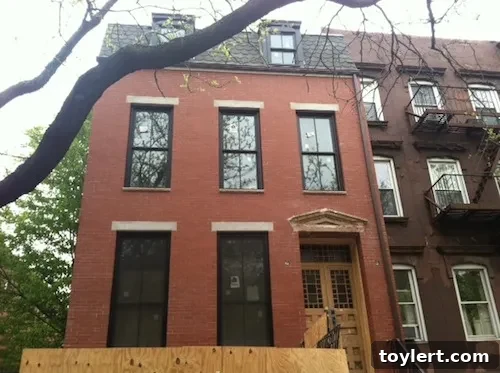
Historic Fort Greene Townhouse Undergoes Stunning Transformation: 434 Vanderbilt Avenue Reimagined
The charming streets of Fort Greene, Brooklyn, are renowned for their historic architecture and vibrant community. Among its many architectural gems, the townhouse at 434 Vanderbilt Avenue stands out, not just for its enduring beauty, but for the remarkable journey it has recently undergone. Once a decaying structure, this magnificent French Second Empire-style home, originally built in 1866, has been painstakingly resurrected through a complex and challenging renovation project. The recent removal of scaffolding, unveiling its stunningly restored facade, signals the culmination of nearly a year of dedicated craftsmanship, led by the expert team at Complimentary Colors Construction Corp. This impressive undertaking has transformed a rundown property into a beacon of historical preservation and modern living.
A Challenging Beginning: Overcoming Prior Setbacks
The path to revitalizing 434 Vanderbilt Avenue was far from straightforward, presenting a true test of resilience and expertise. The property, suffering from years of neglect and structural issues, demanded a comprehensive gut renovation from the outset. However, the project’s initial phases were plagued by unfortunate setbacks. Two previous contractors proved unable to navigate the complexities, leading to significant delays, budget overruns, and a frustrating halt in construction. This critical juncture called for a firm with not only exceptional technical prowess but also a deep understanding of historic preservation and structural integrity. It was at this point, approximately six months into the original timeline, that Complimentary Colors Construction Corp., owned by Michael Sheehan and managed on-site by Sean Beckerman, stepped in to take the reins, inheriting a project fraught with challenges.
Mastering Structural Integrity: Correcting a Critical Lean
Upon assessment, Complimentary Colors identified one of the most pressing issues: a fundamental flaw introduced by a prior contractor, namely an incorrectly installed interior steel structure. This was not merely a minor oversight; it severely compromised the building’s stability and threatened its long-term viability. The team swiftly began the meticulous process of reworking the entire steel framework, ensuring it met stringent safety and structural standards. Beyond this, they faced an alarming structural anomaly: a pronounced four-inch lean to the building. Correcting such a significant deviation in a historic structure requires exceptional engineering skill, precision, and a deep knowledge of building mechanics. Complimentary Colors devised and implemented a sophisticated strategy, effectively rectifying the lean and ensuring the building’s absolute structural soundness for generations to come. This critical intervention not only saved the historic townhouse from further deterioration but also laid a robust and reliable foundation for the remainder of the renovation work.
Facade Restoration: A Delicate Balance of History and Modern Craftsmanship
The exterior of a historic townhouse is its public face, and restoring 434 Vanderbilt Avenue’s facade required navigating strict guidelines set by the Landmarks Preservation Commission (LPC). The LPC initially mandated that at least 60 percent of the original brick be reused to maintain historical authenticity. However, upon closer inspection, it became clear that the extent of the original brick’s deterioration made this requirement unfeasible; there simply wasn’t enough salvageable material to meet the threshold while ensuring the facade’s long-term integrity. This presented a unique challenge: how to achieve a historically appropriate look while utilizing new, approved materials and simultaneously correcting the building’s structural lean.
Complimentary Colors embarked on a meticulous facade renovation process. First, all the old, compromised bricks and mortar were carefully and systematically removed. This crucial step allowed for a thorough assessment of the underlying structure and prepared the canvas for the new materials. New cinder blocks were then precisely tied into the corrected interior steel structure, ensuring maximum stability and seamless integration. The ingenious solution for the four-inch lean was skillfully incorporated into the rebricking process itself. By subtly stepping the new bricks inward from left to right across the facade, the team visually and structurally corrected the lean, creating a perfectly plumb exterior that expertly belies its former misalignment. This delicate balance of structural correction and aesthetic restoration showcases the intricate expertise required in high-stakes historic renovation.
The final stage of the facade work involved rebricking the entire front of the house with a carefully selected, new brick. This material was not chosen lightly; it underwent a rigorous approval process with the LPC, ensuring it harmonized perfectly with the building’s original character and the surrounding historic streetscape. The result is a facade that looks historically accurate, robust, and utterly captivating—a true testament to the blend of traditional craftsmanship and modern construction techniques employed by Complimentary Colors. This unwavering commitment to detail extended seamlessly to the roofline, where both the front and rear pitched roofs were completely rebuilt, meticulously securing the building’s envelope and significantly contributing to its refreshed, dignified aesthetic.
Interior Configuration and the Awaited Cornice
Despite the comprehensive overhaul, keen observers of architectural details might notice one significant element currently missing from the otherwise stunning facade: a full cornice. This decorative architectural feature, often a defining characteristic and hallmark of French Second Empire design, typically adds a crowning grandeur and intricate character to the roofline. Its absence, unfortunately, is due to current funding limitations faced by the homeowner. While the structural integrity and essential aesthetic elements of the facade have been meticulously restored, this final, elegant flourish awaits future investment. This detail highlights a common reality in large-scale historic renovations, where budgetary constraints can sometimes dictate the immediate scope of work, leaving room for future enhancements that complete the original vision.
Beyond the impressive exterior transformation, the interior of 434 Vanderbilt Avenue has been thoughtfully reconfigured and meticulously designed to meet contemporary needs while honoring the building’s historic footprint and maximizing its potential. The new layout features a spacious owner’s duplex, offering generous, multi-level living quarters spread across two floors, providing both privacy and ample space for the residents. Above this private residence, two independent, upper-floor rental units have been expertly incorporated. This clever configuration not only maximizes the property’s utility and financial viability but also allows the owner to enjoy a beautifully renovated home while generating valuable rental income. The blend of a private owner’s residence with income-producing rental units is a popular and highly practical solution for maximizing the value of historic urban properties, making this townhouse a truly modern yet historically sensitive dwelling tailored for today’s urban living.
The Legacy of French Second Empire Architecture in Fort Greene
The successful restoration of 434 Vanderbilt Avenue is far more than just a construction project; it is a vital act of preserving the rich architectural heritage of Fort Greene. The French Second Empire style, characterized by its distinctive mansard roofs, elegant dormer windows, and often ornate detailing, made a profound mark on American architecture in the mid to late 19th century. Built in 1866, this townhouse represents a significant and tangible piece of that architectural legacy within the vibrant Brooklyn neighborhood. Its meticulous revival ensures that future generations will have the opportunity to appreciate the craftsmanship, design principles, and historical narrative of a bygone era. Such dedicated preservation efforts are absolutely crucial for maintaining the unique character and historical tapestry of neighborhoods like Fort Greene, which draw residents and visitors alike for their storied past and dynamic present. Complimentary Colors’ work here serves as a prime example of how modern construction expertise can lovingly restore, adapt, and breathe new life into historic structures for contemporary living without sacrificing their intrinsic historical and cultural value.
Complimentary Colors’ Vision and Promising Future Prospects
The meticulous craftsmanship, unwavering dedication, and exceptional problem-solving capabilities demonstrated by Complimentary Colors Construction Corp. on the 434 Vanderbilt Avenue project have not gone unnoticed within the community. Their ability to confidently step into a stalled, complex renovation, systematically correct significant structural errors, and ultimately deliver a high-quality finish on a historically sensitive building speaks volumes about their expertise and unwavering commitment to excellence. This resounding success has already paved the way for potential new ventures within the immediate neighborhood. The firm has reportedly been approached to assess a house directly across the street, where the owner is reportedly considering an ambitious four-story addition. Such interest emphatically underscores the deep trust and stellar reputation Complimentary Colors has meticulously built within the Fort Greene community, firmly positioning them as a go-to contractor for challenging, historically sensitive, and architecturally significant projects.
The transformation of 434 Vanderbilt Avenue stands as a shining example of what can truly be achieved when skilled professionals tackle complex historic renovations with passion, precision, and a profound respect for heritage. It is a compelling story of rescuing a beloved piece of Fort Greene’s architectural tapestry, transforming a decaying structure into a vibrant, functional home while honoring its rich past. This project not only significantly enhances the immediate streetscape but also contributes profoundly to the ongoing preservation and revitalization of one of Brooklyn’s most cherished historic districts. It stands as an enduring testament to the timeless beauty of French Second Empire architecture and the exceptional skill of dedicated builders committed to preserving our architectural heritage for future generations. The successful culmination of this project leaves an indelible mark on Vanderbilt Avenue, securing 434’s place in Fort Greene’s history for many years to come.
Transformation for 434 Vanderbilt Avenue [Brownstoner]
Salvation for Decrepit Fort Greene Townhouse [Brownstoner] GMAP