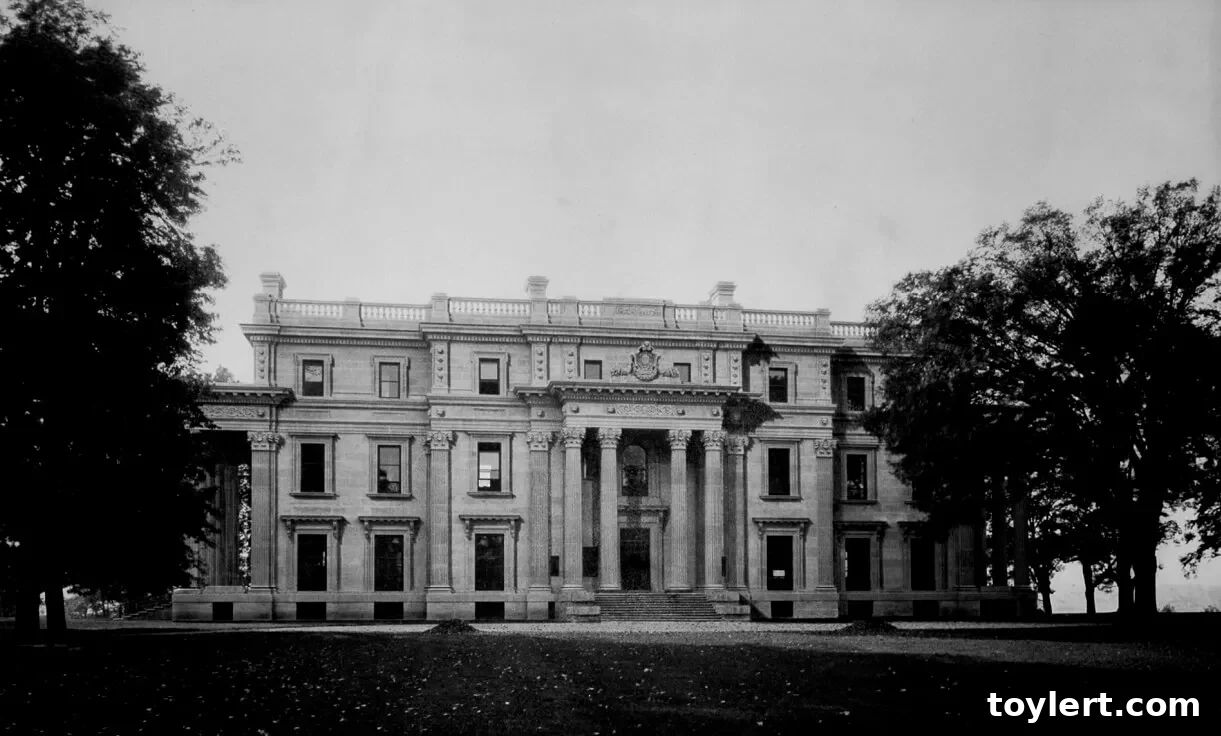
Exploring the Grandeur of the Vanderbilt Mansion: A Gilded Age Gem in the Hudson Valley
Nestled majestically on a sprawling estate overlooking the serene Hudson River, the Vanderbilt Mansion National Historic Site stands as a remarkable testament to American wealth, ambition, and architectural prowess during the late 19th century. While its imposing Beaux-Arts facade and meticulously landscaped grounds might suggest unparalleled extravagance, this palatial residence is surprisingly considered one of the more “modest” among the numerous grand homes erected by the descendants of the legendary Commodore Cornelius Vanderbilt. This unique perspective only deepens the intrigue surrounding this exquisite property, offering visitors a fascinating glimpse into the lives of one of America’s most influential families.
Constructed between 1896 and 1899, the Vanderbilt Mansion, originally known simply as Hyde Park – a name that often leads to confusion with the nearby estate of Franklin D. Roosevelt – served as the idyllic country retreat for Frederick William Vanderbilt and his wife, Louise Holmes Anthony Vanderbilt. Their vision for a sophisticated and comfortable escape from the bustling urban life of New York City materialized into an architectural masterpiece that perfectly embodied the refined tastes and social aspirations of the Gilded Age elite.
The Legacy of the Vanderbilts: From Shipping Magnate to Gilded Age Dynasties
To fully appreciate the significance of the Vanderbilt Mansion, one must first understand the family behind its creation. Frederick W. Vanderbilt was the grandson of Cornelius “Commodore” Vanderbilt, the shrewd shipping and railroad magnate whose entrepreneurial spirit laid the foundation for one of America’s greatest fortunes. By the time Frederick came of age, the Vanderbilt name was synonymous with immense wealth, power, and influence.
The Gilded Age, roughly spanning from the 1870s to the early 1900s, was a period of unprecedented economic growth and industrialization in the United States. This era saw the emergence of a new class of millionaires and billionaires who, with their vast fortunes, embarked on extravagant building sprees. These wealthy families commissioned renowned architects to design opulent townhouses, sprawling country estates, and luxurious “cottages” – elaborate summer homes that were anything but modest – across the country. The Vanderbilts were at the forefront of this architectural movement, eager to showcase their status and contribute to the nation’s burgeoning cultural landscape.
Frederick was one of several third-generation Vanderbilts who embraced this trend wholeheartedly. His siblings and cousins also left their indelible mark on American architecture. Perhaps most famously, his brother George Washington Vanderbilt II built the colossal Biltmore Estate in Asheville, North Carolina – a 250-room French Renaissance château that remains the largest privately-owned house in the United States. Another cousin, Alva Vanderbilt, commissioned the stunning Marble House in Newport, Rhode Island, a dazzling example of Gilded Age extravagance modeled after the Petit Trianon at Versailles. Both Biltmore and Marble House, like Frederick’s estate, are now open to the public, allowing millions to marvel at the grandeur of a bygone era.
Architectural Splendor: The Beaux-Arts Masterpiece of Hyde Park
The Vanderbilt Mansion at Hyde Park is a quintessential example of Beaux-Arts architecture, a style that dominated public and institutional buildings in America during the late 19th and early 20th centuries. Frederick and Louise Vanderbilt entrusted the design of their country home to the esteemed architectural firm of McKim, Mead & White, a practice responsible for numerous iconic American structures, including the Boston Public Library, the Rhode Island State House, and the former Pennsylvania Station in New York City.
The Beaux-Arts style, heavily influenced by classical Greek and Roman architecture and the principles taught at the École des Beaux-Arts in Paris, emphasizes symmetry, grandeur, elaborate ornamentation, and a hierarchical organization of spaces. At the Vanderbilt Mansion, these characteristics are evident in its monumental scale, balanced proportions, and meticulously crafted details. The use of fine materials such as Indiana limestone for the exterior, coupled with ornate carvings, columns, and a grand entrance, projects an aura of timeless elegance and power.
The interior of the mansion is equally impressive, reflecting a fusion of classical design with the comforts and technological advancements of the late 19th century. Visitors can explore lavishly decorated rooms featuring imported marbles, intricate wood paneling, and an extensive collection of European furniture, tapestries, and artworks. The house was also equipped with cutting-edge amenities for its time, including central heating, electricity, and even an elevator, ensuring a lifestyle of unparalleled luxury for its occupants and their guests.
Frederick and Louise Vanderbilt: Lives of Leisure and Philanthropy
Frederick W. Vanderbilt, though often overshadowed by his more famous relatives, was a significant figure in his own right. Unlike some of his family members who actively managed vast enterprises, Frederick primarily enjoyed the fruits of his inheritance. He served on the boards of various railroad companies and financial institutions, but his true passions lay in art collecting, horticulture, and the pursuit of a refined social life. He and Louise were prominent members of New York society, known for their gracious entertaining and their discerning taste.
Louise Holmes Anthony Vanderbilt, Frederick’s second wife, played a crucial role in shaping the aesthetic and social life of the Hyde Park estate. She was known for her elegance and her keen interest in gardens and interior design. Together, they transformed the existing property into a magnificent country retreat that would host countless social gatherings, intimate family visits, and distinguished guests. The estate allowed them to cultivate a lifestyle that balanced rural tranquility with the sophistication of urban living, offering a respite from the demands of city life while still providing all the luxuries one could desire.
Beyond their personal enjoyments, the Vanderbilts were also involved in various philanthropic endeavors, though often less publicly than other Gilded Age figures. Their contributions, while not always widely publicized, underscored a sense of civic responsibility that often accompanied such immense wealth during that period.
The Enchanting Grounds and the Hudson River Valley Setting
The Vanderbilt Mansion is not merely a house; it is an entire estate designed to impress and delight. The mansion is perfectly situated on a bluff overlooking the Hudson River, offering breathtaking panoramic views of the river and the distant Catskill Mountains. This picturesque setting in the heart of the Hudson River Valley was no accident. The valley had long been a favored location for America’s elite, drawn by its natural beauty, fertile lands, and convenient proximity to New York City.
The landscape around the mansion was meticulously designed to complement the grandeur of the house. The grounds feature formal gardens, sweeping lawns, and mature trees, all carefully planned to enhance the visual appeal and provide recreational opportunities. The Italianate formal garden, with its terraced levels, intricate parterres, and classical statuary, is a particularly striking feature, showcasing the Vanderbilts’ commitment to European garden design principles.
Beyond the formal areas, the estate also includes extensive woodlands and agricultural lands, reflecting the dual nature of a Gilded Age country estate: a place of leisure and a working property. The presence of the Hudson River itself was central to the estate’s appeal, offering opportunities for boating and providing a constant source of inspiration and tranquility.
Preservation and Public Access: A National Historic Site
Following Frederick Vanderbilt’s death in 1938, and Louise having passed away in 1926, the estate was bequeathed to his niece, Margaret Van Alen. Recognizing its immense historical and architectural significance, and spurred by the urgent need for preservation during the Great Depression, the estate was acquired by the U.S. government in 1940. It was subsequently designated as the Vanderbilt Mansion National Historic Site and placed under the stewardship of the National Park Service.
Today, the Vanderbilt Mansion stands as a vital educational resource and a popular tourist destination. Visitors from around the world come to explore the mansion’s opulent interiors, stroll through its magnificent gardens, and learn about the lives of the Vanderbilt family. The site offers a window into the Gilded Age, providing context for the immense social, economic, and cultural transformations that shaped modern America.
The National Park Service works diligently to maintain the integrity of the mansion and its grounds, preserving not just the physical structures but also the stories and experiences that resonate within its walls. Through guided tours, interpretive exhibits, and educational programs, the Vanderbilt Mansion National Historic Site continues to illuminate a pivotal period in American history, allowing contemporary audiences to connect with the grandeur and complexities of the past. It serves as a reminder of the extraordinary wealth that defined an era, and the enduring legacy of a family that helped shape the nation’s landscape, both literally and figuratively.