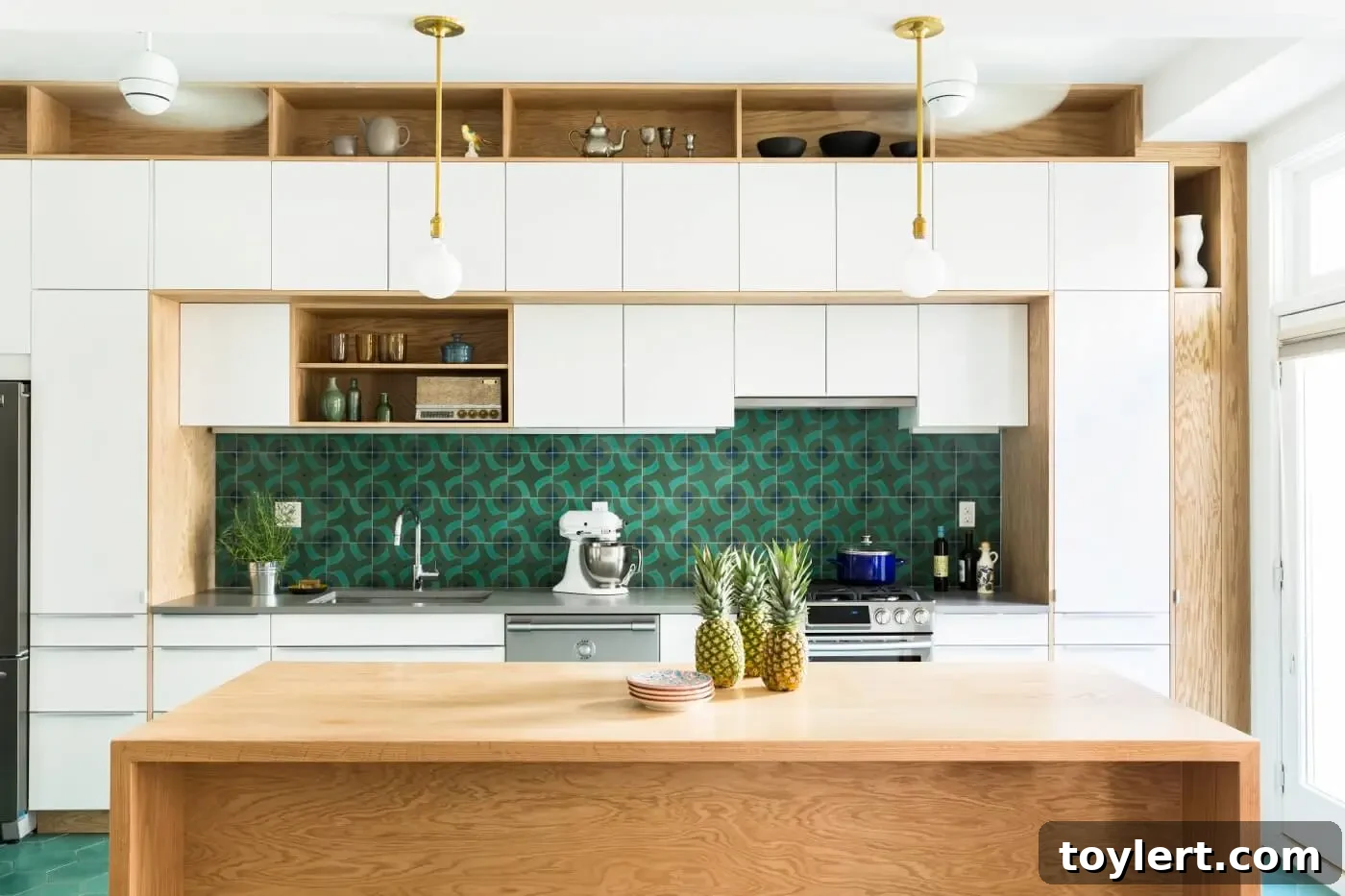
In the vibrant heart of Downtown Brooklyn, where historic charm meets contemporary living, a captivating story of architectural transformation unfolded. At the helm was Alexandra Barker, a distinguished LEED-certified architect and the visionary principal behind the Barker Freeman Design Office (BFDO). Her recent project, a masterful renovation of a ca. 1900 three-story limestone townhouse, perfectly encapsulates the firm’s ethos: creating spaces that are simultaneously fresh, functional, colorful, and crucially, cost-conscious. This ambitious undertaking was designed to cater to the evolving needs of a family of four, breathing new life into a classic Brooklyn residence and proving that exceptional design doesn’t always come with an exorbitant price tag.
The homeowners, a creative couple comprising a graphic designer and a TV producer, embarked on this journey with a clear vision and unwavering patience. For years, they had meticulously planned and saved, making the most of approximately 1,000 square feet on a single floor of their cherished building. This period of careful consideration was not just about accumulating resources; it was about refining their desires, understanding their family’s future needs, and envisioning a home that truly reflected their lifestyle. With a tenant occupying the floor above and an untapped, unfinished basement below, the potential for expansion was immense, yet the path to realizing it required strategic architectural ingenuity.
Alexandra Barker, who also shares her expertise as an architecture faculty member at Pratt Institute, was brought in with a very specific, yet expansive, mission: to convert the raw, unfinished basement into a fully functional and inviting duplex. “They hired me to finish their basement so they could have a duplex,” Barker explained, highlighting the pivotal role this transformation played in the family’s aspirations. The underlying directive for the entire project was crystal clear from the outset: “Everything on this job was extremely budget-oriented.” This constraint, far from being a limitation, became a fertile ground for creative problem-solving and innovative design, pushing the boundaries of what could be achieved within sensible financial parameters without compromising on quality or aesthetics.
Transforming a Brooklyn Townhouse: A Vision of Modern Family Living
The essence of any successful renovation lies in understanding the occupants. For this Brooklyn family, the desire for more space was paramount. Their current 1,000 square feet, while cozy, had become increasingly cramped as their children grew. They sought not just additional square footage, but a home that offered better flow, defined zones for work and play, and enhanced connection to the outdoors. The limestone townhouse, a testament to Brooklyn’s rich architectural heritage, presented both opportunities and challenges. Barker Freeman Design Office was tasked with respecting the building’s historic character while injecting it with contemporary functionality and a vibrant, family-friendly aesthetic. This balancing act required a delicate touch, blending modern design principles with the inherent charm of a pre-war structure.
The homeowners’ professions further informed the design process. A graphic designer appreciates visual harmony, color theory, and efficient layouts, while a TV producer likely values practical, durable spaces that can withstand daily activity while maintaining a certain aesthetic appeal. This synergy between client and architect allowed for a truly collaborative process, where ideas were exchanged, and solutions were tailored to their unique tastes and requirements. The aspiration was to create a home that felt expansive and open, yet inherently comfortable and reflective of their individual personalities, moving beyond the confines of a single-floor existence to embrace the verticality of their townhouse.
Budget-Conscious Design: Ingenuity in Every Detail
One of the project’s most defining characteristics was its stringent budget. Far from seeing this as an impediment, Alexandra Barker and her team at BFDO embraced it as a catalyst for innovation. Achieving a “cost-conscious” outcome required meticulous planning, smart material selection, and an unwavering focus on value engineering. This meant prioritizing functional needs, opting for durable yet affordable finishes, and leveraging clever design strategies to create visual impact without excessive spending. For instance, instead of expensive custom millwork throughout, strategic built-ins might be employed where they offer the most utility and visual appeal, complemented by more standard, yet tastefully chosen, elements elsewhere.
The renovation’s core involved transforming an “unfinished basement” into a livable, integrated “duplex.” This critical expansion dramatically increased the family’s usable space. Basement renovations often pose challenges related to natural light, dampness, and ceiling height. Barker’s expertise was crucial in navigating these hurdles, designing solutions that would not only be aesthetically pleasing but also structurally sound and compliant with all building codes. The aim was to make the basement feel like a natural extension of the home, rather than a mere add-on, seamlessly connecting it to the upper floor and potentially to the backyard, which often becomes a coveted amenity in Brooklyn townhouses.
Alexandra Barker’s Design Philosophy: Fresh, Functional, and Full of Life
Alexandra Barker’s reputation for delivering “fresh and functional” designs is evident in her approach to this project. Her philosophy centers on understanding how families truly live and designing spaces that support their daily routines, foster creativity, and provide comfort. This meant considering everything from durable surfaces for children’s activities to ergonomic layouts for workspaces. The “colorful” aspect of the design wasn’t about extravagance, but about intelligent use of palette to infuse personality and warmth. Through strategically chosen paint colors, playful tile patterns, or carefully selected furnishings, vibrant elements were introduced to create an engaging and lively atmosphere, lifting spirits without breaking the bank.
The LEED certification held by Alexandra Barker speaks volumes about her commitment to sustainable design practices. Even within a budget-driven project, principles of environmental responsibility were likely integrated. This could include selecting low-VOC (volatile organic compound) paints and finishes to improve indoor air quality, specifying energy-efficient lighting fixtures, and optimizing insulation to reduce heating and cooling costs in the long run. Sustainable choices not only benefit the environment but also contribute to the long-term health and financial well-being of the homeowners, demonstrating that eco-conscious design can be accessible and practical.
The Basement Transformation: Maximizing Space and Light
The conversion of the unfinished basement into a vital part of the duplex was perhaps the most challenging and rewarding aspect of the renovation. Architects like Barker excel at envisioning the potential within neglected spaces. Key design considerations would have included maximizing natural light, a perennial challenge in basements. This might have involved excavating to create deeper window wells, installing light shafts, or strategically placing new windows or glass doors leading to a revitalized backyard patio. The goal was to flood the lower level with as much daylight as possible, making it feel airy and inviting rather than dark and subterranean.
Functionally, the basement likely offered an invaluable expansion, providing distinct zones for the family. This could include additional bedrooms for the children, a dedicated family room or media space, a much-needed home office for the parents, a laundry room, and a supplementary bathroom. Each new space would have been meticulously planned for its purpose, ensuring ample storage, efficient layouts, and seamless transitions between areas. For flooring, durable and budget-friendly options like polished concrete, resilient vinyl plank, or practical tiling would have been considered, chosen for their longevity and ease of maintenance, perfectly suited for an active family home.
The staircase connecting the original floor to the new basement level would have been a critical design element, transforming a utilitarian link into an architectural feature. Perhaps a new open-tread staircase was introduced to enhance light flow, or an existing structure was modernized with new railings and finishes. This connection point is vital for ensuring the duplex feels cohesive and unified. Furthermore, the selection of materials throughout the basement—from wall finishes to cabinetry—would reflect a balance of durability, aesthetic appeal, and cost-effectiveness, contributing to the overall “cost-conscious” yet “colorful” and “functional” mandate.
A Testament to Thoughtful Design and Enduring Value
The successful completion of this Brooklyn townhouse renovation by Alexandra Barker and BFDO is a testament to the power of thoughtful, client-centered design. By transforming a limited single-floor dwelling into a spacious duplex, the project dramatically enhanced the family’s quality of life. The graphic designer and TV producer now enjoy a home that supports their professional lives, provides ample space for their children to grow and play, and offers comfortable zones for relaxation and entertaining. This expansion not only addressed immediate needs but also significantly increased the long-term value and appeal of their historic property in a highly sought-after urban environment.
Ultimately, this project stands as a shining example of how innovative architectural solutions, guided by a deep understanding of budget constraints and an unwavering commitment to design excellence, can yield extraordinary results. Alexandra Barker’s ability to blend modern aesthetics with historic preservation, infuse vibrant personality into a home, and achieve all of this within a pragmatic financial framework solidifies BFDO’s reputation as a leader in urban residential design. For families seeking to reimagine their living spaces without compromising on their financial goals, the principles demonstrated in this Kensington renovation offer invaluable inspiration and a clear path forward.