My Unforgettable First Encounter with Brooklyn: Clinton Hill in the Summer of ’77
A Personal Journey Through the Gritty Charm and Historic Grandeur of New York’s Iconic Borough
Stepping into a Different World: New York City in 1977
The year was 1977, a period indelibly etched into the annals of New York City’s history as much for its profound struggles as for its raw, unyielding spirit. Fresh out of college, brimming with a potent mix of youthful optimism and naive curiosity, I found myself embarking on a journey that would forever redefine my understanding of urban life. My destination: Brooklyn. The moment I emerged from the GG train at the Clinton-Washington stop, the sheer magnitude of Clinton Hill unfolded before me, a vivid tableau painted with shades of history, dilapidation, and an undeniable, magnetic allure. It was a pivotal chapter in a burgeoning fascination with America’s greatest metropolis.
This was also the summer of ’77, a season notoriously shrouded by the ominous shadow of the “Summer of Sam.” While the full extent of the city’s anxieties and the pervasive sense of unease weren’t yet apparent to my uninitiated senses, the atmosphere was palpable. New York, at that time, was a city teetering on the brink – financially broke, physically grimy, hot, and undeniably dangerous. Yet, to my eyes, accustomed to the more pristine landscapes of my upbringing, it possessed an intoxicating beauty. Every crumbling facade told a story, every bustling street corner hummed with an unseen energy. It was a sensory overload, a symphony of grit and grandeur that resonated deeply within me, promising an adventure unlike any other.
The air itself felt different, charged with the cacophony of sirens, the distant rumble of subway trains, and the vibrant murmur of countless languages. The sidewalks were a stage for humanity’s diverse drama, a microcosm of the world played out against a backdrop of historic architecture and contemporary challenges. It was a city that wore its imperfections proudly, a place where survival and beauty coexisted in a delicate, often precarious, balance. This initial immersion was overwhelming yet utterly captivating, setting the stage for an experience that would prove both enchanting and, surprisingly, harrowing.
The Allure of Clinton Hill: Architecture, History, and a First Rowhouse Experience
My friend, a student at the esteemed Pratt Institute, served as my guide, leading me through the sun-drenched streets to her third-floor apartment on Washington Avenue. We were just a few doors away from what locals reverently called the Pfizer Mansion, a magnificent testament to the neighborhood’s opulent past. As a lifelong admirer of old houses, a passion ignited in childhood by countless books and dreams, I was utterly mesmerized. The grand scale of the city, the distinctive character of Clinton Hill, and the very essence of Brooklyn itself captivated me completely, pulling me into its rich narrative.
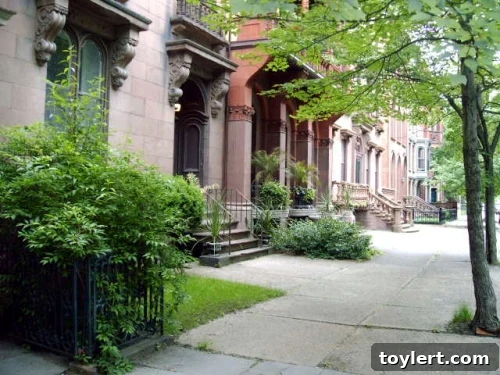
Clinton Hill, even then, was a treasure trove of architectural marvels, a veritable outdoor museum of urban design. It boasted a rich tapestry of Italianate, Neo-Grec, Romanesque Revival, and Queen Anne style brownstones and stately rowhouses, each a silent sentinel of a bygone era. These were not merely buildings; they were living artifacts, telling tales of industrialists, artists, and families who had shaped the borough over centuries. The sheer craftsmanship, the intricate detailing on cornices and lintels, the majestic stoops leading to imposing entrances – it was all a breathtaking spectacle of human ingenuity and historical endurance.
I had never before set foot inside a rowhouse, and the experience was transformative. The ingenious layout, designed to maximize space and light within narrow footprints, fascinated me. Every corner revealed cool, original details: ornate fireplaces, intricate moldings, pocket doors, and original floorboards that whispered secrets of its past inhabitants. This intimate glimpse into the inner life of a Brooklyn brownstone deepened my appreciation for the area’s heritage and the thoughtful design that characterized its residences. It felt like stepping back in time, connecting with generations of lives lived within those very walls.
The Pfizer Mansion, a colossal edifice standing proudly on the avenue, served as a majestic backdrop to our daily strolls. Its imposing presence was a constant reminder of Clinton Hill’s former glory, a stark contrast to the occasional neglect seen in some other parts of the borough. Yet, it highlighted the enduring potential for grandeur that still permeated the area, symbolizing a dream, a promise of what could be, and what had been, in this extraordinary part of Brooklyn. The contrast between its stately elegance and the surrounding everyday life was a quintessential New York experience.
A Taste of Brooklyn: From Culinary Delights to Cultural Immersion
Our explorations often led us down the vibrant stretch of Dekalb Avenue, a bustling artery teeming with local life. It was here, amidst the eclectic mix of shops and eateries, that I experienced another quintessential Brooklyn rite of passage: my first taste of Junior’s cheesecake. The creamy, rich confection, a culinary legend in its own right, was an epiphany. It wasn’t just dessert; it was a slice of Brooklyn history, a symbol of the borough’s enduring cultural contributions. This simple pleasure, shared with a friend on a warm summer evening, cemented my affection for this captivating corner of the world, a truly unforgettable moment.
Beyond the culinary delights, Clinton Hill in 1977 offered a raw, unvarnished glimpse into a community finding its rhythm amidst urban decay. The sounds of the city, the snippets of conversations carried on the breeze, the vibrant street art adorning neglected walls, and the sense of diverse lives unfolding – it was an immersive experience that appealed to all senses. Pratt Institute, with its creative energy and a constant flow of young artists and designers, infused the neighborhood with an artistic vitality, attracting a unique blend of residents who appreciated the historic charm despite the prevalent challenges, contributing to a unique bohemian atmosphere.
The neighborhood felt alive with stories, each brownstone facade, each corner store, each person passing by adding another layer to the complex tapestry of Brooklyn. It was a far cry from the sanitized, gentrified version of Brooklyn seen today. This was the authentic, unpolished borough, a place where history wasn’t just preserved in museums but lived and breathed on the streets. This cultural immersion was as enriching as the architectural marvels, offering a deeper understanding of the city’s soul.
The Unvarnished Reality: A Harsh Welcome to Brooklyn
While my initial impressions were largely romanticized, Brooklyn, true to its complex nature, had its own way of introducing newcomers to its less forgiving realities. My friend’s student flat, typical of many rentals catering to the Pratt community at the time, was one of those now-notorious establishments where landlords seemed to view their primary role as merely collecting rent, with maintenance being an unfortunate afterthought. This widespread neglect, sadly, was not uncommon in a city struggling with its infrastructure, financial woes, and dwindling resources, painting a picture of urban decay that was hard to ignore.
Two days into my enthralling visit, the raw truth of urban living delivered a startling, unforgettable lesson. I had just stepped out of the room where I was staying, perhaps to grab a book, fetch a drink, or simply stretch my legs, when a deafening crash echoed through the apartment. Turning back, my heart pounding, I was met with a scene of utter chaos: the entire ceiling of the room had collapsed, showering the bed and floor with heavy chunks of plaster, lath, and debris. Dust filled the air, and the sheer force of the impact left a gaping hole above where I had been just moments before.
A chilling realization immediately washed over me: had I been in that room mere moments earlier, immersed in a book or lost in thought, I would have sustained serious injuries, or worse. The fragility of life, and the unpredictable nature of this grand, gritty city, suddenly became terrifyingly real and visceral. It was a stark reminder that beneath the charm and history lay a raw, untamed edge, a precarious existence that demanded constant awareness and resilience from its inhabitants.
That moment, a terrifying contrast to the dreamy architectural explorations and cheesecake indulgences, served as a brutal initiation into the harsh realities of New York. It was a visceral “Welcome to Brooklyn, sucker!” – a sardonic greeting from a city that demanded respect, resilience, and a thick skin. It underscored the profound duality of New York: a place of breathtaking beauty and dangerous neglect, of endless opportunity and sudden, unforeseen peril. This incident, while harrowing, also cemented my deep understanding of the city’s complex, multifaceted character. It wasn’t just a picturesque backdrop for a summer adventure; it was a living, breathing entity, full of surprises, both delightful and devastating, a true test of one’s mettle.
Reflecting on a Transformative Journey: Brooklyn’s Enduring Spirit
My summer of ’77 in Clinton Hill, Brooklyn, proved to be far more than just a college friend visit; it was a transformative journey of self-discovery and urban exploration. It was a period of intense revelation, a coming-of-age against the formidable backdrop of one of the world’s most dynamic, yet challenging, cities. From the majestic lines of the brownstones to the vibrant life on Dekalb Avenue, from the sweet taste of my first Junior’s cheesecake to the terrifying reality of a collapsing ceiling, every experience, every sensory detail, was indelibly etched into my memory, shaping my perspective for years to come.
The Brooklyn I encountered was a place of stark contrasts – rich history existing alongside contemporary struggles, architectural grandeur juxtaposed with pockets of urban decay, moments of serene beauty punctuated by sudden, startling danger. Yet, through it all, the spirit of the borough shone brightly, resilient, adaptable, and utterly captivating. It taught me invaluable lessons: that beauty can be found in unexpected places, that true charm often lies beneath a gritty exterior, and that a genuine appreciation for a city comes from embracing all its facets, both the glorious and the challenging, the comfortable and the chaotic.
Decades later, as Brooklyn has undergone significant transformations, evolving into the vibrant, sought-after destination it is today, the echoes of that summer remain vibrant and clear. The memory of Clinton Hill’s historic streets, the warmth of its community despite the tough times, and the unforgettable lessons learned from its unpredictable nature continue to resonate deeply within me. That first glimpse, that raw encounter, laid the foundation for a lifelong fascination with New York City – a city that truly never sleeps, never ceases to surprise, and always offers a profound, unforgettable experience to those willing to embrace its multifaceted reality.