Read Part 1, Part 3, and Part 4 of this story.
Lane Bryant: A Legacy of Innovation in Maternity Fashion
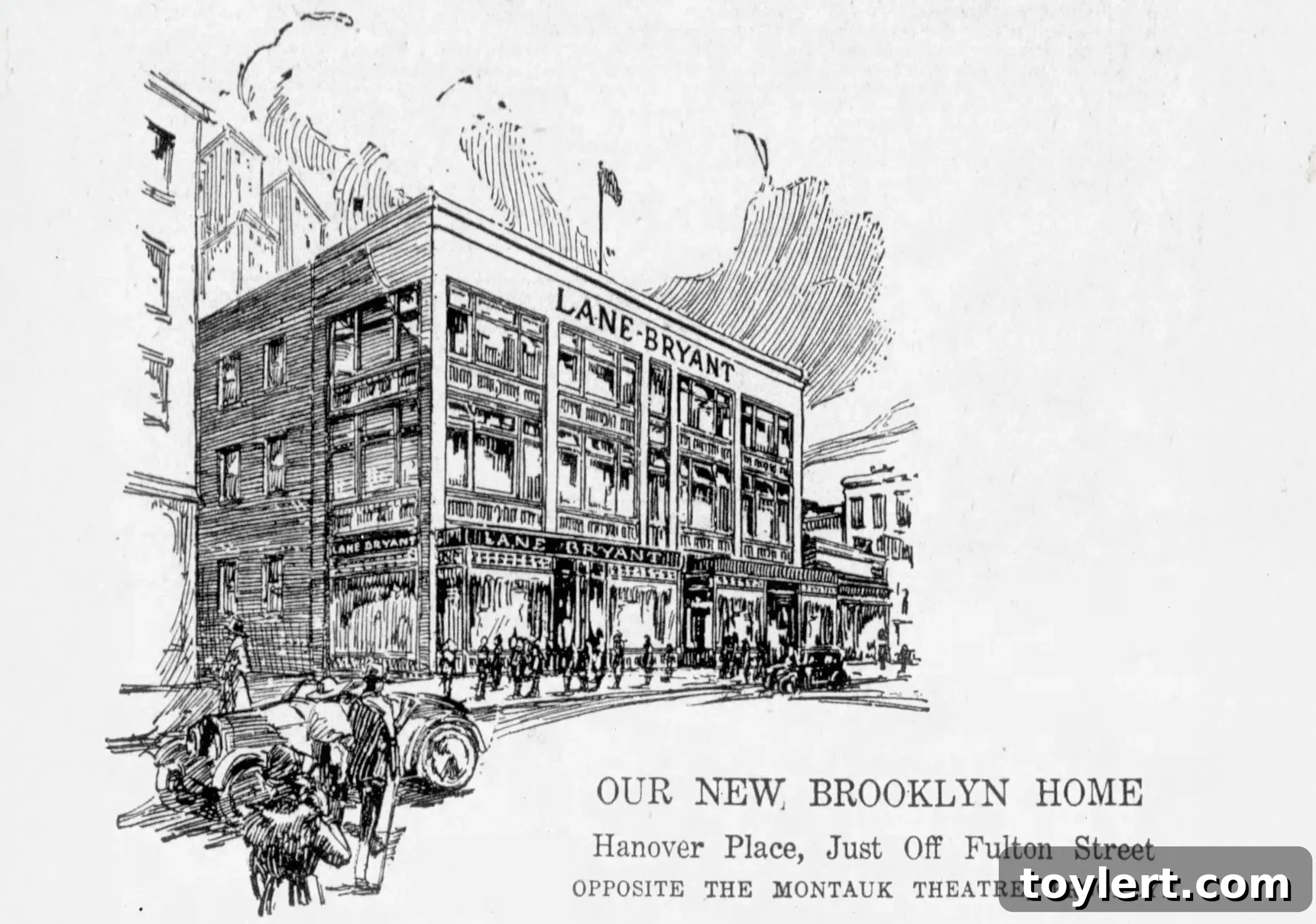
The early 20th century marked a period of profound change, not just in society but also in the realm of women’s fashion. Amidst this dynamic landscape, a visionary dressmaker named Lena Bryant embarked on a journey that would forever alter how expectant mothers dressed and perceived themselves. By 1909, from her bustling shop strategically located on 5th Avenue and 120th Street in New York City’s vibrant Harlem district, Bryant introduced a groundbreaking concept under her now-iconic Lane Bryant label. She meticulously designed and manufactured maternity clothing specifically for stylish women – a revolutionary idea at a time when such garments were virtually nonexistent. This pioneering effort led to the creation of some of the world’s very first mass-produced lines of maternity wear, making fashionable and functional attire accessible to a broader demographic than ever before.
The Challenges of Pregnancy Fashion Before Lane Bryant
Prior to Lena Bryant’s innovative designs, the experience of pregnancy often presented considerable challenges for women who wished to maintain their social lives, professional engagements, or simply step out with confidence. Societal norms in the early 1900s often dictated a preference for discretion regarding pregnancy, leading to a general lack of appropriate and stylish clothing options. The prevailing fashion trends of the era, characterized by rigid corsets, tight bodices, and structured silhouettes, were inherently unsuitable for a woman’s changing body. These styles were designed for a static figure, offering little to no allowance for the natural expansion that accompanied pregnancy. As a result, expectant mothers faced a wardrobe dilemma that was both practical and psychological.
For those women who desired to venture beyond the confines of their homes while pregnant, the choices were severely limited and often unsatisfactory. One primary option was to commission custom-made clothing. While bespoke garments could perfectly accommodate a growing body, this solution came with a hefty price tag, placing it far beyond the reach of average households. Only the wealthiest women could afford the luxury of a tailor-made wardrobe designed for a temporary condition like pregnancy, which also required multiple fittings as the body changed, adding to the inconvenience and cost.
Another common approach, particularly for women with practical skills, was to sew their own clothing. This required not only proficiency with a needle and thread but also an understanding of garment construction that could adapt to the pregnant form. While more economical than custom tailoring, this was a time-consuming and labor-intensive endeavor. The availability of suitable patterns was scarce, and creating anything truly stylish or comfortable from scratch often proved to be a formidable task, frequently resulting in garments that prioritized utility over aesthetic appeal. For many, the effort involved was simply not worth the modest results.
Perhaps the most prevalent, yet least empowering, choice was to don oversized, baggy clothing. These shapeless garments, often borrowed from a husband’s wardrobe or simply purchased several sizes too large, served the primary function of obscuring the pregnant figure. While they offered a degree of physical comfort and allowed women to conceal their pregnancy in public, they came at a significant cost to self-esteem and personal identity. Such attire often made women feel frumpy and invisible, reinforcing the societal message that a pregnant body was something to be hidden rather than celebrated. This widespread lack of dignified and attractive clothing options contributed to a sense of social isolation for many expectant mothers, deterring them from participating fully in public life during a transformative period.
Lena Bryant’s Breakthrough: Marrying Style with Practicality
Lena Bryant, with her keen understanding of women’s needs and an acute business sense, recognized this gaping hole in the fashion market. She intuitively understood that pregnancy was not merely a physical state to be endured in hiding but a significant and beautiful phase of life that deserved its own elegant expression. Her vision extended beyond simply creating clothes that fit; she aimed to design garments that celebrated the pregnant form, instilling confidence, comfort, and undeniable style. This was a truly radical concept, challenging the conservative fashion norms and societal expectations of her era.
Her innovative approach began with a fundamental rethinking of garment design and construction. Instead of attempting to modify existing, ill-suited patterns or simply scaling up standard dresses, Bryant conceived entirely new designs specifically engineered to gracefully accommodate a woman’s changing body. She pioneered features such as adjustable waistlines, which could be expanded as needed, along with strategically placed pleats and expandable panels that allowed for growth without sacrificing shape or elegance. Her designs also favored looser, more flowing silhouettes that offered unparalleled comfort while maintaining a chic and fashionable appearance. These were not mere practical adjustments; they were carefully integrated design elements that ensured women could look and feel their best throughout their pregnancy.
Crucially, the concept of “mass production” was central to Bryant’s groundbreaking strategy. By manufacturing her thoughtfully designed garments in larger quantities, she achieved significant economies of scale, which in turn allowed her to offer stylish maternity wear at considerably more affordable prices. This strategic move effectively democratized maternity fashion, making elegant and comfortable options accessible to a burgeoning middle class of women who previously had no viable choices. Her shop in Harlem quickly became a beacon for women seeking not just new clothing, but a renewed sense of dignity, freedom, and self-assurance during pregnancy. She proved that style and practicality were not mutually exclusive, even for expectant mothers.
The Enduring Impact and Expansion of Lane Bryant
The success of Lane Bryant’s pioneering maternity line was swift and impactful. Word of her comfortable, flattering, and stylish designs spread like wildfire among women who had long yearned for fashionable alternatives. Her Harlem boutique rapidly transformed into a thriving enterprise, laying the groundwork for what would become a formidable retail empire. Lena Bryant was much more than a talented dressmaker; she was an astute businesswoman who fearlessly identified an underserved market and courageously addressed its needs with innovative, practical, and aesthetically pleasing solutions. Her early successes demonstrated that women deserved to feel beautiful and confident at every stage of their lives, without having to compromise on either comfort or contemporary style.
Beyond the garments themselves, Lane Bryant’s contributions fostered a significant cultural shift. By providing women with attractive and appropriate clothing options, she inadvertently challenged the prevailing societal pressure to conceal pregnancy. Her designs empowered women to participate more actively and freely in social gatherings, maintain their professional roles, and navigate daily life with greater ease and self-possession. This empowerment had far-reaching ripple effects, contributing to a broader conversation about women’s autonomy, visibility, and active participation in public life during a period of profound social change.
While the Lane Bryant label would eventually expand far beyond maternity wear, becoming globally recognized for championing inclusive fashion, particularly for plus-size women – another vastly underserved demographic that Bryant later courageously addressed – it was her initial, groundbreaking work in maternity fashion that cemented her brand’s foundational legacy. This legacy was built on innovation, inclusivity, and a deep-seated commitment to meeting the diverse needs of women. Lena Bryant’s name became a symbol of progress for women who sought practical, elegant, and affordable clothing options, profoundly transforming both the fashion industry and society’s perception of expectant mothers.
A Lasting Testament to Entrepreneurial Vision and Women’s Empowerment
Lena Bryant’s extraordinary story is a compelling testament to the power of entrepreneurial vision, unwavering resilience, and an unparalleled understanding of customer needs. From her relatively humble beginnings in a Harlem storefront, she meticulously built a retail empire that profoundly revolutionized several critical segments of the fashion industry. Her remarkable foresight in recognizing the vast demand for mass-produced, stylish maternity wear not only provided an immediate and essential solution for countless women of her era but also established a crucial precedent for future innovations in adaptive and inclusive fashion design. Today, the core principles she established – comfort, style, and universal accessibility – continue to form the bedrock of the modern maternity clothing market.
Her pioneering work ensured that pregnancy no longer necessitated a sacrifice of personal style or a retreat from public engagement. Instead, it blossomed into an opportunity for women to embrace their changing bodies with newfound confidence and grace, supported by garments that were both exquisitely functional and undeniably fashionable. Lena Bryant’s profound influence extends far beyond the mere racks of her stores; she cultivated an environment where women could feel empowered, seen, and truly valued. Her contributions significantly enriched the broader narrative of women’s liberation and self-expression through the transformative power of fashion. Her enduring legacy as a pioneering entrepreneur and an unwavering champion for women continues to inspire generations, serving as a powerful reminder of the profound and lasting impact one visionary individual can have on deeply ingrained societal norms and the everyday lives of millions.