The Vibrant Heart of Brooklyn: A Deep Dive into Caribbean Culture and Carnival’s Enduring Legacy
Central Brooklyn pulsates with the rich, diverse rhythms of Caribbean culture, a vibrant testament to generations of immigrants who have shaped its identity since the 1930s. This community, forged through journeys of hope, resilience, and the pursuit of a better life, has woven an intricate tapestry of traditions, languages, and histories into the very fabric of New York City. At the heart of this cultural mosaic lies Carnival, a festival that transcends mere celebration to embody the spirit, history, and enduring identity of the Caribbean people, both in their ancestral homelands and on the bustling streets of Brooklyn.
The story of Caribbean immigration to Central Brooklyn is a powerful narrative of ambition and escape. Like countless other immigrant groups before and after them, these pioneers arrived seeking economic opportunities, stability, and the promise of a brighter future for themselves and their families. Many also sought refuge from the turbulent political landscapes, oppressive regimes, or persecution for their faith, race, ethnic origin, or political beliefs that marked various periods in their home islands. Their journeys contributed to a profound demographic shift, transforming neighborhoods and imbuing Brooklyn with an undeniable Caribbean soul.
The Journey to Central Brooklyn: A Tapestry of Hope and Resilience
Waves of Immigration and New Beginnings
The influx of Caribbean immigrants began in earnest in the 1930s, gaining momentum after World War II when economic opportunities in the United States, particularly in urban centers like New York City, beckoned. Subsequent decades saw further waves, often influenced by evolving immigration policies and specific socio-political conditions across the Caribbean. From the bustling streets of Kingston, Jamaica, to the verdant hills of Grenada, the vibrant shores of Trinidad, and the historic landscapes of Barbados, individuals and families embarked on a transformative journey across the seas. They brought with them not just their aspirations but an indelible cultural inheritance that would profoundly enrich their new home.
A Rich Cultural Mosaic
The Caribbean is not a monolithic entity; it is a region defined by its breathtaking diversity. Its history is a complex narrative of colonization, resistance, and cultural fusion, rooted primarily in the tragic proliferation of the African slave trade in the New World. This dark chapter laid the foundation for societies built on a mix of African resilience, European influence, and, in many cases, contributions from East Indian, Asian, and indigenous peoples. Consequently, West Indians hail from islands and nations once governed by a medley of European powers – Britain, France, Holland, Spain, and Portugal – each leaving an imprint on language, law, cuisine, and customs. The result is a vibrant blend of dialects, religious practices, musical forms, and culinary traditions that coalesce into a uniquely Caribbean identity. In Central Brooklyn, this diversity is celebrated, forming a cohesive community united by shared experiences and a common heritage.
Preserving Heritage: The Carlos Lezama Archives and Museum
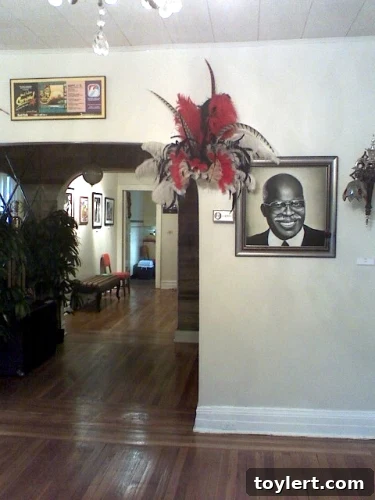
The image above depicts the interior of 1028 St. Johns Place, home to the Carlos Lezama Archives and Museum. This institution stands as a powerful symbol of the community’s dedication to preserving its rich heritage. More than just a collection of artifacts, the museum serves as a living repository of history, a place where the stories of Caribbean immigrants, their struggles, triumphs, and profound contributions to American society are meticulously documented and celebrated. It embodies the collective memory of a people, ensuring that the legacy of luminaries like Carlos Lezama – a visionary instrumental in establishing the West Indian American Day Carnival Parade in Brooklyn – and countless others is honored and passed down through generations. Such cultural institutions are critical anchors, providing a sense of belonging and a focal point for communal identity in a dynamic urban landscape.
Carnival: A Universal Celebration Born of Ancient Roots
While the Caribbean is defined by its stunning diversity, one extraordinary phenomenon unites its people, both on the islands and within diaspora communities worldwide: Carnival. This exuberant festival, with its kaleidoscope of colors, infectious music, and joyful revelry, is far more than just a party; it is a profound cultural statement, a historical narrative, and a powerful affirmation of identity.
From Medieval Europe to the New World: The Genesis of Festivity
The roots of Carnival stretch back to medieval Catholic Europe, long before its vibrant transformation in the tropics. The Latin phrase carne vale, literally meaning “farewell to meat,” encapsulates its original purpose. Carnival was a boisterous, often uninhibited festival that served as the final burst of celebration and indulgence just before the solemn, forty-day period of Lent. Lent, which traditionally involves fasting, penance, and reflection, ends at Easter, the holiest day in the Christian calendar. Carnival, therefore, provided a necessary catharsis, a last opportunity for feasting and merrymaking before a period of spiritual discipline, subtly retaining hints of pre-Christian pagan practices related to fertility, spring, and the expulsion of winter spirits. The Carnival of Venice, with its elaborate masks and clandestine allure, remains perhaps the most iconic European manifestation of these ancient customs.
As European powers like France, Spain, and Portugal embarked on their voyages of exploration and colonization in the New World, they inevitably carried their cultural traditions with them, including the concept of Carnival. However, what began as a European pre-Lenten ritual underwent a radical transformation when it encountered the diverse cultures and challenging realities of the Caribbean.
The Transatlantic Journey and Cultural Adaptation
In the crucible of the Caribbean, European Carnival traditions fused powerfully with African spiritual practices, musical forms, and storytelling traditions brought by enslaved peoples. Denied many basic freedoms, and often prohibited from practicing their indigenous religions and customs, enslaved Africans found ways to subtly and overtly infuse European festivities with their own expressions. Carnival became a powerful outlet for creativity, satire, and, crucially, a form of cultural resistance and identity affirmation. Masquerade, for example, which had European antecedents, took on new meanings, allowing participants to mock their masters or embody ancestral spirits, cloaked in anonymity and vibrant spectacle.
The music of Carnival evolved into a pulsating soundtrack of liberation and joy, giving birth to genres like calypso and soca in Trinidad, reggae and dancehall in Jamaica, and countless other distinctive island rhythms. Costumes became more elaborate, more symbolic, drawing inspiration from African folklore, natural elements, and historical events. Dances, once suppressed, became fluid expressions of freedom and communal celebration. This fusion transformed Carnival from a mere European import into a uniquely Caribbean phenomenon – a powerful synthesis of pain and pleasure, history and hope, deeply rooted in the experiences of the African diaspora. Each island developed its own unique flair, from the elaborate “Mas” (Masquerade) of Trinidad and Tobago to the intricate “Junkanoo” of the Bahamas, all contributing to the rich tapestry of Caribbean Carnival.
Carnival as a Symbol of Identity and Resistance
Beyond its festive exterior, Carnival in the Caribbean historically served as a critical vehicle for preserving cultural identity and fostering a sense of community amidst colonialism and oppression. It was a space where suppressed voices could find expression, where history could be re-enacted, and where collective identity could be affirmed. It became a yearly testament to the resilience of a people who, despite immense hardship, found ways to celebrate their heritage and assert their presence. This deep cultural significance ensures that Carnival remains not just a holiday, but a profound cultural institution that connects Caribbean people to their past, present, and future.
Carnival in Brooklyn: A Bridge Between Worlds
When Caribbean immigrants settled in Central Brooklyn, they brought with them not just their dreams, but also their cherished traditions. Among these, Carnival quickly re-established itself, transforming the streets of Brooklyn into an annual explosion of color, sound, and pride.
Bringing the Islands to the Streets of Brooklyn
The most iconic manifestation of this cultural transplant is the annual West Indian American Day Carnival Parade, held on Labor Day along Eastern Parkway. What started as small community gatherings and indoor events in the mid-20th century, blossomed into one of New York City’s largest and most spectacular annual celebrations. Millions of people, both from the Caribbean diaspora and beyond, converge to witness and participate in this magnificent spectacle. Masquerade bands, adorned in breathtaking, elaborate costumes that can take months to construct, dance down the parkway. Steelpan orchestras, born from ingenious musical innovation in Trinidad, fill the air with their melodious, percussive sounds. The tantalizing aromas of Caribbean cuisine waft from countless vendors, offering everything from jerk chicken to roti. It’s a sensory feast, a vibrant re-creation of island life transported to the heart of Brooklyn, serving as a powerful annual reminder of heritage and unity.
Economic and Social Impact
The West Indian American Day Carnival Parade is more than just a cultural event; it is a significant economic and social force. It draws tourists from around the globe, boosting local businesses and injecting substantial revenue into the city. For the Caribbean community, it represents a moment of profound social cohesion, strengthening bonds between different generations and diverse island groups. It offers a platform for artists, musicians, and designers to showcase their talents, and for community organizations to engage with the public. Moreover, it fosters a sense of immense pride, allowing Caribbean Americans to publicly celebrate their heritage on a grand scale, educating and inspiring onlookers about the richness of their culture.
A Living Legacy
Today, Carnival in Brooklyn continues to evolve, adapting to new influences while steadfastly honoring its profound historical and cultural roots. It stands as a living legacy, a testament to the enduring power of tradition, and a beacon of cultural identity for the vast Caribbean diaspora in New York City and beyond. It represents the successful integration of diverse cultures into the American landscape, proving that while immigrants may seek new lives, they never forget the vibrant traditions that define them. Central Brooklyn, through its spirited embrace of Carnival, proudly showcases itself as a global epicenter of Caribbean culture, a place where history, hope, and celebration dance hand in hand.