Navigating Brooklyn’s Shifting Sands: The Enduring Debate Over Neighborhood Boundaries
Brooklyn, a borough celebrated for its distinct neighborhoods and vibrant communities, often presents a unique challenge when it comes to defining where one ends and another begins. This delightful complexity, however, can quickly turn into genuine confusion for residents, businesses, and even city planners. At the heart of one such long-standing debate lies the demarcation between two of Brooklyn’s most dynamic areas: Crown Heights and Prospect Heights. While seemingly a trivial matter, the exact placement of these boundaries carries significant weight, influencing everything from local identity and real estate perceptions to the way online platforms categorize urban geography.
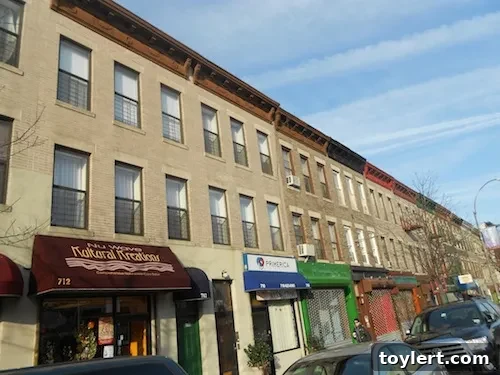
For many long-term residents and local historians, the answer to this territorial puzzle is unequivocally clear: Washington Avenue. This iconic thoroughfare, captured in the image above, has traditionally served as the definitive border, a physical line drawn in the urban landscape. Yet, as Brooklyn continues its rapid evolution, fueled by new demographics, burgeoning development, and the pervasive influence of digital information, this clear line has become increasingly blurred, leading to a fascinating “neighborhood border war” that reflects the fluid nature of modern urban life.
Washington Avenue: More Than Just a Street, a Divisive Line
The traditional understanding of Brooklyn’s neighborhoods is deeply rooted in local knowledge and historical precedent. For generations, Washington Avenue has been recognized as the undisputed dividing line between the lively community of Crown Heights to its east and the charming, brownstone-lined streets of Prospect Heights to its west. This sentiment is echoed by community leaders and long-time residents who consider this boundary an immutable fact of local geography. As Atim Oton of Community Board 8 succinctly put it in an article by DNAinfo, “The boundaries are simple. Washington Avenue is the dividing line.” This statement reflects a strong belief in the established order and the historical wisdom that has guided the borough’s understanding of its own territories.
This traditional view isn’t merely arbitrary; it often stems from historical development patterns, architectural styles, and the socio-economic evolution of these distinct areas. Neighborhoods develop their unique character over time, and physical features like major avenues or parks naturally come to delineate these differences. Washington Avenue, therefore, isn’t just a road; it’s a symbolic marker of two different historical narratives and community identities that have coexisted and evolved alongside each other. Understanding these roots is crucial to appreciating why the debate over its status as a border persists so passionately among those who call these areas home.
The persistence of this traditional understanding highlights the deep-seated connection residents feel to their local community. For “old-timers,” these boundaries are integral to their sense of belonging and civic identity. They represent years of shared experiences, local businesses, and community initiatives tied to a specific geographical definition. Any deviation from this established order can feel like an erosion of identity, a challenge to the very fabric of their neighborhood. This clash between enduring tradition and contemporary fluidity lies at the core of the ongoing discussion surrounding Brooklyn’s ever-evolving map.
The Forces Reshaping Identity: Real Estate, Newcomers, and Digital Platforms
While local tradition firmly plants Washington Avenue as the boundary, several modern forces have conspired to muddy these waters, creating confusion and sparking debate. The most significant among these are the practices of the real estate industry, the perspectives of newcomers to the city, and the ever-growing influence of digital mapping and review platforms.
The Real Estate Effect: Branding and Perception
Real estate agents play a pivotal role in shaping public perception of urban areas. In a competitive market like Brooklyn, property descriptions and neighborhood labels are powerful marketing tools. Historically, there might have been a perceived premium associated with the “Prospect Heights” brand, perhaps due to its proximity to Prospect Park or its established brownstone aesthetic. This could lead agents to subtly, or sometimes overtly, extend the “Prospect Heights” label further east than traditional boundaries would suggest, effectively re-branding parts of Crown Heights to appeal to certain buyers or renters. This practice, driven by market demand and the desire to maximize property value, contributes significantly to the confusion surrounding the official lines.
However, the narrative is not static. As Brooklyn’s demographics and desirability shift, so too do these branding strategies. Crown Heights, in particular, has witnessed a remarkable resurgence and increased popularity over the past decade, attracting a diverse influx of new residents, businesses, and cultural venues. This rise in popularity has lessened the imperative for real estate professionals to “borrow” the Prospect Heights name. As Nick Juravich, the insightful blogger behind I Love Franklin Ave, pointed out, “As Crown Heights becomes an increasingly popular place to live, the tendency to call its western edge Prospect Heights is lessening.” This observation underscores how the economic and social appeal of a neighborhood can directly influence how its boundaries are marketed and perceived, demonstrating the dynamic interplay between identity and market forces.
The economic implications of such branding are profound. Property values, rental prices, and even the types of businesses that flourish in an area can be influenced by its perceived neighborhood identity. A clearer, more consistent understanding of boundaries, while perhaps challenging to achieve, could bring more transparency and stability to these aspects of urban life. The real estate market, therefore, acts as a powerful, albeit often unofficial, arbiter of neighborhood definitions, constantly adapting its narratives to reflect current trends and client preferences.
The Newcomer’s Perspective: Seeking Clarity in a Complex City
For individuals new to Brooklyn, navigating the borough’s intricate tapestry of neighborhoods can be overwhelming. Without the benefit of years of local knowledge or an inherent understanding of historical demarcations, newcomers often rely heavily on online resources, mapping applications, and real estate listings. When these sources present conflicting or ambiguous information about neighborhood boundaries, it creates a genuine sense of disorientation. One apartment might be listed under “Prospect Heights” on one site and “Crown Heights” on another, even if they are just blocks apart. This inconsistency makes it challenging for new residents to form a clear understanding of where they live, impacting their sense of community belonging and their ability to engage with neighborhood-specific resources and services.
The struggle for clarity among newcomers highlights a broader urban challenge: how to effectively integrate new populations into established community structures. When the fundamental geographical definitions are unclear, it can impede social cohesion and civic engagement. A resident might be unaware of their correct community board, local events, or neighborhood-specific advocacy groups, simply because they are unsure of which neighborhood they officially belong to. This underlines the importance of clear, widely accepted boundaries, not just for administrative purposes, but for fostering a robust and informed local citizenry.
Yelp’s Role in Defining Digital Geography
In the digital age, online platforms like Yelp, Google Maps, and other location-based services wield significant power in shaping our understanding of urban geography. For many, these digital maps are the primary tools used to navigate, discover businesses, and even define where neighborhoods begin and end. The article highlights a significant development: Yelp’s previous “incorrect” boundaries that contributed to the confusion and their subsequent decision to move their border west to Washington Avenue. A Yelp spokeswoman acknowledged this, stating that Yelp’s “boundaries were just wrong before.” This admission underscores the tangible impact digital platforms have on real-world perceptions.
The adjustment made by Yelp is more than just a minor technical correction; it’s a powerful affirmation of the traditional boundary and a step towards reducing digital ambiguity. When a widely used platform like Yelp aligns its definitions with local understanding, it helps solidify that understanding for millions of users, particularly newcomers and tourists. This has practical implications for local businesses, as their visibility and classification can significantly impact customer traffic. Being listed under the correct, traditionally recognized neighborhood helps businesses connect with their target local audience and reinforces the unique identity of that area. The move by Yelp exemplifies the growing responsibility of tech companies to accurately reflect local realities and contribute positively to urban identity, rather than inadvertently creating further confusion.
The Broader Implications of Dynamic Borders
The debate over Crown Heights and Prospect Heights is not an isolated incident; it mirrors similar discussions in other parts of Brooklyn and cities worldwide. It reveals a fundamental tension between fixed, administrative definitions and the fluid, organic ways in which urban communities evolve and self-define. This dynamic nature has profound implications for community identity, urban planning, and civic engagement.
Community Identity and Civic Engagement
Neighborhood boundaries are fundamental to community identity. They provide a framework for shared culture, local pride, and collective action. When these lines are ambiguous, it can dilute this sense of identity. Residents might feel a less distinct connection to a specific “place,” making it harder to rally around common issues or celebrate unique neighborhood characteristics. For community boards, which are structured around specific geographical areas, clear boundaries are essential for effective governance, resource allocation, and representation. If residents are unsure which board represents their street, their voice might be lost or misdirected, weakening local democracy and responsiveness.
Furthermore, local businesses often rely on the distinct branding of their neighborhood to attract customers and foster loyalty. A café in what is traditionally Crown Heights but marketed as Prospect Heights might confuse potential patrons or dilute its connection to the immediate local community. The clarity of these boundaries, therefore, directly impacts the vibrancy of local commerce and the intricate social fabric that binds residents to their immediate surroundings.
Urban Planning and Development Challenges
For city officials and urban planners, defined boundaries are not just about identity; they are crucial for practical administration. Zoning regulations, infrastructure projects, sanitation services, and public safety initiatives are all planned and executed based on specific geographical delineations. When neighborhood boundaries become contentious or fluid, it can complicate these essential city functions. The agreement among city officials and residents that borders are “arbitrary and dynamic” acknowledges the complex, organic growth of cities, but it also highlights the challenge of applying rigid administrative frameworks to an ever-changing urban landscape. Striking a balance between official necessity and organic evolution is a perpetual challenge in urban governance.
Learning from Other Disputed Territories
The Crown Heights/Prospect Heights conundrum is far from unique. The article itself points to another example within Brooklyn: the border between Boerum Hill and Cobble Hill, which “it seems no one agrees on.” These disputes often arise in areas undergoing gentrification or significant demographic shifts, where new populations bring new perceptions and old names compete with aspirational branding. Such debates are indicative of healthy, evolving cities where identity is actively discussed and redefined. They remind us that a city’s map is not just a static drawing, but a living document continually being redrawn by its inhabitants, markets, and digital platforms.
Similar situations can be observed in various major cities globally, where the “official” maps might differ significantly from how locals perceive or refer to their neighborhoods. Whether it’s the nuances of districts in London, Paris, or Tokyo, the tension between administrative clarity and cultural fluidity is a universal urban phenomenon. These examples underscore that Brooklyn’s border debates are not anomalies but rather a vibrant manifestation of urban life’s dynamic and multifaceted nature.
Reconciling Perceptions: Towards a Clearer Brooklyn Narrative
The ongoing discussion around Brooklyn’s neighborhood boundaries, particularly concerning Crown Heights and Prospect Heights, reflects a deeper conversation about urban identity in the 21st century. As cities continue to grow and transform, the lines that once seemed immutable become subject to reinterpretation. The resolution of such debates is rarely absolute, but rather an ongoing process of negotiation between historical memory, contemporary usage, and the pervasive influence of digital information.
Ultimately, achieving greater clarity in neighborhood definitions requires a concerted effort from all stakeholders. Community boards, local media outlets like DNAinfo, and dedicated bloggers like Nick Juravich of I Love Franklin Ave play a crucial role in documenting, discussing, and reinforcing a shared understanding of these boundaries. Furthermore, real estate agencies and digital platforms bear a responsibility to align their representations with established community consensus, thereby minimizing confusion and supporting a unified urban narrative. The recent correction by Yelp sets a positive precedent, demonstrating that digital tools can, and should, reflect local realities.
As Brooklyn continues its fascinating journey of transformation, the vibrancy of its neighborhoods remains its greatest asset. While the exact lines on the map may continue to evolve, the rich tapestry of its communities, each with its unique character and story, will undoubtedly endure. The “border war” between Crown Heights and Prospect Heights, therefore, is not just a quarrel over lines on a map; it’s a testament to the borough’s dynamic spirit, its enduring sense of place, and the passionate engagement of its residents in shaping their collective future.
Swath of Central Brooklyn Ceded Back in Neighborhood Border War [DNAinfo]