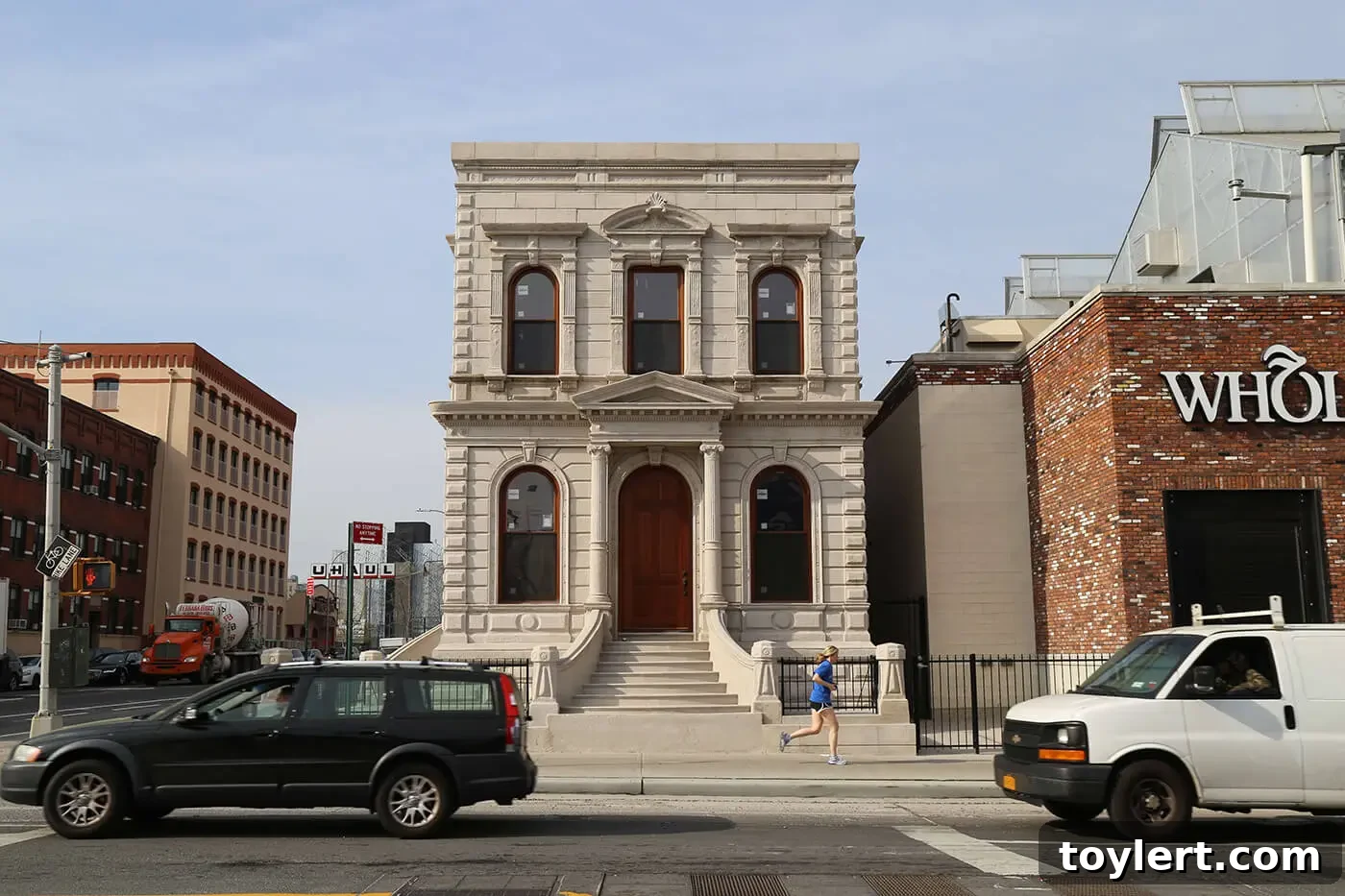
The Coignet Stone Building, an enduring symbol of industrial innovation and architectural resilience, stands majestically at the bustling intersection of 3rd Avenue and 3rd Street in the heart of Gowanus, Brooklyn. This remarkable structure, long recognized for its pioneering use of concrete, has recently undergone an extensive and meticulous $1.3 million restoration. This monumental effort has not only breathed new life into the once-crumbling landmark but has also reaffirmed its status as an invaluable piece of New York City’s rich architectural tapestry. From its origins as a groundbreaking showroom for the New York and Long Island Coignet Stone Company, the building holds the distinction of being New York City’s very first known instance of concrete construction, setting a precedent for future urban development. Today, after decades of neglect and subsequent rehabilitation, it shines brighter than ever, looking every bit the historic landmark it truly is.
The Coignet Stone Building’s story is one of innovation, decline, and ultimately, triumphant rebirth. Its significance extends far beyond its immediate physical presence; it represents a pivotal moment in construction history, showcasing the revolutionary potential of concrete long before it became a ubiquitous material in modern building practices. This meticulous restoration project was not merely about aesthetic enhancement; it was a dedicated endeavor to honor and preserve a piece of industrial heritage, ensuring that future generations can appreciate its architectural and historical value. The building’s renewed facade and structural integrity are a testament to the power of thoughtful preservation, demonstrating how historical assets can be revitalized to contribute to the vibrancy of contemporary urban landscapes.
A Vision of Concrete: Pioneering Construction in 19th Century New York
The inception of the Coignet Stone Building dates back to a period of immense industrial change and architectural experimentation in the United States. Completed by 1874, this remarkable structure was originally conceived as the flagship showroom for the New York and Long Island Coignet Stone Company. The company was at the forefront of introducing “béton Coignet,” a pioneering form of precast concrete, to the American construction market. This innovative material, developed by French industrialist François Coignet, offered unprecedented strength, durability, and versatility, positioning itself as a cost-effective alternative to traditional carved stone and brick.
What makes the Coignet Stone Building particularly significant is its role as a practical demonstration of this groundbreaking material. Every intricate detail, from the ornate window frames to the decorative cornices, was meticulously crafted from Coignet stone, showcasing its potential for both structural integrity and elaborate architectural embellishment. The building was, in essence, an advertisement in three dimensions, designed to convince skeptical builders and architects of concrete’s superior qualities and aesthetic possibilities. At a time when steel and other modern materials were still finding their footing, the Coignet Building stood as a bold declaration of a new era in construction, signaling a departure from conventional building methods and embracing the future of engineered materials.
Architectural Brilliance by William Field and Son
The architectural design of the Coignet Stone Building was entrusted to the prolific and highly respected firm of William Field and Son. This celebrated architectural practice was renowned for its significant contributions to Brooklyn’s urban landscape during the late 19th century. Their portfolio boasted an impressive array of residential and commercial projects, many of which are still admired today for their distinctive charm and robust construction. Among their other notable works in Brooklyn are the stately Riverside Apartments in Brooklyn Heights, an enduring example of their residential prowess, and the Home and Tower Apartments in Cobble Hill, which further solidified their reputation for designing elegant and functional urban dwellings.
For the Coignet Stone Building, William Field and Son likely drew inspiration from popular architectural styles of the era, such as the Second Empire or Italianate, adapting them to highlight the unique properties of Coignet stone. The building’s design features elements typically found in grander, stone-built structures, demonstrating how concrete could mimic and even surpass the decorative capabilities of natural stone. This deliberate choice underscored the material’s ability to create sophisticated facades with intricate moldings and decorative motifs, challenging the prevailing notion that concrete was merely a utilitarian material. The firm’s vision for the Coignet Building was not just about erecting a structure but about crafting a monument that would herald a new age of construction possibilities.
From Showroom to Shadow: The Building’s Journey Through the Decades
Following its initial prominence as a revolutionary showroom, the Coignet Stone Building embarked on a long and varied journey through the commercial landscape of Gowanus. Over the decades, it served as home to a series of small businesses, each leaving their own mark on the historic edifice. While the exact nature of all these ventures remains part of local lore, it is plausible that they ranged from industrial workshops catering to Gowanus’s manufacturing heritage to commercial offices leveraging its strategic location.
However, this period of occupation also brought about certain alterations that obscured the building’s original splendor. At some point, likely in a misguided attempt at modernization or perhaps due to deterioration of the original facade, one of these tenants made the regrettable decision to cover the building’s distinctive exterior with an “ugly brick veneer.” This unfortunate alteration concealed the elegant Coignet stone, robbing the building of its unique identity and transforming it into a rather unremarkable structure. For many years, passersby were unaware of the architectural treasure hidden beneath the drab brick, underscoring a common challenge in urban preservation: how to recognize and protect historic structures when their defining features have been camouflaged.
The building’s fortunes took a significant downturn in the 1960s when it was eventually abandoned. This era marked a period of economic decline and industrial exodus for many parts of Gowanus, leaving numerous historic properties vacant and vulnerable. The Coignet Stone Building, once a symbol of innovation, became a derelict shell, succumbing to the ravages of time, weather, and neglect. Its crumbling state and boarded-up windows made it an emblem of urban decay, a poignant reminder of a forgotten past. For decades, it stood as a ghost of its former self, its groundbreaking history overshadowed by its desolate present, prompting fears among local preservationists that it might eventually face demolition. This prolonged period of abandonment only heightened the urgent need for intervention and highlighted the precarious existence of many historic buildings without active stewardship.
The Phoenix Rises: A $1.3 Million Restoration Masterpiece
The narrative of the Coignet Stone Building took a dramatic turn with the initiation of its comprehensive $1.3 million restoration. This ambitious project, meticulously planned and executed, aimed not only to repair the physical damage but also to meticulously reverse the alterations that had stripped the building of its original character. The restoration was a collaborative effort, often spearheaded by development groups invested in the surrounding Gowanus revitalization, recognizing the intrinsic value of preserving such a unique landmark. The task was complex, requiring a deep understanding of historical preservation techniques and expertise in working with an antiquated material like 19th-century concrete.
The restoration process involved several critical stages:
- Facade Deconstruction: The first major step was the careful removal of the unsightly brick veneer that had long obscured the original Coignet stone. This painstaking process revealed the extent of the deterioration beneath and confirmed the presence of the pioneering concrete material.
- Structural Stabilization and Repair: Preservation architects and structural engineers meticulously assessed the building’s integrity. Extensive repairs were undertaken to address structural weaknesses, cracks, and erosion in the concrete, utilizing modern techniques that are sympathetic to historical materials. Specialized compounds and restoration mortars were used to ensure the longevity and stability of the historic fabric.
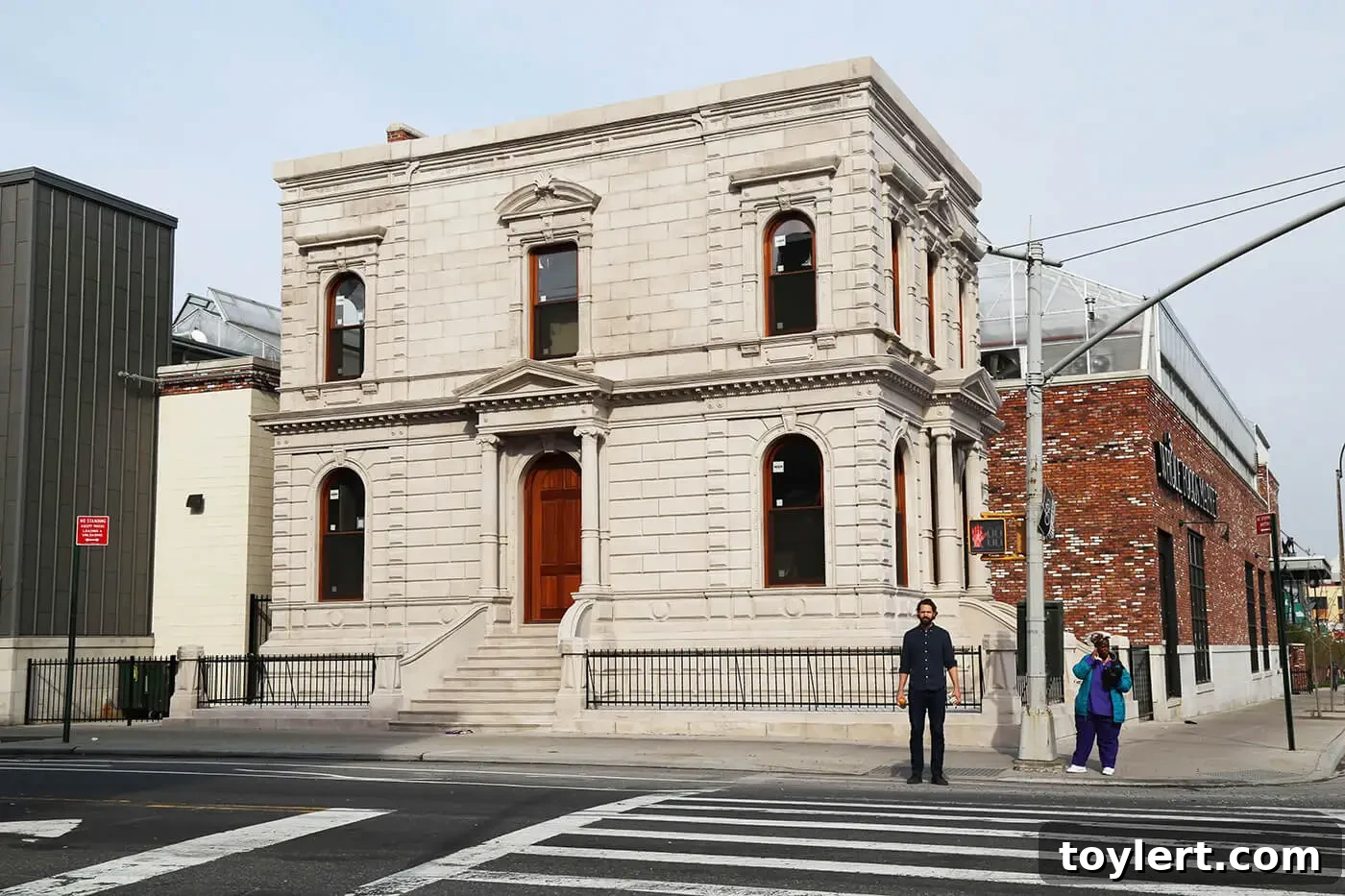
- Surface Treatment and Re-finishing: With the underlying structure stabilized, attention turned to the exterior finish. The original Coignet stone was designed to mimic carved limestone, and the restoration sought to replicate this aesthetic. The application of a new, pristine white coating, most likely a high-quality stucco cement, was chosen to achieve an appearance strikingly similar to its initial state. This careful re-finishing not only protected the concrete but also restored the intricate decorative elements that had been lost or damaged over time, bringing back the building’s sophisticated allure.
- Preservation of Detail: Every effort was made to restore the building’s ornate details, from the classical pilasters and cornices to the intricate window surrounds. Craftsmen worked tirelessly to recreate or repair damaged elements, ensuring that the historical accuracy and architectural grandeur were faithfully preserved.
The successful completion of this restoration project is a monumental achievement in architectural preservation. It serves as a powerful example of how investment and dedication can transform a neglected ruin into a vibrant historical asset, ensuring that the Coignet Stone Building can once again stand proudly as a testament to Brooklyn’s rich heritage and innovative spirit.
The Coignet Building Today: A Beacon of History in a Changing Gowanus
Today, the Coignet Stone Building stands as a magnificent testament to resilience and renewal, a radiant beacon of history amidst the rapidly transforming landscape of Gowanus. Its brilliant white facade, shimmering under the Brooklyn sun, offers a striking contrast to its industrial surroundings and the ongoing modernization of the neighborhood. The successful restoration has not only saved a significant landmark from oblivion but has also reintegrated it into the contemporary urban fabric, allowing it to play a new role in the district’s evolving identity.
While the building itself retains its original historical function as a landmark structure, its revitalization has had a profound impact on the surrounding area. Positioned prominently, it now serves as a poignant visual reminder of Gowanus’s layered past, bridging the gap between its industrial heritage and its future as a vibrant mixed-use community. The building’s renewed prominence often correlates with the broader revitalization efforts in Gowanus, including environmental initiatives like the Gowanus Canal cleanup and significant rezoning proposals that are reshaping the area. It acts as a touchstone, a physical anchor that grounds new developments in a sense of place and history.
The Coignet Building’s presence is not just about aesthetics; it embodies an important educational value. It provides a tangible link to 19th-century industrial innovation, offering insights into early concrete technology and architectural trends. For residents, visitors, and students, it represents a visible lesson in the importance of preserving historical structures, demonstrating that growth and progress can coexist harmoniously with the celebration of heritage. Its story of pioneering spirit, decline, and ultimate rebirth resonates deeply, fostering a sense of community pride and acting as an inspiration for future preservation projects throughout New York City. The building now proudly stands, not just as a piece of history, but as an active participant in the ongoing narrative of Gowanus, showcasing how the past can beautifully inform and enrich the present and future.
The Enduring Legacy of Concrete in Urban Landscapes
The story of the Coignet Stone Building is more than just a local anecdote; it is a microcosm of the broader narrative of concrete’s transformative impact on urban landscapes worldwide. From its humble beginnings as a revolutionary material showcased in a Brooklyn showroom, concrete has evolved to become one of the most fundamental and versatile building materials of the modern era. The foresight of the New York and Long Island Coignet Stone Company, and the architectural brilliance of William Field and Son, provided an early glimpse into a future dominated by this engineered stone.
The Coignet Building’s pioneering use of concrete in the 1870s laid the groundwork for countless innovations that followed. It demonstrated concrete’s immense potential for structural integrity, fire resistance, and aesthetic versatility – qualities that would later become indispensable in the construction of everything from grand public works and sprawling industrial complexes to towering skyscrapers and intricate infrastructure projects. Its robust nature and adaptability made it ideal for rapid urban expansion, allowing cities to grow vertically and horizontally at unprecedented rates.
Today, we witness concrete in nearly every aspect of our built environment, from the foundations of our homes to the bridges that span our rivers and the roads we travel. The Coignet Building serves as a powerful reminder of this material’s enduring legacy, showcasing its historical roots and demonstrating how even early forms of concrete could be crafted with beauty and precision. Its preservation underscores the importance of acknowledging the origins of modern construction techniques and celebrating the ingenuity of those who first dared to build differently. As we continue to develop sustainable and innovative building practices, the Coignet Building stands as a timeless testament to a material that truly shaped our modern world.
Conclusion: A Monument Reclaimed for Future Generations
The journey of the Coignet Stone Building is a compelling saga of architectural innovation, historical neglect, and ultimate redemption. What began as a bold experiment in 19th-century concrete construction, setting a precedent as New York City’s first such structure, endured decades of obscurity and decay. Yet, through a dedicated and significant $1.3 million restoration effort, this historic Gowanus landmark has been meticulously reclaimed and brilliantly revitalized.
Today, the building stands as a powerful symbol – not only of its own pioneering history but also of the broader commitment to preserving the unique character of Brooklyn and New York City. Its renewed facade and structural integrity tell a story of technological advancement, architectural elegance, and the enduring value of heritage. It serves as an invaluable educational resource, offering a tangible link to a pivotal era in construction and design. More than just a building, the Coignet Stone Building is a testament to the fact that even the most neglected remnants of the past can be transformed into vibrant testaments to human ingenuity and cultural richness. Its continued presence ensures that its groundbreaking legacy will inspire and inform generations to come, standing proudly as a beacon of preservation and progress in the heart of Gowanus.