The Supreme Court and New York’s Rent Regulations: A Deep Dive into a Landmark Legal Battle
In a pivotal moment for urban housing policy, the Supreme Court of the United States initiated a remarkably serious examination of New York’s intricate rent regulation laws in 2012. This significant legal scrutiny, highlighted by a Wall Street Journal report, brought to the forefront the long-standing tension between private property rights and the public interest in affordable housing. The potential ramifications of such a review extended far beyond New York City, threatening to reshape the legal landscape for rent control and tenant protections nationwide.
At the heart of this constitutional challenge were James and Jeanne Harmon, an Upper West Side brownstone-owning couple, who embarked on a determined legal battle against the city’s rent rules. They contended that these regulations compelled them to subsidize their tenants, arguing that such a mandate violated fundamental constitutional principles. The defense of these entrenched laws fell to the City of New York and the New York Attorney General, who asserted the essential role of rent stabilization in maintaining housing equity and preventing widespread displacement in one of the world’s most dynamic and expensive housing markets.
The Enduring System of New York City Rent Regulations
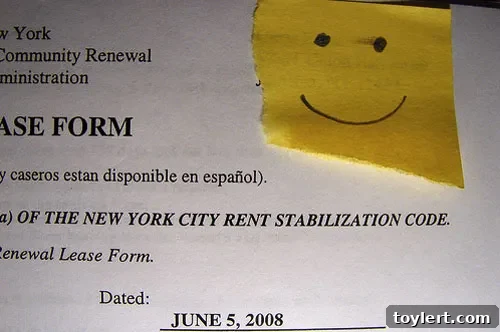
New York City’s rent regulation system, predominantly comprising rent control and rent stabilization, represents a unique and deeply embedded aspect of its urban fabric. Originating in the aftermath of World War II to combat severe housing shortages, these laws have been continuously adapted over the decades to address the city’s persistent housing crises. Rent stabilization, in particular, applies to a substantial portion of the city’s housing stock, primarily apartments in buildings constructed before 1974. It dictates the maximum allowable annual rent increases and grants tenants crucial rights, including the right to renew their leases, thereby offering a degree of housing security and affordability to millions of New Yorkers.
While celebrated by tenant advocates as a vital bulwark against spiraling housing costs and gentrification, rent regulations have consistently faced strong opposition from property owners and real estate developers. Critics argue that these policies disincentivize property maintenance and investment, stifle new construction, and distort the natural market forces of supply and demand. They claim that rent caps often prevent landlords from covering operational costs, making necessary capital improvements, or realizing a fair return on their significant investments. This fundamental disagreement over the efficacy and fairness of rent regulation has fueled countless legislative debates and legal challenges, making the Supreme Court’s engagement in 2012 particularly noteworthy.
The Harmon Case: A Constitutional Standoff
The legal challenge mounted by James and Jeanne Harmon was deeply personal, rooted in their experience as landlords within the rent-stabilized system. Their argument was vividly illustrated by the situation of one of their tenants, Nancy Wing Lombardi, an executive who occupied a one-bedroom unit in their brownstone for approximately $1,000 per month. This figure, as the Harmons highlighted, was significantly below the market rate for a comparable apartment in a prime Upper West Side location in 2012. The fact that Lombardi also reportedly owned a house in the Hamptons further underscored the Harmons’ grievance, suggesting that the benefits of rent stabilization were not exclusively reaching those in acute financial need, but were rather creating an unfair burden on property owners.
The Harmons characterized their legal effort as an “underdog constitutional battle,” positioning themselves against the powerful legal apparatus of the state and city. Their lawsuit was not merely an attempt to adjust rent prices but a profound challenge to the constitutional legitimacy of New York’s long-standing housing policies. By bringing their case to the nation’s highest court, they sought to reignite a fundamental debate over property rights, economic liberty, and the appropriate scope of government intervention in private markets.
The Fifth Amendment: A Claim of “Taking” Without Just Compensation
A cornerstone of the Harmons’ legal assault was their appeal to the Fifth Amendment of the U.S. Constitution, particularly its Takings Clause. This clause unequivocally states that “private property [shall not] be taken for public use, without just compensation.” The Harmons posited that New York’s rent stabilization laws, by dictating rental prices and limiting their ability to charge market rates, effectively constituted a “taking” of their private property. They argued that by compelling them to lease their property at below-market values, the government was essentially commandeering a portion of their economic interest and rightful income from their property for the public benefit of affordable housing, yet failing to provide them with the constitutionally mandated “just compensation.”
This argument delved into the complex area of “regulatory takings,” a legal concept distinct from direct physical appropriation. A regulatory taking occurs when government regulations, though not directly seizing property, impose such severe restrictions on its use or economic viability that they amount to an effective expropriation. The Harmons contended that the cumulative burden of rent stabilization laws on their ability to manage and profit from their property crossed this constitutional threshold, infringing upon their fundamental rights as property owners. They viewed the forced subsidy of tenants as a direct seizure of their financial returns, akin to the government seizing a portion of their land without payment.
Conversely, the City and State of New York staunchly defended the regulations, countering the Harmons’ Fifth Amendment claim. Their argument drew upon established legal precedents that differentiate between direct governmental occupation of property and regulations that merely govern its use. They asserted that because the Harmons had voluntarily chosen to enter the rental market and had already opened their property to tenants, the state’s regulation of the terms of tenancy did not constitute a “taking” in the constitutional sense. Rather, they argued it was a legitimate exercise of the state’s inherent police power, a broad authority to enact laws to protect public health, safety, and welfare. In the context of New York City’s unique housing market, this power was deemed essential to ensure social stability and prevent widespread housing instability, thus making rent stabilization a permissible regulatory measure rather than an uncompensated taking.
Due Process and the Temporary Versus Permanent Nature of Rent Controls
Beyond the Takings Clause, the Harmons also pressed a significant due process claim, invoking historical interpretations of rent control laws. Their argument resonated with a crucial 1922 ruling by the Supreme Court, which they cited as establishing that rent controls were intended to be temporary measures, justifiable only as responses to “catastrophic” emergencies, such as post-war housing shortages. The Harmons argued that the continued, seemingly permanent application of rent stabilization in New York City, decades after its initial emergency justifications, fundamentally contradicted this precedent. They suggested that the city’s ongoing housing challenges, while significant, could no longer be classified as temporary emergencies warranting such extensive and long-lasting government intervention.
This line of reasoning implied that the prolonged nature of rent stabilization, without a continuously demonstrable “catastrophic” emergency, violated the due process rights of property owners. Due process ensures that governmental actions are not arbitrary or unreasonable and that individuals are afforded fair procedures. For the Harmons, the enduring regulatory regime represented an arbitrary infringement on their economic liberty and property rights, failing to meet the constitutional standards of due process. They sought to re-establish the principle that emergency powers, once the emergency has passed, should recede, thereby restoring full autonomy to property owners.
The state, in response, emphasized the evolving nature of urban challenges and the ongoing necessity for regulatory tools to address persistent social problems. They contended that while the initial impetus for rent control might have been an acute post-war emergency, the chronic housing affordability crisis in New York City represented an equally compelling and enduring social need. They argued that the regulations were continually reviewed, updated, and justified by legislative findings, and therefore, did not violate due process. The state maintained that the legislature has the legitimate authority to adapt laws to contemporary societal needs, asserting that the decades-long duration of the regulations reflected a persistent and legitimate necessity for housing stability rather than an unconstitutional overreach of governmental power.
The “Racket” Argument: Policy Versus Legal Constitutionality
Finally, the Harmons advanced a broader, more impassioned argument, asserting that rent regulations constituted a “racket in which property owners and market rate tenants always lose.” This perspective framed the regulatory system as inherently unfair and economically distorting, placing disproportionate burdens on landlords while potentially benefiting a select group of tenants at the expense of others, including those paying market rates who might indirectly bear the cost of subsidized units. They contended that such a system led to a host of unintended negative consequences, such as discouraging necessary property improvements, fostering a black market for leases, and ultimately failing to solve the root causes of the housing crisis.
While this argument resonated deeply with many landlord advocacy groups and property owners who feel unfairly targeted, the state’s legal defense strategically countered it by drawing a sharp distinction between arguments concerning public policy and those pertaining to constitutional legality. The state maintained that whether rent regulations represented “good policy” or were economically efficient was a matter for legislative debate, political discourse, and public opinion—not for the Supreme Court to decide on constitutional grounds. The judiciary’s role, they argued, was to assess the legality and constitutionality of the laws themselves, not to evaluate their wisdom, effectiveness, or fairness as public policy. Therefore, while the Harmons’ “racket” argument held significant sway in the political arena, the state asserted its irrelevance to the core legal question of the regulations’ constitutional validity.
Broader Implications and the Ongoing Debate Over Housing Policy
The Supreme Court’s decision to even entertain the Harmons’ appeal in 2012 underscored the profound and persistent controversies surrounding rent regulation. A ruling in favor of the Harmons could have triggered seismic shifts, potentially unraveling a critical component of New York City’s housing infrastructure and establishing a precedent that might empower challenges to rent control laws in numerous other cities grappling with affordability issues. For property owners, such a decision would have marked a monumental victory for individual property rights, potentially liberating them from what many perceived as unjust government overreach. Conversely, for millions of tenants, it would have signaled a potentially catastrophic loss of affordable housing options, ushering in a dramatic rebalancing of power dynamics in the landlord-tenant relationship.
This case, like many historic legal battles over housing, illuminates the intricate interplay of economic theory, social justice imperatives, and constitutional law. Debates surrounding rent control often delve into fundamental philosophical questions about the appropriate role of government in a free-market economy, the precise definition and limits of private property rights, and the extent to which public welfare considerations can legitimately justify restrictions on private enterprise. While the immediate outcome of the Harmons’ specific appeal in 2012 may not have led to the wholesale dismantling of rent stabilization, the Supreme Court’s willingness to engage with the issue sent an unmistakable message: the constitutional legitimacy of extensive and long-lasting regulatory schemes like rent stabilization would remain under judicial and public scrutiny.
Conclusion: An Enduring Legal and Social Debate
The Supreme Court’s “surprisingly serious look” at New York’s rent regulation laws in 2012, catalyzed by the persistent efforts of James and Jeanne Harmon, served as a potent reminder of the enduring and multifaceted legal and social debate surrounding urban housing policy. It starkly illuminated the deep-seated conflicts between property owners championing their constitutional rights and a vast populace of tenants reliant on these regulations for housing security and affordability. While specific legal battles continue to evolve, the core constitutional arguments articulated by the Harmons—concerning the Fifth Amendment’s Takings Clause, due process violations, and the perceived unfairness of the system—remain central to ongoing discussions about urban housing, property ownership, and governmental responsibilities.
Ultimately, high-profile legal challenges like the Harmon case do more than just determine the fate of particular laws; they actively shape the ongoing national dialogue about housing affordability, the boundaries of property ownership, and the delicate balance of power within complex urban environments. The “Legal War Over NYC’s Rent Regulations,” as comprehensively chronicled by the Wall Street Journal, exemplifies a perennial struggle that continues to influence legislative policy, jurisprudential development, and the daily lives of millions of residents across the country.
The Legal War Over NYC’s Rent Regulations [WSJ]
Photo by shinsawbu