Williamsburgh Trust Company Building: A Neoclassical Gem Secures New York City Landmark Status
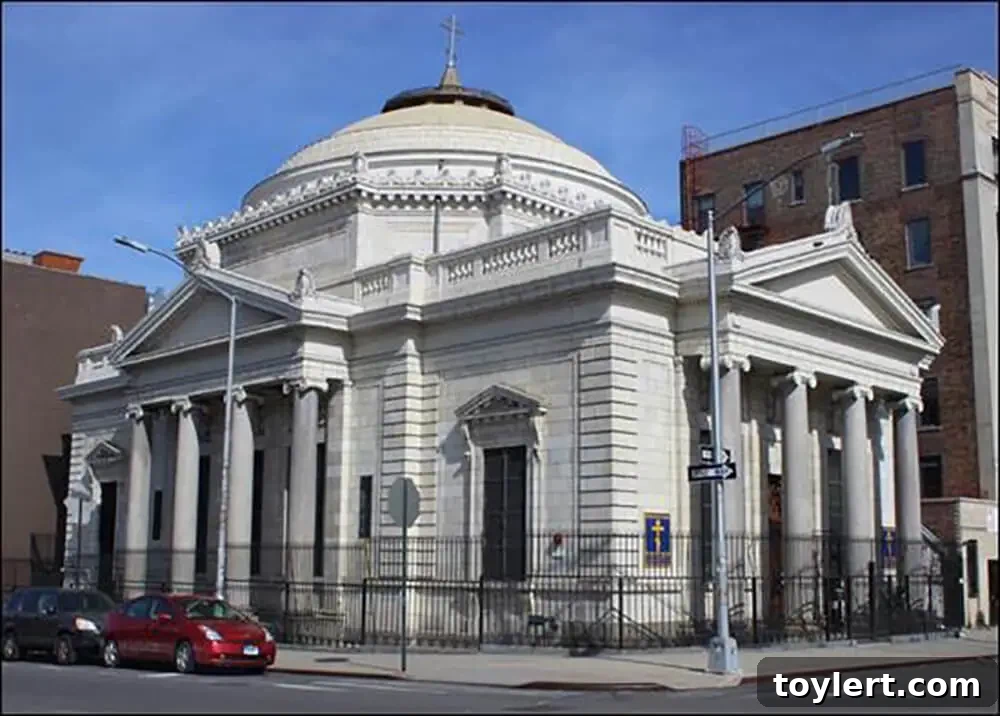
In a significant and widely celebrated decision, the New York City Landmarks Preservation Commission (LPC) has officially designated the magnificent Williamsburgh Trust Company Building, located at 177 South 5th Street in the vibrant heart of Williamsburg, Brooklyn, as a New York City landmark. This rare and momentous vote, cast on a recent Tuesday, ensures the enduring protection and recognition of a structure that stands as a testament to Brooklyn’s rich architectural heritage and its economic prowess at the turn of the 20th century. The designation is not merely an administrative formality; it is a profound acknowledgment of the building’s irreplaceable historical, cultural, and aesthetic value within the urban fabric of one of the city’s most dynamic neighborhoods.
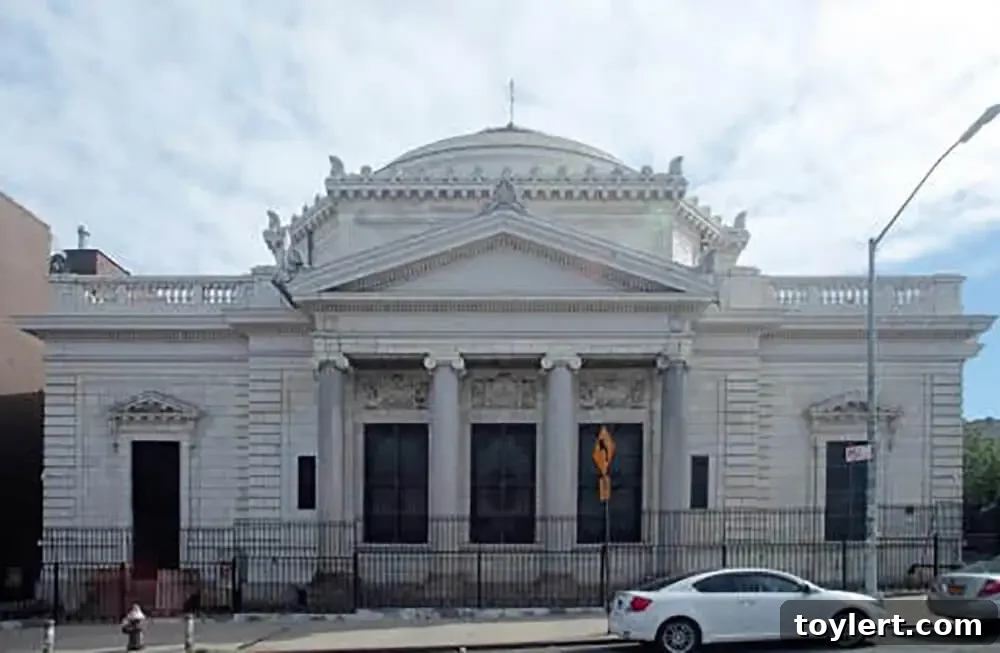
The Williamsburgh Trust Company Building is a quintessential example of Neoclassical architecture, a style renowned for its grandeur, symmetry, and meticulous adherence to classical Greek and Roman principles. Erected in 1906, the building was originally conceived and constructed to serve as a formidable banking institution, embodying the stability and trustworthiness that financial establishments of that era sought to project. Its design was entrusted to the esteemed local architectural firm of Helmle, Huberty & Hudswell, a name synonymous with many of Brooklyn’s most distinguished structures. The LPC itself highlighted its significance, noting that this building proudly joins the ranks of numerous historic “banking temples” that emerged across both Brooklyn and Manhattan from the late 19th century onwards, each a powerful symbol of economic flourishing and civic ambition.
A Masterpiece of Neoclassical Design and Symbolism
The architectural style of the Williamsburgh Trust Company Building, Neoclassical, is deeply rooted in the revival of classical Greek and Roman design principles, often characterized by monumental scale, imposing facades, pediments, and stately columns. These elements were not merely decorative; they were carefully chosen to evoke a sense of permanence, authority, and public trust – qualities highly desirable for a financial institution. Typically, such “banking temples” featured grand entrances, elaborate stone carvings, and opulent interior spaces designed to impress clients and reinforce the bank’s image as a secure custodian of wealth. The use of robust materials like granite, marble, and finely dressed limestone contributed to their enduring quality and majestic appearance. This building, with its inherent dignity and classical proportions, seamlessly integrates these characteristics, making it a prominent visual anchor in its immediate urban environment.
At 177 South 5th Street, the Neoclassical design language translates into a structure that commands attention. While specific details of its facade may include colossal order pilasters or columns, intricate cornices, and perhaps decorative reliefs symbolizing commerce or prosperity, the overall impression is one of timeless elegance and stability. Such architectural choices were deliberate, aimed at distinguishing these institutions from surrounding commercial and residential buildings and positioning them as pillars of community strength and economic progress. The building’s designation by the LPC acknowledges not just its aesthetic appeal but also its role as a tangible representation of architectural trends and societal values from its era.
Helmle, Huberty & Hudswell: Architects of Brooklyn’s Heritage
The architectural firm of Helmle, Huberty & Hudswell played a pivotal role in shaping Brooklyn’s built environment during the late 19th and early 20th centuries. Renowned for their expertise in designing public, commercial, and institutional buildings, their portfolio is dotted with numerous significant structures that continue to define the borough’s landscape. Their work often blended robust construction with artistic flair, demonstrating a mastery of various architectural styles prevalent at the time, including Neoclassical, Beaux-Arts, and Renaissance Revival. For the Williamsburgh Trust Company Building, their choice of Neoclassical was particularly apt, aligning perfectly with the prevailing desire for banks to project an image of unwavering solidity and classical permanence. Their ability to translate the aspirational values of a burgeoning financial institution into a physical, imposing structure underscores their talent and enduring legacy. Their contributions extend beyond individual buildings; they helped to establish an architectural vocabulary for the civic and commercial heart of Brooklyn, leaving an indelible mark that continues to be celebrated by historians and enthusiasts alike.
Williamsburg: A Neighborhood’s Evolving Identity
The Williamsburgh Trust Company Building is situated in a neighborhood that has undergone profound transformations throughout its history. Originally a distinct town, Williamsburgh (later Williamsburg) was annexed by Brooklyn in 1855, becoming a crucial industrial and residential hub. Its waterfront location fostered robust trade and manufacturing, attracting diverse immigrant communities that shaped its unique cultural tapestry. In the early 20th century, when this bank was constructed, Williamsburg was a bustling center of commerce, home to factories, thriving businesses, and a growing population. The emergence of grand “banking temples” like the Williamsburgh Trust Company Building was a direct reflection of this economic vibrancy and the need for robust financial services to support a rapidly expanding urban landscape.
Over the decades, Williamsburg has witnessed cycles of decline and revitalization. From its industrial peak, it transitioned through periods of economic hardship, only to re-emerge in recent times as a global epicenter of art, culture, and innovation. This dramatic evolution, characterized by gentrification and an influx of new residents and businesses, has brought renewed attention to its historic structures. The designation of the Williamsburgh Trust Company Building as a landmark serves as a critical anchor, connecting the neighborhood’s dynamic present with its rich, industrious past. It stands as a powerful reminder of the layers of history that coexist within Williamsburg, offering a tangible link to its earlier identities amidst constant change.
The Enduring Legacy of “Banking Temples”
The concept of the “banking temple” is a fascinating chapter in American urban history, particularly pronounced in rapidly growing metropolises like New York City. During the late 19th and early 20th centuries, as the national economy expanded and financial institutions gained unprecedented influence, banks consciously adopted architectural styles that conveyed authority, security, and permanence. Neoclassical and Beaux-Arts designs, with their imposing facades, monumental columns, and lavish ornamentation, became the preferred choice. These structures were more than just places of transaction; they were civic monuments, symbols of capitalist prowess and community prosperity.
These “banking temples” were strategically placed at prominent intersections, often dominating streetscapes and serving as architectural anchors. Their design was intended to inspire confidence, particularly in an era before comprehensive federal deposit insurance, where a bank’s perceived stability was paramount. The Williamsburgh Trust Company Building perfectly embodies this architectural philosophy. It was designed not just to house banking operations but to instill a deep sense of trust and awe in its patrons, becoming an integral part of the urban narrative of growth and ambition that defined New York City during its Gilded Age and Progressive Era. Preserving these buildings today allows us to appreciate this unique architectural and economic history, understanding how institutions used design to shape public perception and build lasting legacies.
The Role of the Landmarks Preservation Commission
The Landmarks Preservation Commission (LPC) plays a crucial role in safeguarding New York City’s unparalleled architectural, historical, and cultural heritage. Established in 1965 in response to the demolition of historically significant structures like the original Pennsylvania Station, the LPC is responsible for designating individual landmarks, scenic landmarks, and historic districts across the five boroughs. Its mission is to preserve the city’s built environment for future generations, ensuring that the stories embedded within its structures are not lost to time or redevelopment pressures.
The process of landmark designation is rigorous and multi-faceted. It begins with extensive research into a building’s history, architectural style, and significance. This is followed by public hearings, where community members, preservation advocates, property owners, and experts present their cases for or against designation. Ultimately, the commissioners vote on whether a property meets the criteria for landmark status, which typically include architectural merit, historical association with significant events or figures, and its cultural or aesthetic value to the city. Once designated, a landmarked property receives special protections, meaning any proposed changes to its exterior must be reviewed and approved by the LPC, thus preventing inappropriate alterations or demolition. Commission Chair Meenakshi Srinavasan’s statement, “This is one of the neighborhood’s most beautiful and prominent buildings,” encapsulates the very essence of what the LPC seeks to protect – structures that are not only aesthetically pleasing but also hold profound significance for their communities and the city as a whole.
Why Preserve Historic Buildings?
The preservation of historic buildings like the Williamsburgh Trust Company Building offers numerous benefits that extend far beyond aesthetics. Firstly, it provides a tangible link to our past, allowing present and future generations to connect with the history, people, and events that shaped our cities. These structures serve as open-air museums, telling stories of ingenuity, economic evolution, and social change.
Secondly, historic preservation fosters a unique sense of place and local identity. In an increasingly globalized and homogenized world, maintaining distinctive architectural heritage helps communities retain their character and avoid becoming indistinguishable. Such buildings contribute to the cultural richness that makes New York City so captivating.
Economically, landmarked buildings often become magnets for heritage tourism, drawing visitors who contribute to local economies. They can also stabilize property values in historic districts and offer sustainable alternatives to new construction, as reusing existing structures reduces waste and the demand for new materials. Environmentally, preserving and adaptively reusing buildings is often more sustainable than demolition and new construction.
Finally, historic buildings provide valuable educational resources. Architects, historians, and the public can study their design, construction techniques, and evolution. They inspire a deeper appreciation for craftsmanship and the continuity of human endeavor. The designation of the Williamsburgh Trust Company Building is a victory for all these reasons, securing its place not just in stone, but in the collective memory and future prosperity of Williamsburg and New York City.
The Future of 177 South 5th Street: A Preserved Legacy
With its new status as a New York City landmark, the Williamsburgh Trust Company Building at 177 South 5th Street embarks on a new chapter, one firmly rooted in preservation and continuity. While the interior spaces may undergo adaptive reuse to suit modern needs – perhaps housing new businesses, cultural institutions, or even residential units – its magnificent Neoclassical exterior is now safeguarded against significant alteration or demolition. This ensures that the building’s original architectural integrity and its commanding presence within Williamsburg will be maintained for generations to come. The landmark designation is not a freeze on progress but a commitment to thoughtful development that respects the past while embracing the future. It guarantees that this “banking temple” will continue to tell its story, acting as a historical beacon and a cherished piece of Brooklyn’s identity, visible to residents and visitors alike who walk the historic streets of Williamsburg.