Discovering Williamsburg’s Hidden Gem: A Historic Wood Frame Home at 170 Woodpoint Road
Nestled away from the bustling streets of contemporary Williamsburg, a truly unique and historically significant property awaits at 170 Woodpoint Road. This intriguing wood frame house, discreetly set back with its front garden thoughtfully concealed behind a classic fence, offers a rare glimpse into Brooklyn’s storied past while embracing a charming, modern cottage aesthetic. It stands as a testament to thoughtful renovation, seamlessly blending vintage appeal with contemporary comfort, all within one of Brooklyn’s most dynamic neighborhoods. The blend of old and new is not just evident in the house itself, but also in the very fabric of the block it inhabits, creating a captivating dialogue between eras.
Embracing Cottage Charm: A Masterful Renovation
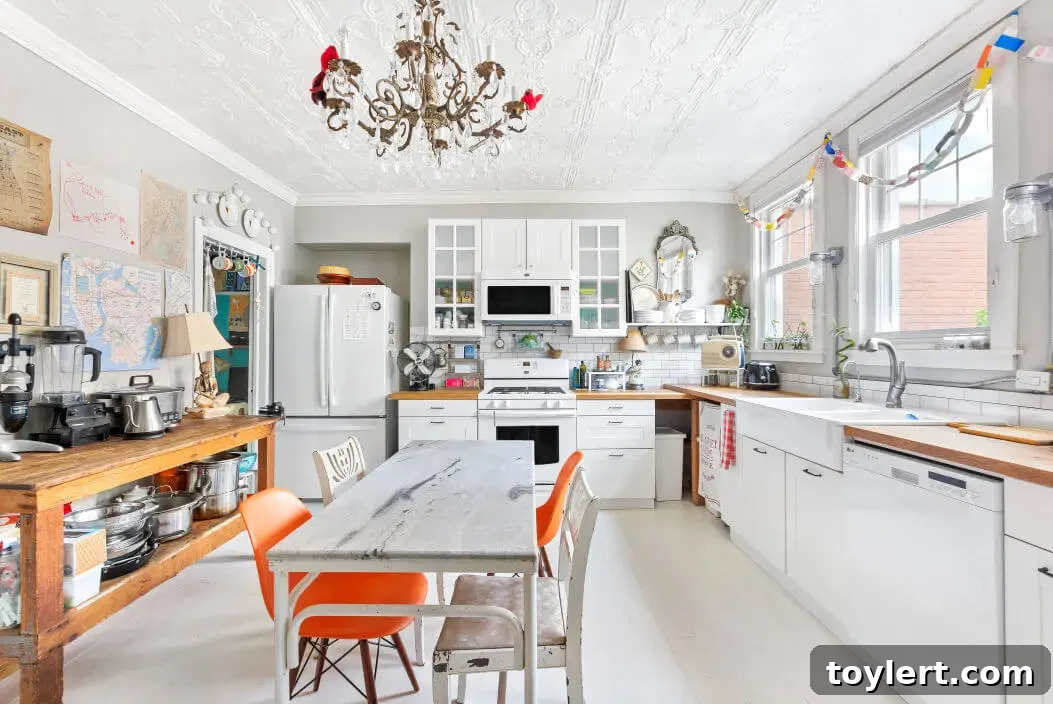
Step inside this enchanting residence, and you are immediately transported by its distinctive cottage vibe – a design ethos rarely found in the urban landscape of New York City. The renovation of 170 Woodpoint Road has been executed with an exquisite eye for detail, honoring the home’s historic character while introducing elements that elevate its livability and aesthetic appeal. Wide-plank floorboards, a hallmark of traditional craftsmanship, stretch across the living spaces, imbuing each room with warmth and an authentic, rustic charm. These substantial planks not only provide a visually striking foundation but also speak to the durability and timelessness of classic materials, a stark contrast to the often-impersonal finishes of modern construction.
Further enhancing the home’s unique atmosphere are the striking tin ceilings that adorn various rooms. More than just a decorative element, tin ceilings evoke a sense of grandeur and historical authenticity, popular during the late 19th and early 20th centuries. They catch the light beautifully, adding texture and intricate patterns that contribute to the overall cozy yet sophisticated ambiance. Complementing these features are the horizontal wood slat walls, which introduce a contemporary rustic touch. This design choice adds visual interest, depth, and a tactile quality, reinforcing the cottage aesthetic and creating a welcoming, inviting environment throughout the home. Together, these carefully selected elements create an interior that is both deeply rooted in history and perfectly suited for modern living, offering a serene sanctuary amidst the urban rush.
A Glimpse into the Past: Unraveling the Home’s Nineteenth-Century Roots
The history embedded within the walls of 170 Woodpoint Road is as captivating as its aesthetics. While pinpointing an exact construction date without extensive historical research proves challenging, records and architectural cues strongly suggest that this substantial 25-foot-wide wood frame house dates back to the 19th century. Intriguingly, there’s a strong possibility its origins stretch even further back, potentially into the pre-Civil War era. This makes the property a rare survivor, a tangible link to a pivotal period in American history and a testament to the enduring craftsmanship of its time.
Homes from the pre-Civil War period in New York City often featured construction techniques and materials that prioritized longevity and robustness, elements still evident in properties that have withstood the test of time. A 25-foot width for a wood frame house of this era suggests a property of considerable stature and perhaps an early commitment to comfortable, spacious living. Such houses often utilized sturdy timber framing, hand-milled lumber, and designs that reflected the vernacular architecture prevalent before the widespread adoption of mass-produced components. Understanding its approximate construction period allows us to appreciate the house not just as a dwelling, but as a living artifact, echoing stories of generations who have called this corner of Williamsburg home.
Woodpoint Road: An Ancient Pathway Through Time
The location of this historic residence on Woodpoint Road adds another layer of profound historical significance. Once known as Old Woodpoint Road, this thoroughfare has served as a vital pathway through the area for centuries, connecting early settlements and facilitating commerce long before the modern street grid took shape. Its very name suggests its historical function, likely traversing wooded areas or leading to specific wooden landmarks, indicating its role in the early development of the region.
While 170 Woodpoint Road is now firmly situated within the vibrant boundaries of Williamsburg, the land it occupies boasts an even older identity. This area was once the thriving heart of the Town of Bushwick. Long before its current iteration, during the Dutch colonial period, it was known as Het Dorp, a Dutch term meaning “The Village.” The Dutch arrival in the 17th century profoundly shaped the early landscape and naming conventions of what would become Brooklyn. Het Dorp was one of the original six towns of Long Island established by the Dutch, reflecting a structured colonial presence centered around agriculture and early community building. Its transition from a Dutch village to the Town of Bushwick, and eventually its absorption into the growing influence of Williamsburg, illustrates the dynamic historical evolution of this specific corner of Brooklyn, making every street and every old building a potential repository of forgotten narratives. The enduring presence of a 19th-century wood frame home like 170 Woodpoint Road serves as a physical reminder of these deep historical layers, connecting residents to centuries of local heritage.
Architectural Evolution: A Chronicle in Wood and Stone
The architectural journey of 170 Woodpoint Road can be traced through historical documents and photographs, revealing a fascinating evolution over more than a century. Early maps, such as those dating back to at least 1868, clearly depict wood frame houses populating this very block. This suggests that the area was already a established residential zone by the mid-19th century, with homes built using the readily available and versatile wood construction methods of the era. It’s also worth noting that some of the surrounding blocks might have seen even earlier development, indicative of the gradual expansion of settlements from the original Het Dorp nucleus.
A particularly illuminating record is the circa 1940 tax photo. This invaluable snapshot captures the house in its original shingled glory, showcasing its authentic silhouette and an elegant, simple bracketed cornice. The cornice, often a prominent decorative feature, would have added a classic touch to the home’s facade, reflecting the architectural styles popular in earlier periods. This photo serves as a crucial benchmark, illustrating the home’s appearance before certain structural modifications took place.
One notable alteration visible today is the stepped parapet. This feature, which typically involves a facade extending above the roofline in a series of steps, is a fairly common 20th-century modification. It often served both aesthetic and practical purposes, sometimes concealing a low-slope roof or providing a more finished look. Historical analysis suggests this change occurred at some point between the 1940s and the 1980s. Such alterations are typical in the lifespan of older urban homes, reflecting changing tastes, building codes, or structural updates. The present-day configuration of 170 Woodpoint Road thus embodies a rich tapestry of architectural styles and historical periods, offering a unique blend of original character and evolutionary adaptation.
Williamsburg Today: A Neighborhood of Contrasts and Charm
The modern-day Williamsburg that surrounds 170 Woodpoint Road is a vibrant testament to urban evolution, a dynamic neighborhood that masterfully balances its deep historical roots with a relentless forward momentum. The block itself epitomizes this duality, presenting a compelling blend of old and new construction. Historic wood frames like this one stand proudly alongside newer, often more contemporary buildings, creating a visually diverse and architecturally rich streetscape. This eclectic mix contributes to Williamsburg’s unique character, offering residents the charm of established communities alongside the conveniences and innovations of a thriving urban center.
Living on Woodpoint Road means enjoying the best of both worlds. While the street maintains a sense of quiet residential charm, particularly with the house set back and its private garden, it is merely steps away from the pulsating energy that defines contemporary Williamsburg. The neighborhood is renowned for its exceptional quality of life, boasting an impressive array of amenities. Residents have easy access to world-class dining, from Michelin-starred restaurants to cozy cafes, reflecting a diverse culinary scene. Independent boutiques and artisanal shops line the streets, offering unique shopping experiences, while a robust arts and culture scene provides galleries, music venues, and performance spaces for every taste.
Beyond the immediate block, Williamsburg offers unparalleled connectivity to the rest of New York City, with various subway lines providing quick commutes to Manhattan and other boroughs. Green spaces, such as nearby parks, offer respite and recreation, contributing to a balanced urban lifestyle. For those seeking a home with genuine soul and character, 170 Woodpoint Road presents an unparalleled opportunity. It appeals to a discerning buyer who values not only the unique architectural elements like tin ceilings and wide-plank floors but also the narrative of a home that has witnessed centuries of Brooklyn’s transformation. It’s a property for history enthusiasts, design aficionados, and anyone yearning for a distinctive living experience in one of NYC’s most sought-after neighborhoods. This wood frame treasure is more than just a house; it’s a piece of Williamsburg’s enduring legacy, beautifully preserved and thoughtfully updated for the next chapter.