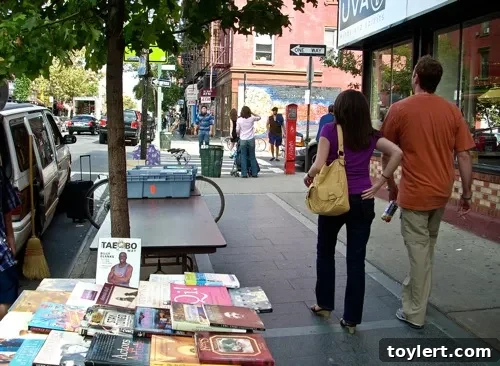
Williamsburg’s Retail Renaissance: A Deep Dive into Brooklyn’s Evolving Commercial Landscape
Williamsburg, once known primarily for its vibrant arts scene, independent boutiques, and thriving nightlife, is undergoing a significant transformation. This dynamic Brooklyn neighborhood is increasingly attracting the attention of national retail chains, marking a new chapter in its commercial evolution. While the influx of mainstream brands signifies Williamsburg’s growing appeal and economic strength, this expansion is shaped by a complex interplay of factors, both propelling and hindering development. Understanding these forces provides a clearer picture of Williamsburg’s shifting identity and its future as a retail powerhouse in New York City.
The Irresistible Allure of Williamsburg: A Shifting Demographic and Economic Landscape
The primary driver behind the interest from national retailers is the dramatic demographic shift witnessed in Williamsburg over the past decade. The neighborhood has evolved from an artists’ haven to a highly desirable residential destination, characterized by a rapid increase in upscale housing. “Pricey condos and rentals are now filling up with wealthy families,” notes industry analyses, and this affluent demographic naturally attracts high-end retailers eager to cater to their purchasing power and lifestyle needs. These new residents, often relocating from Manhattan or other expensive urban centers, seek convenience, quality, and familiar brands alongside the neighborhood’s unique charm.
Beyond affluence, increasing population density plays a crucial role. As more people move into Williamsburg, the sheer volume of residents translates directly into greater foot traffic for local businesses. This increased pedestrian activity makes retail spaces more valuable and viable for a wider range of stores, from specialty boutiques to larger national brands. Furthermore, the skyrocketing residential rents, a clear indicator of the neighborhood’s desirability, paradoxically also appeal to national retailers. These brands often possess the financial stability to absorb higher commercial rents, seeing it as an investment in a market with proven demand and significant growth potential. For them, a prime location in a high-density, affluent area like Williamsburg justifies the premium price tag.
Catalysts for Commercial Growth: Landmark Developments Paving the Way
The entry of major national brands into Williamsburg isn’t happening in a vacuum; it’s often anchored by large-scale commercial developments that reshape the retail landscape. These projects serve as magnets, drawing in other businesses and solidifying the neighborhood’s status as a burgeoning commercial hub.
The 242 Bedford Avenue Project: A Game-Changer
One of the most significant catalysts has been the ambitious project at 242 Bedford Avenue, situated between North 3rd and North 4th streets. Developed by Midtown Equities and other investors, this impressive complex represents a $40 million investment spanning 150,000 square feet. Slated to open in 2014, the development was a clear signal of Williamsburg’s commercial maturation. Its anchor tenants are a testament to the new demographic and the neighborhood’s evolving needs: a Whole Foods Market, a Citibank branch, a New York Sports Club, and luxury apartments. The inclusion of a Whole Foods, often a harbinger of gentrification and a draw for affluent residents, immediately elevated the retail profile of the area. Citibank provides essential financial services, while New York Sports Club caters to the health and wellness demands of a modern urban population. The luxury apartments integrated into the complex ensure a built-in customer base, further enhancing its appeal.
This landmark deal, signed in March, immediately prompted other significant retailers to cast their eyes on Williamsburg. Real estate brokers noted a palpable shift in interest, as the commitment of such prominent brands validated the market and demonstrated its potential for high returns. The 242 Bedford Avenue development wasn’t just a retail complex; it was a declaration that Williamsburg was ready for the big leagues, capable of supporting and attracting top-tier national and international businesses.
Emerging Hotspots and Strategic Expansions Across the Neighborhood
The ripple effect of major developments like 242 Bedford Avenue quickly spread. Speculation mounted regarding other high-profile brands eyeing the area. Notably, J.Crew, a popular apparel retailer known for its classic American style, was rumored to be considering 247 Bedford Avenue, directly across the street from the new complex. This move would further consolidate Bedford Avenue’s status as a prime retail corridor. Beyond fashion, “notable restaurants” were also reportedly exploring opportunities on the same block, indicating a growing demand for diverse and upscale dining experiences that cater to the sophisticated palates of Williamsburg’s new residents.
The entertainment sector also saw significant investment. The Williamsburg Cinema, a new movie theater rising at the intersection of Driggs and Grand, exemplifies this trend. With seven screens and 1,000 stadium seats, it was set to show mainstream films, offering a modern cinematic experience that had been largely absent in the neighborhood’s independent-centric entertainment scene. This addition not only provides a new leisure option but also significantly increases evening foot traffic, benefiting surrounding restaurants, bars, and shops. Moreover, the demand generated by the influx of new residents extended to niche markets. Furniture stores, in particular, began actively scouting locations in the area. As thousands of new arrivals moved into newly constructed or renovated apartments, they naturally needed to “kit out their pads,” creating a robust market for home furnishings and décor.
Navigating the Challenges: The Unique Retail Landscape of Williamsburg
Despite the undeniable appeal and robust growth, Williamsburg presents unique challenges for large-scale retail expansion. The neighborhood’s historical development and urban fabric impose certain limitations that national chains must contend with, requiring creative solutions and strategic adaptation.
The Space Constraint Conundrum: A Hurdle for Big-Box Stores
Perhaps the most significant drawback for national retailers, especially those with a big-box store model, is the severe lack of large, contiguous retail spaces. Unlike suburban developments with sprawling shopping centers, Williamsburg’s commercial inventory primarily consists of smaller, often narrow, storefronts. The typical retail footprint in the area measures approximately 20 by 100 feet. While perfectly suitable for independent boutiques, cafes, or smaller specialty shops, this configuration poses a considerable hurdle for major retailers accustomed to expansive floor plans that allow for extensive product displays, multiple departments, and a standardized brand experience. This limitation often forces chains to either scale down their operations, adopt multi-level store designs, or seek out rare, larger consolidation opportunities that are difficult and expensive to acquire.
Developers and retailers looking to establish a significant presence must therefore think innovatively. This might involve combining multiple adjacent lots, undertaking extensive renovations, or even constructing new buildings designed specifically to accommodate larger footprints. However, these solutions are costly and time-consuming, adding another layer of complexity to entering the Williamsburg market. The challenge of space underscores the unique character of urban retail development in historic neighborhoods, contrasting sharply with the more straightforward expansion models often employed in suburban areas.
Balancing Local Charm with National Appeal: A Delicate Integration
Another, more qualitative, challenge lies in integrating national brands into a neighborhood celebrated for its independent spirit and quirky, local charm. Williamsburg’s identity has long been intertwined with its unique small businesses, artisan shops, and a general ethos of creative independence. While new residents appreciate the convenience and familiarity of national chains, there’s also an underlying desire to preserve the distinct character that made Williamsburg attractive in the first place. Retailers must strike a delicate balance: offering a polished, reliable experience without alienating existing residents or eroding the “hip” vibe that defines the neighborhood. This often means adopting localized store designs, participating in community events, and being mindful of the aesthetic and cultural context, rather than simply replicating a standardized national template.
The Evolving Economic Landscape: Rent Trends and Geographic Shifts
The heightened interest and development activity have predictably impacted the economic landscape of Williamsburg, most notably in commercial rent trends and the geographic distribution of retail vibrancy.
Skyrocketing Retail Rents: A Double-Edged Sword for Businesses
The demand for retail space on prime thoroughfares like Bedford Avenue has led to a dramatic escalation in rents. Just 18 months prior to these observations, retail rents on Bedford Avenue hovered around $100 per square foot. However, they rapidly surged to an average of $150 per square foot, a 50% increase in a relatively short period. This rapid appreciation reflects the intense competition for desirable locations and the perceived value of operating in such a high-traffic, affluent area. While national chains often have the capital to absorb these higher costs, these skyrocketing rents present a formidable challenge for independent businesses and local entrepreneurs. Many long-standing shops, unable to compete with the financial might of larger corporations, find themselves facing difficult choices, contributing to a broader discussion about gentrification and the changing face of beloved urban neighborhoods.
The Southern Migration of Retail Vibrancy: Extending Williamsburg’s Reach
Adding another layer to Williamsburg’s retail evolution is the observable shift in commercial hotness, which is “drifting southward.” For years, North Williamsburg, particularly along Bedford Avenue, was the epicenter of the neighborhood’s revitalization and the primary magnet for new businesses. However, the success and increasing saturation of North Williamsburg, coupled with soaring rents, have naturally pushed development and commercial interest further south. “The South side is now starting to see the rapid restaurant and bar growth that first characterized North Williamsburg’s rise,” concludes industry reports. This southward expansion suggests that the transformation is not confined to a single corridor but is steadily encompassing broader areas of the neighborhood. The South side, with its potentially more accessible rents and emerging opportunities, is becoming the next frontier for new dining establishments, entertainment venues, and eventually, other retail outlets, extending Williamsburg’s commercial footprint and diversifying its offerings.
The Future of Williamsburg Retail: A Glimpse Ahead
The trajectory of Williamsburg’s retail sector points towards a continued, albeit complex, evolution. The neighborhood remains an incredibly attractive market due to its dynamic demographics, high residential density, and persistent cultural cachet. While the challenges of limited space and the need to preserve local character will remain central, the strategic investments and growing interest from diverse brands indicate a strong commercial future. Williamsburg is poised to solidify its reputation not just as a cultural hotspot, but as a significant retail destination, offering a unique blend of independent charm and mainstream convenience.
As the neighborhood continues to grow and adapt, the balance between preserving its distinct identity and embracing commercial expansion will be crucial. The retail landscape will likely see further innovation in store formats, strategic partnerships between local and national entities, and a continued expansion of commercial activity into less developed sub-districts. Williamsburg’s retail renaissance is far from complete; it’s an ongoing narrative of transformation, adaptation, and sustained vibrancy.
Mainstream Brands Look for Foothold in Brooklyn’s Hippest Neighborhood [TRD]
Photo by nrvlowdown