East New York Eviction Battle: Sybil Green Fights for Her Home Against Property Flippers
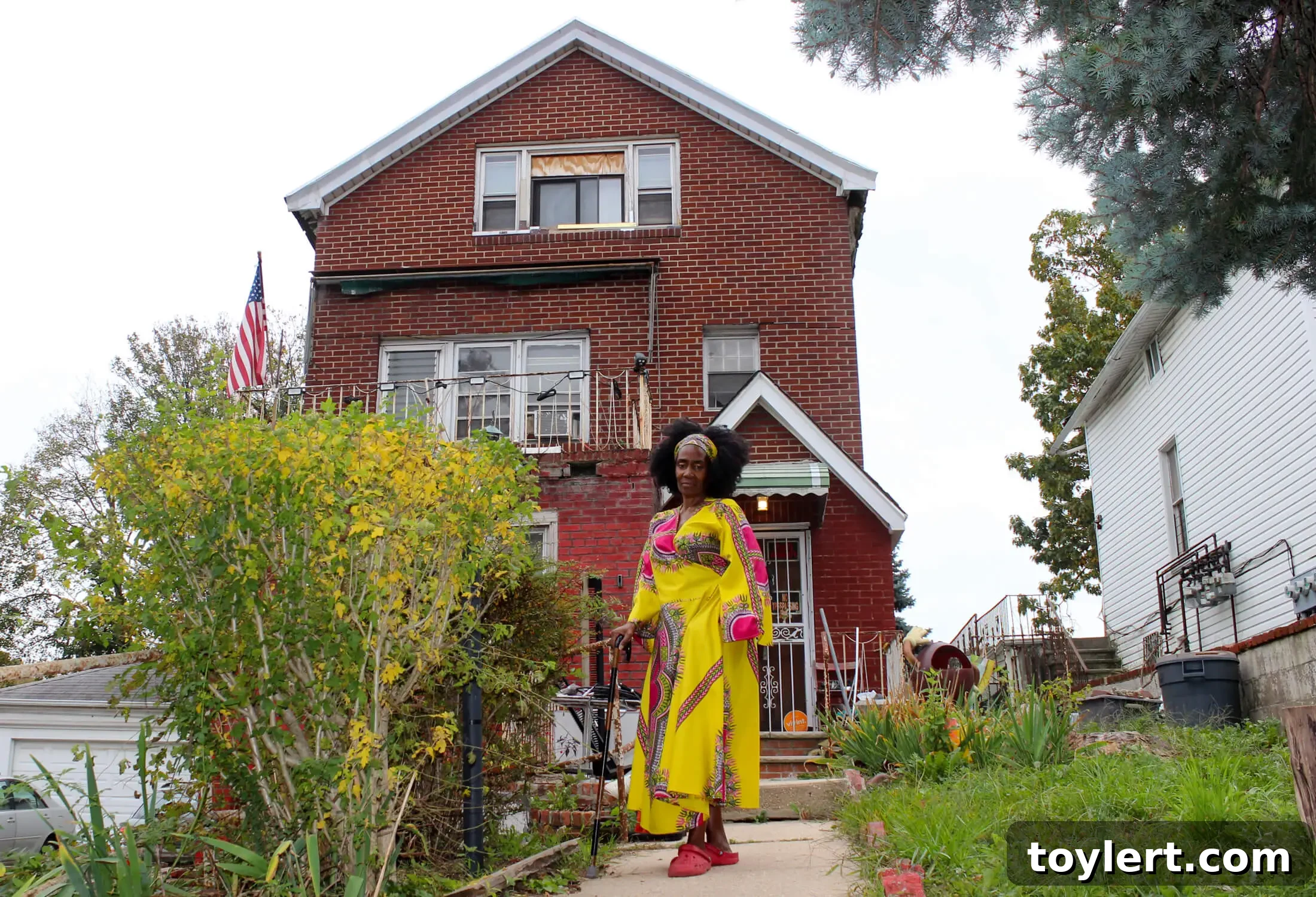
For ten long years, Sybil “Tami” Green has called a house in East New York her home. This abandoned property, which she moved into a decade ago, became her sanctuary, a place where she built a life within the vibrant community. However, her peaceful existence has been shattered by the relentless pursuit of Brooklyn property flippers who have initiated eviction proceedings, claiming ownership of the residence at 94 Jackie Robinson Parkway. Green’s struggle, marked by months of trying to trace an elusive heir and navigating complex legal waters, has recently seen a significant and hopeful development.
This isn’t just an individual’s fight; it’s a deeply rooted community issue that highlights the pressures of gentrification and predatory real estate practices in one of Brooklyn’s most rapidly changing neighborhoods. Sybil Green’s story has become a rallying cry for housing advocates and local residents, drawing attention to the vulnerabilities of individuals and the importance of due process in property transactions. Her battle is more than just about retaining a house; it’s about upholding fairness, preventing displacement, and safeguarding the fabric of the East New York community.
A Decade of Residence: Sybil Green’s Connection to 94 Jackie Robinson Parkway
Sybil Green’s journey to the house at 94 Jackie Robinson Parkway began over a decade ago. Finding the property seemingly abandoned, she took the initiative to transform it, pouring her time, effort, and resources into making it a habitable and welcoming space. Over the years, she has not only maintained the property but has also become an integral part of the East New York neighborhood. Her presence in the house represents a common narrative in communities where properties fall into disrepair or neglect, only to be lovingly restored by individuals seeking a stable place to live.
Her occupancy for such an extended period is significant, as it often raises questions about adverse possession or squatter’s rights, though the specifics of her legal standing as an occupant are complex and subject to New York State law. What is undeniably clear is her profound connection to the home and the community. She is not merely a transient occupant but a long-term resident whose life is deeply interwoven with the address. The threat of eviction, therefore, is not just a legal challenge; it’s a personal upheaval threatening to uproot a decade of stability and belonging.
The Looming Threat: Brooklyn Property Flippers and the Eviction Notice
The protagonists in this escalating drama are a group of Brooklyn flippers, real estate investors notorious for acquiring distressed or undervalued properties with the intent of quick renovation and resale for substantial profit. While property flipping can be a legitimate part of the real estate market, it often comes under scrutiny when ethical lines are blurred, particularly when dealing with vulnerable populations or questionable acquisition tactics. In Sybil Green’s case, these flippers claim to have obtained the deed to the East New York house, subsequently filing to evict her.
The flippers’ actions bring to light a critical issue in rapidly gentrifying areas: the systematic targeting of properties with unclear ownership or those neglected for various reasons. These properties become ripe targets for investors looking to capitalize on rising real estate values, often at the expense of long-term residents or rightful heirs who may be unaware of their inheritance or legal rights. The eviction filing against Sybil Green is a direct consequence of this practice, placing her at the center of a high-stakes legal battle that could determine her future housing stability.
A Crucial Breakthrough: Tracing the Elusive Heir with Community Support
In her strenuous fight to remain in the house, Sybil Green has not been alone. She has garnered vital support from organizations dedicated to housing justice and community empowerment. Central to this support is the East New York Community Land Trust (ENY CLT). Community Land Trusts are non-profit organizations that acquire and hold land permanently for the benefit of a community, ensuring lasting affordability and preventing displacement. Their involvement in Sybil’s case underscores the community’s commitment to protecting its residents from predatory real estate practices.
With the dedicated assistance of the ENY CLT, Green, who is embroiled in multiple court cases concerning her occupancy at 94 Jackie Robinson Parkway, embarked on a determined search for the legitimate heir to the property. This extensive investigation led her and her advocates to a pivotal figure: social worker Yudelka Guerra. Guerra’s testimony would prove to be a turning point, providing critical insights into the circumstances surrounding the alleged transfer of the property deed. This collaboration between an individual resident, a community organization, and a professional witness highlights the power of collective action in addressing systemic injustices in the housing market.
The Affidavit That Shakes the Foundation: Herman Greene’s Story
Yudelka Guerra’s discovery provided a much-needed breakthrough in Sybil Green’s complex legal struggle. Guerra confirmed that she had worked at a shelter where Herman Greene, a son of the deceased owner of the East New York house, had previously resided. This connection was vital, as Herman Greene was the elusive heir whose signature on the deed was central to the flippers’ claim of ownership. What Guerra revealed in her subsequent affidavit cast a dark shadow over the legitimacy of that property transfer.
Guerra has since submitted a compelling affidavit in the ongoing legal battle over the ownership of the house. This affidavit makes a serious allegation: that Herman Greene did not fully comprehend his right of inheritance when he was approached by his brother to sign the deed over to an LLC controlled by the Brooklyn flippers. Crucially, the affidavit further alleges that Herman Greene did not receive any money or compensation for signing away his inherited property. This claim introduces significant ethical and legal questions about coercion, exploitation, and the validity of the transaction itself.
Legal Representation: A Cornerstone of Property Transfers in New York State
The allegations in Yudelka Guerra’s affidavit touch upon a fundamental principle of real estate law in New York State: the requirement for legal representation in property transfers. In New York, property owners are mandated to have legal counsel during such transactions. This critical safeguard is in place to protect individuals from being coerced, misled, or exploited, ensuring that they fully understand the implications of signing away their property rights. Legal representation provides an impartial advocate who can explain complex legal documents, ensure fair terms, and verify that all parties are acting willingly and with full comprehension.
If Herman Greene, as alleged, signed the deed without legal representation and without understanding his inheritance rights, and furthermore, received no monetary consideration for the transfer, it would constitute a significant violation of New York State law and established legal practices. Such a breach could render the deed transfer null and void, severely undermining the Brooklyn flippers’ claim to ownership and bolstering Sybil Green’s defense against eviction. This legal requirement is not a mere technicality; it is a vital protection for property owners, especially those who may be vulnerable or lack legal expertise.
The Broader Implications: Housing Justice in East New York
Sybil Green’s case is more than just an individual homeowner’s struggle; it’s a microcosm of the larger housing crisis and the fight for justice in rapidly gentrifying neighborhoods like East New York. This Brooklyn enclave, once considered affordable, has seen property values skyrocket, attracting investors and developers eager to capitalize on its burgeoning appeal. Unfortunately, this often leads to aggressive tactics to displace existing residents, particularly those who are long-term occupants or heirs of properties with unclear titles.
The involvement of the East New York Community Land Trust highlights a growing movement to counteract these forces. CLTs are crucial in establishing a model of community-controlled, permanently affordable housing, ensuring that land benefits the community rather than fueling speculative markets. By supporting Sybil Green, the ENY CLT is not only fighting for one home but also advocating for a more equitable and stable future for all residents of East New York. This case serves as a stark reminder of the ethical responsibilities in real estate and the importance of robust legal frameworks to protect vulnerable individuals from predatory practices.
A Fight for Home and Justice: The Path Forward
The recent development, with Yudelka Guerra’s affidavit shedding light on the dubious circumstances of the deed transfer, injects a powerful new dynamic into Sybil Green’s ongoing legal battle. It provides a potential pathway to challenge the legitimacy of the flippers’ claim and, by extension, their right to evict her. The case at 94 Jackie Robinson Parkway will likely continue to unfold in the courts, scrutinizing the details of the deed transfer, the legal representation (or lack thereof), and the understanding of the original heir.
For Sybil Green, this is a fight for her home, her stability, and her continued presence in the community she has nurtured for a decade. For East New York, it is a crucial test of whether legal protections and community advocacy can triumph over speculative real estate interests. The outcome of this case could set a significant precedent, influencing how future property disputes are handled in New York City and offering hope to countless others who find themselves caught in similar housing predicaments. The struggle for justice at 94 Jackie Robinson Parkway continues, fueled by resilience, community solidarity, and the unwavering pursuit of truth.