Transforming Your Yard: A Comprehensive Guide to Installing Artificial Grass
The sight of a patchy, struggling lawn can be disheartening for any homeowner. Whether it’s persistent brown spots, high water bills, or the endless battle against weeds, traditional grass often presents challenges that lead many to seek modern alternatives. One increasingly popular solution gaining traction is the installation of an artificial lawn. This innovative landscaping option promises a perpetually green, manicured look without the demanding upkeep of natural turf. However, embarking on such a project naturally raises a host of questions, from the practicalities of installation to ensuring it meets the unique needs of a household with young children.
Homeowners often find themselves contemplating several key aspects before making the switch. For instance, is a proper base layer of gravel truly necessary, and what role does a weed barrier play in preventing future growth? Beyond the structural requirements, a primary concern for families is the softness and safety of the turf. Will it provide a cushioned landing for children during their inevitable tumbles, allowing for carefree play? This guide aims to address these crucial questions and provide a thorough overview of artificial grass installation, benefits, considerations, and maintenance, helping you make an informed decision for your outdoor space.
Why Consider Artificial Grass for Your Home?
The allure of artificial grass extends far beyond simply covering up dead patches. It offers a compelling blend of aesthetic appeal and practical advantages that cater to a wide range of homeowner needs and lifestyles.
- Unwavering Aesthetics: Imagine a lawn that remains vibrant green and perfectly manicured all year round, regardless of the season, drought, or foot traffic. Artificial grass delivers this consistent beauty without fading or developing bare spots.
- Low Maintenance Lifestyle: This is arguably the biggest draw. Say goodbye to weekly mowing, edging, fertilizing, and pest control. Artificial turf drastically reduces the time and effort spent on lawn care, freeing up your weekends for more enjoyable activities.
- Water Conservation: In an era of increasing environmental awareness and water restrictions, artificial grass offers a significant benefit. It requires no irrigation, leading to substantial savings on water bills and contributing to sustainable living.
- Pet-Friendly Solutions: Artificial turf is highly durable and resistant to digging, making it ideal for pets. It’s also easier to clean up pet waste, and specialized infills can help neutralize odors, ensuring a fresh and hygienic outdoor space for your furry friends.
- Allergy Relief: For individuals suffering from grass pollen allergies, artificial turf provides a welcome reprieve, as it produces no pollen.
- Durability and Longevity: Designed to withstand heavy use and various weather conditions, high-quality artificial grass can last for 15-20 years or more with proper installation and minimal care, making it a long-term investment.
Essential Installation Considerations: Gravel, Weed Barrier, and Softness
Proper installation is paramount to the longevity, functionality, and aesthetic appeal of your artificial lawn. Two fundamental components often discussed are the base layer (gravel) and the weed barrier, both critical for a successful outcome. Furthermore, for families, the safety and comfort for children are top priorities.
The Critical Role of a Proper Base Layer (Gravel)
One of the most frequently asked questions pertains to the need for a gravel base. The answer is a resounding yes. A well-prepared and compacted base layer is the backbone of any artificial grass installation. It serves several vital functions:
- Ensures Proper Drainage: Artificial turf, though permeable, needs a solid foundation to allow water to drain efficiently. A graded gravel base prevents water from pooling underneath the turf, which could lead to mold, mildew, or an uneven surface over time. Typically, an aggregate base (like crushed granite, decomposed granite, or crushed limestone) that compacts well is used, creating a slight slope away from structures to facilitate runoff.
- Provides Stability and Evenness: A properly compacted base creates a stable, level surface for the turf to lay upon. This prevents dips, humps, or shifting of the turf over time, ensuring a smooth and natural-looking finish. Without a solid base, the turf can develop wrinkles or indentations, compromising its appearance and durability.
- Prevents Settling: Over years of foot traffic and exposure to the elements, an artificial lawn can settle. A robust gravel base minimizes this settling, maintaining the turf’s integrity and aesthetic appeal for longer.
The depth of the base layer typically ranges from 3 to 6 inches, depending on soil conditions and anticipated use. It’s crucial that this layer is thoroughly compacted using a plate compactor to achieve maximum stability.
Implementing an Effective Weed Barrier
Another common query is whether a weed barrier is truly necessary. While artificial turf itself blocks sunlight from reaching the soil, preventing most weeds from germinating, nature finds a way. Small seeds can still be blown onto the turf, settle into the infill, or grow from the edges. This is where a high-quality weed barrier becomes indispensable.
- Prevents Weed Growth: A geotextile fabric weed barrier, laid directly over the compacted base layer and beneath the turf, acts as an extra line of defense against stubborn weeds and unwanted plant growth. It creates a physical separation between the soil beneath and the turf system, significantly reducing the chances of weeds pushing through.
- Stabilizes the Base: Some geotextile fabrics also contribute to the stability of the base by preventing the gravel from mixing with the underlying soil, maintaining the integrity of the drainage layer.
Choosing a permeable weed barrier is crucial, as it allows water to pass through freely, ensuring proper drainage while still blocking weeds.
Ensuring Softness and Safety for Young Children
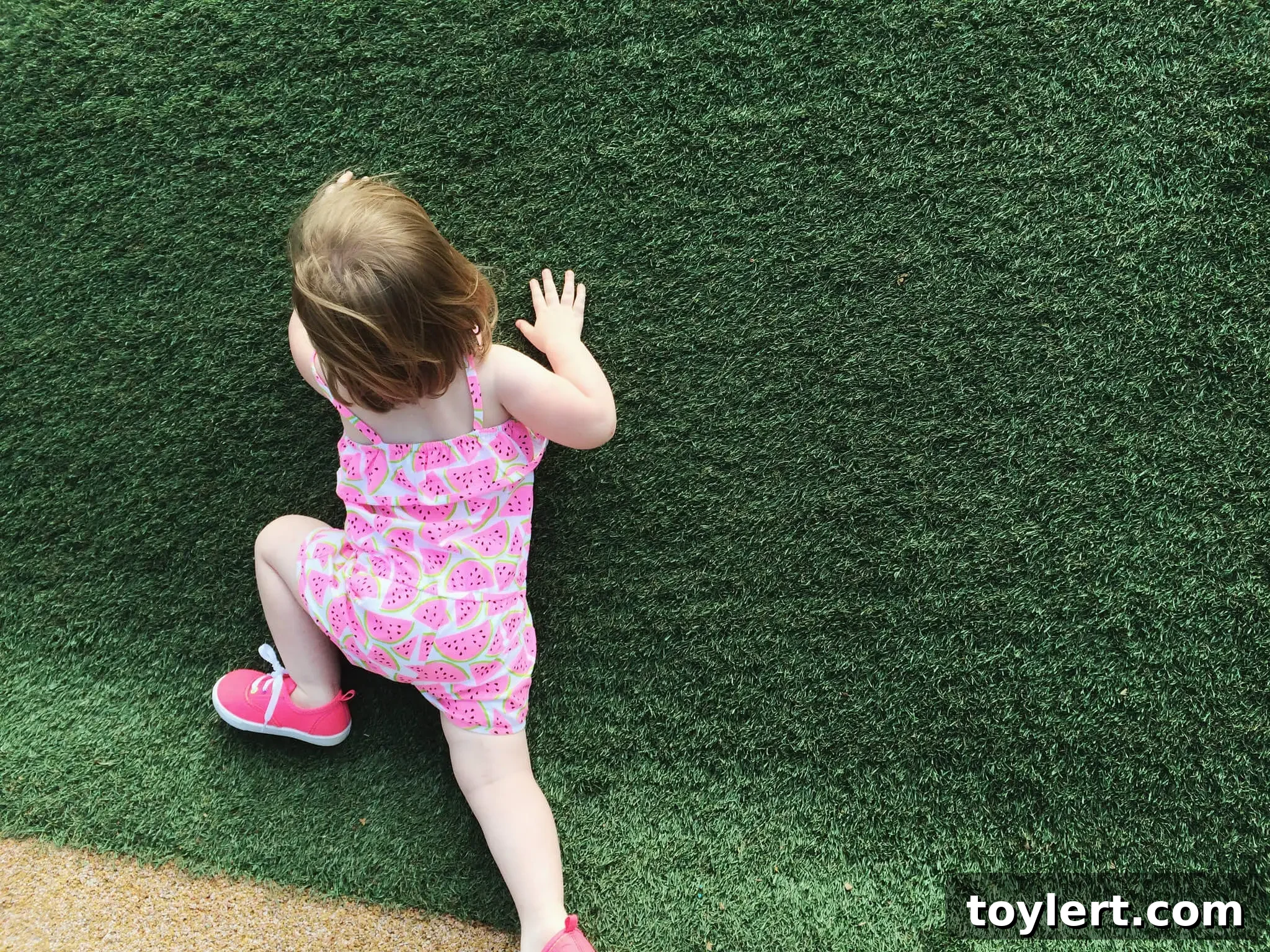
For families with children, the “softness” of artificial grass is a significant concern. Parents want to ensure that playtime tumbles result in minor scrapes, not serious injuries. Modern artificial turf systems are designed with safety in mind, and several factors contribute to their impact absorption:
- Infill Material: The infill, granular material spread between the blades of grass, plays a crucial role in shock absorption. Traditional infills like silica sand provide some cushioning, but more advanced options offer enhanced safety:
- Rubber Crumb: Made from recycled tires, rubber crumb offers excellent shock absorption, creating a bouncier and softer surface. However, it can retain heat more than other options.
- Organic Infills: Products like cork or coconut fiber infills are gaining popularity for their natural properties, good shock absorption, and lower heat retention.
- Acrylic-Coated Sand: These sands are typically rounded and coated, offering better cushioning than raw silica sand and preventing dust.
The choice of infill directly impacts the Critical Fall Height (CFH) rating, which measures how high a child can fall before sustaining a critical injury.
- Underlayment/Padding: For an even softer and safer play area, especially in high-traffic zones or under play equipment, a specialized shock-absorbent underlayment can be installed beneath the artificial turf. These foam or rubber pads dramatically increase the turf’s cushioning properties, providing an extra layer of protection against falls. They are particularly recommended for playgrounds and areas where children are likely to be very active.
- Pile Height and Density: While not the primary factor for softness, turf with a higher pile height (longer blades) and greater density can feel lusher and provide a slightly softer landing than very short, sparse turf.
When selecting artificial grass for a child-friendly space, always inquire about the infill options and whether additional padding is available to meet specific safety standards or personal preferences for softness.
The Artificial Grass Installation Process: A Step-by-Step Overview
While professional installation is often recommended, understanding the general process can help homeowners appreciate the work involved and ensure a quality outcome.
- Site Preparation and Excavation: The first step involves removing existing grass, weeds, and debris. The area is then excavated to a depth of 3-6 inches, depending on the required base thickness.
- Base Layer Application and Compaction: A layer of permeable aggregate (e.g., crushed granite) is spread and then compacted thoroughly using a plate compactor. This layer is graded to ensure proper drainage.
- Weed Barrier Installation: A high-quality geotextile weed barrier is laid over the compacted base, often overlapped at seams, to prevent weed growth.
- Turf Laying and Seaming: The artificial grass rolls are carefully unrolled and positioned. Sections are cut to fit the contours of the area, and seams are meticulously joined using specialized seaming tape and adhesive, ensuring a seamless and natural look.
- Trimming and Edging: The edges of the turf are precisely trimmed to fit the borders, pathways, or landscaping features, creating a clean finish.
- Securing the Turf: The perimeter of the turf is typically secured using landscape spikes or staples driven into the compacted base, preventing movement.
- Infill Application: Once the turf is secured, the chosen infill material (e.g., silica sand, crumb rubber, organic infill) is evenly spread over the turf using a drop spreader. This material helps weigh down the turf, protects the fibers, and contributes to shock absorption.
- Brushing and Grooming: Finally, the infill is brushed into the turf fibers using a power broom or stiff-bristled broom. This stands up the blades, evenly distributes the infill, and gives the lawn its final, plush appearance.
Choosing the Right Artificial Grass for Your Needs
Not all artificial grass is created equal. Understanding the different characteristics can help you select the best product for your specific application:
- Pile Height: This refers to the length of the grass blades. Shorter piles are generally more durable for high-traffic areas, while longer piles offer a lusher, more natural look and feel.
- Density: Denser turf with more blades per square inch often looks fuller and more luxurious but can sometimes retain more heat.
- Blade Shape: Different blade shapes (e.g., C-shape, W-shape, V-shape) affect the turf’s durability, resilience, and softness. Some shapes are designed for better bounce-back, preventing matting.
- Material: Common materials include polyethylene (soft, natural look), polypropylene (durable, often used for putting greens), and nylon (extremely durable, often blended).
- Color and Thatch: Modern artificial grass often features varying shades of green, brown, and tan fibers to mimic natural grass, including a “thatch” layer at the base for added realism.
- Drainage Capabilities: Ensure the turf has adequate drainage holes or a permeable backing, especially if you have pets or live in a rainy climate.
Maintenance of Artificial Turf: Low, But Not No-Maintenance
While artificial grass dramatically reduces maintenance, it’s not entirely maintenance-free. A few simple steps will keep it looking its best:
- Regular Brushing: Periodically brush the turf with a stiff-bristled broom or power broom to keep the blades upright and prevent matting, especially in high-traffic areas.
- Debris Removal: Remove leaves, twigs, and other debris with a leaf blower, rake, or broom to prevent organic matter from decomposing and potentially encouraging weed growth.
- Spot Cleaning: For spills or pet waste, promptly remove solids and rinse the area with water. For stubborn stains or odors, a mild detergent or specialized turf cleaner can be used.
- Odor Control: For pet owners, occasional application of a pet-friendly enzymatic cleaner can help neutralize odors, especially in warmer climates.
Potential Downsides and Common Concerns
Despite its many advantages, artificial grass does have some considerations that homeowners should be aware of:
- Initial Cost: The upfront investment for artificial turf is significantly higher than for traditional sod. However, this cost is often offset by long-term savings on water, fertilizer, pesticides, and landscaping services.
- Heat Retention: Artificial turf, especially darker varieties or those with rubber infill, can absorb and retain heat, making it hotter than natural grass on sunny days. Lighter-colored infills, cooling technology in the fibers, and shade can mitigate this.
- Environmental Impact: While reducing water use, the production and disposal of artificial turf raise environmental questions. However, many manufacturers are now offering recyclable products and using recycled materials in their production.
- Repairs: While durable, significant damage (e.g., from sharp objects, prolonged intense heat) may require professional repair or patching.
- Not a Living Ecosystem: Artificial grass does not contribute to local biodiversity, support pollinators, or produce oxygen in the same way natural grass does.
Making an Informed Decision: Is Artificial Grass Right for You?
The decision to install artificial grass is a significant one that should weigh your personal circumstances, priorities, and budget. Consider the following:
- Lifestyle: If you crave a low-maintenance outdoor space and want to eliminate lawn care chores, artificial grass is a strong contender.
- Environmental Concerns: If water conservation is a top priority, the benefits are clear. If supporting local ecosystems is paramount, consider alternatives or combine artificial turf with native plantings.
- Budget: Evaluate the upfront cost versus the long-term savings.
- Usage: For high-traffic areas, pet zones, or children’s play areas, artificial turf’s durability and specific infill/padding options offer tailored solutions.
Ultimately, a dead patch of grass can be the catalyst for a much larger transformation. An artificial lawn offers a durable, aesthetically pleasing, and low-maintenance solution that can revitalize your outdoor space. By understanding the importance of a proper gravel base, the necessity of a weed barrier, and the various options available to ensure softness and safety for children, homeowners can confidently approach their artificial turf installation project. Consult with reputable installers, ask questions about products and warranties, and carefully consider your specific needs to create the perfect green oasis for your home, ensuring years of enjoyment with minimal effort.